

The design of a commercial flower greenhouse is fundamentally different from simply building a structure that can protect plants from rain and wind. A commercial greenhouse must create a stable, controllable, and repeatable growing environment while keeping investment and operating costs within a reasonable range.
For commercial growers, the real value of a greenhouse lies in whether it can consistently solve three major problems: whether it can reduce the impact of outside climate fluctuations, whether it can maintain uniform growth and flower quality from one production cycle to another, and whether it can keep energy, labor, irrigation, and equipment costs under control over the long term.
This is why two growers producing the same crop may use completely different greenhouse systems. One rose project may use a high-specification glass greenhouse, while another may perform very well in a multi-span film greenhouse. Likewise, orchid greenhouses in different regions may require very different heights, shading ratios, ventilation areas, and humidity-control strategies.
There is no single greenhouse design that is suitable for every flower crop and every climate.
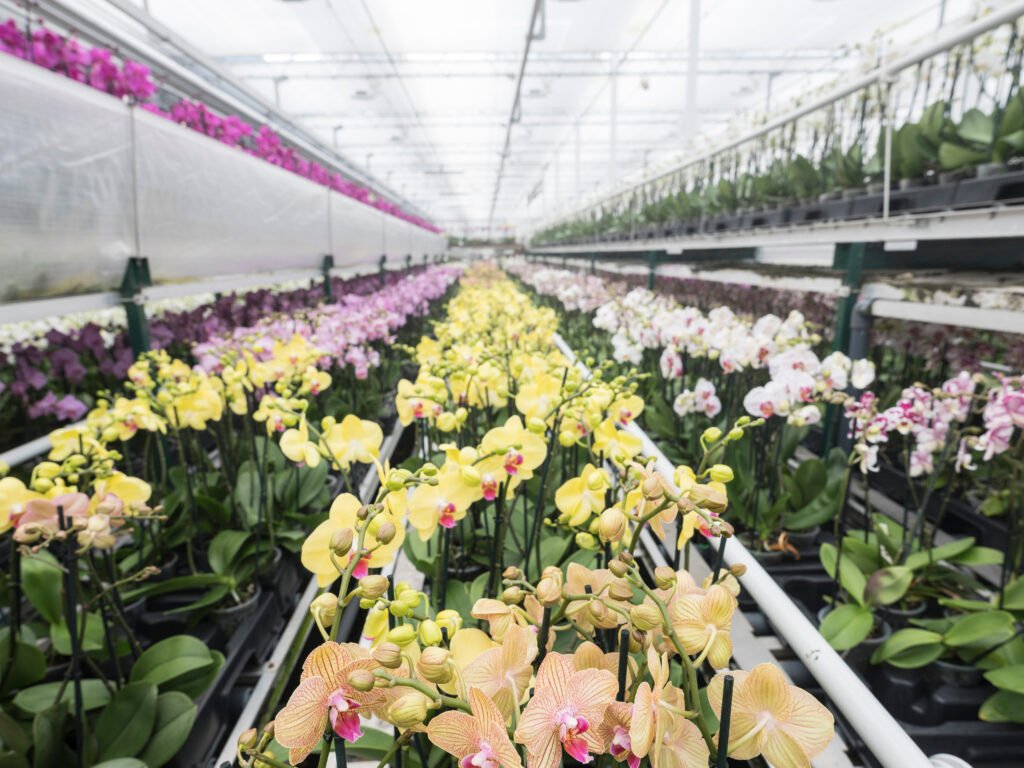
Greenhouse Design Starts with Designing the Climate the Crop Needs
One of the most common mistakes in greenhouse projects is to choose the greenhouse structure first and think about the crop later.
The correct approach is the opposite.
The grower or designer should first define the temperature, light, humidity, airflow, and root-zone conditions required by the target flower crop during different growth stages. The greenhouse structure and equipment can then be selected based on those requirements.
For example, roses can make good use of relatively high light levels, but excessive temperature can negatively affect stem length, flower size, and color. Orchids usually require more stable humidity, softer light, and good air circulation. Chrysanthemums are highly sensitive to photoperiod, meaning flowering can be controlled by manipulating day length. Bulb flowers such as tulips and lilies often require more precise temperature management to control crop timing and flowering schedules.
For this reason, the first question in commercial greenhouse design should not be, “Should we use glass or film?”
A better question is:
What growing environment does this crop require during the most difficult season of the year?
If summer temperatures in a region frequently exceed 35°C, while the crop begins to lose quality above 30°C, then the greenhouse must have enough ventilation and cooling capacity to close that gap.
If winter night temperatures approach 0°C while the crop needs to remain above 15°C, then heating capacity and insulation performance become major design considerations.
In simple terms, greenhouse design is largely about managing the difference between the outside climate and the target growing climate.
The larger that difference becomes, the greater the investment and operating cost usually become.
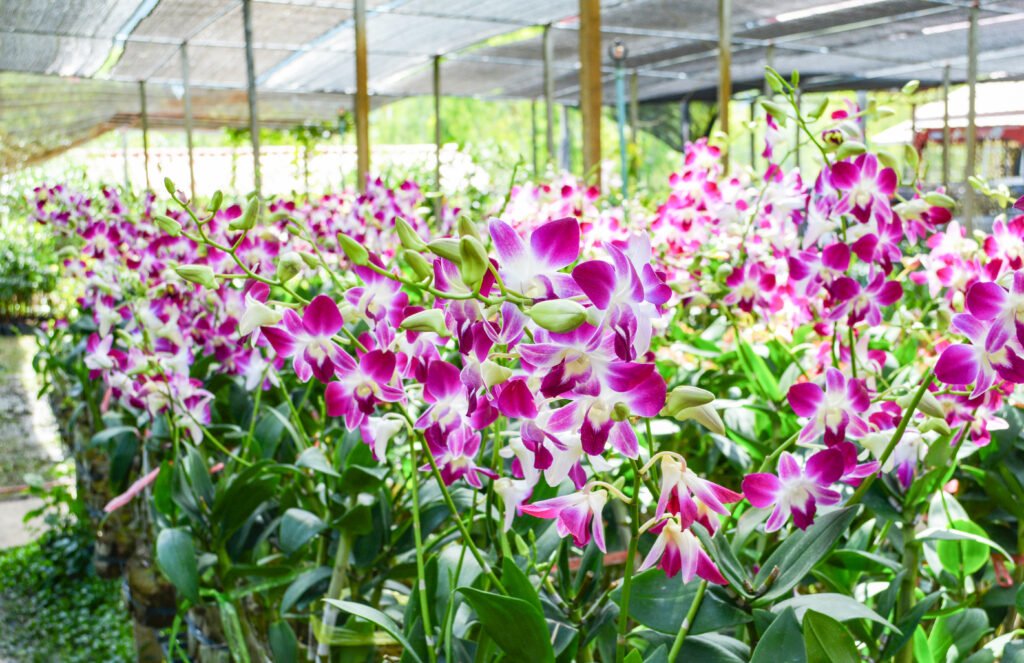
A More Advanced Greenhouse Is Not Always a Better Greenhouse
Glass greenhouses are often considered premium systems, but that does not mean every commercial flower project should use glass.
The real advantages of a glass greenhouse include relatively stable light transmission, long service life, strong structural integration, and good compatibility with advanced climate-control equipment. For long-term projects involving high-value flowers and intensive automation, these advantages can be significant.
However, in a region with mild winters and abundant sunlight, a well-designed multi-span film greenhouse may also provide excellent growing conditions while requiring much lower initial investment.
The structural choice should therefore be connected to the expected economic return.
For example, if cut roses are being produced for a high-end export market, where stem length, flower size, consistency, and year-round availability strongly influence selling price, then stronger climate-control capacity may justify a higher greenhouse investment.
If the flowers are mainly sold in a local market and the natural climate is already relatively suitable, an overly complex greenhouse may simply increase depreciation and extend the payback period.
Commercial greenhouse design should not aim for the most expensive system.
It should aim for the most appropriate system.
Why Greenhouse Height Can Directly Affect Flower Quality
Greenhouse height is often underestimated by growers who focus mainly on floor area.
In reality, a higher greenhouse usually contains a larger volume of air, which helps reduce rapid changes in temperature and humidity.
When solar radiation increases suddenly, a low greenhouse with a small internal air volume can heat up very quickly. A taller greenhouse provides more thermal buffering and allows hot air to rise farther away from the crop canopy.
This matters in commercial flower production because flowers, particularly cut flowers, are sensitive to environmental fluctuations. Repeated exposure to rapid temperature changes can contribute to uneven internode length, inconsistent flowering, and variable stem quality.
A larger internal volume can also improve air distribution.
As warm air rises, the growing zone near the crop can remain more stable. Taller structures also provide more room for shade screens, circulation fans, supplemental lighting, misting systems, and other overhead equipment.
However, a greenhouse should not simply be made as tall as possible.
Increasing height usually increases structural steel consumption, wind load, construction cost, and the volume of air that may need to be heated during winter.
Greenhouse height is therefore a balance between environmental stability and construction and energy costs.
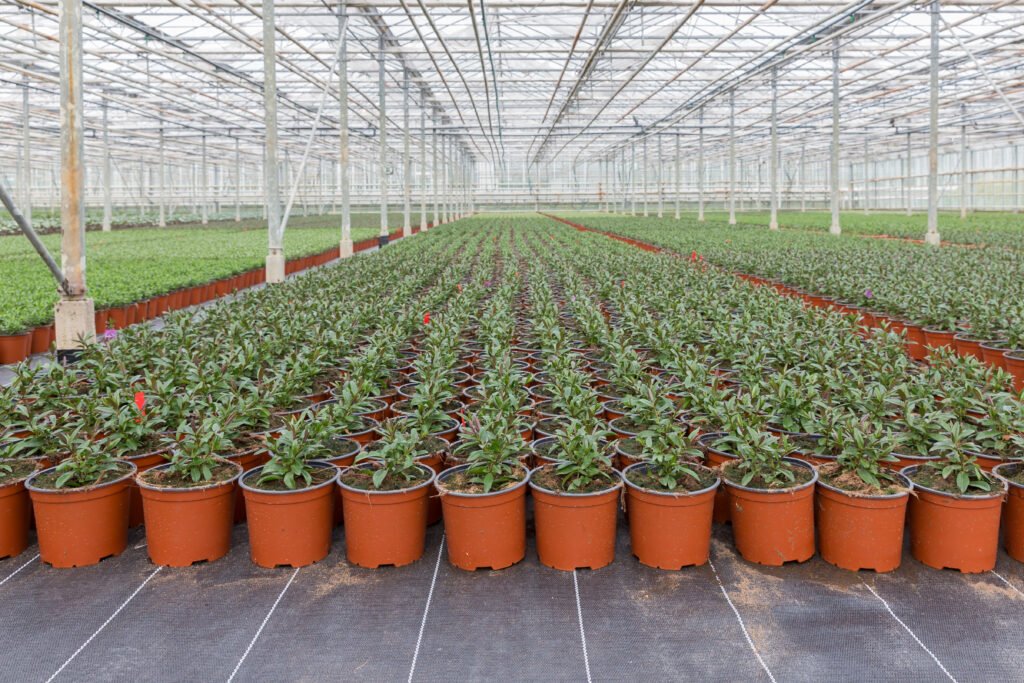
Ventilation Determines Whether the Greenhouse Can Release Excess Heat
Temperature control in commercial greenhouses does not rely entirely on mechanical cooling.
In many greenhouse projects, natural ventilation remains one of the most energy-efficient and economical methods of removing heat.
As greenhouse air warms, it rises. If sufficient roof ventilation is available, hot air can escape, while cooler outside air enters through side openings or lower vents.
This process is driven by both thermal buoyancy and wind pressure.
The problem is that many low-cost greenhouse structures have insufficient effective ventilation area.
A greenhouse may technically have roof vents, but if the openings are too small, poorly positioned, or obstructed, heat removal can still be inadequate.
For commercial flower production, the key question is not simply whether roof vents exist. The more important questions are how much effective vent area is available, where the vents are located, and how air is expected to move through the structure.
In wide multi-span greenhouses with dense crops, the center zones are particularly vulnerable to stagnant air.
This is where horizontal airflow fans or circulation fans become important.
Their main purpose is not simply to create wind. They are used to reduce temperature and humidity differences between different parts of the greenhouse.
In a well-designed greenhouse, air around the crop canopy should move slowly and continuously rather than remain stagnant.
Why Commercial Greenhouses Increasingly Focus on VPD, Not Just Relative Humidity
Traditional greenhouse management often focuses on relative humidity alone, for example maintaining the greenhouse at 60% or 70% RH.
Modern commercial growers increasingly pay attention to VPD, or vapor pressure deficit.
In simple terms, VPD indicates how strongly the air can draw moisture from the plant.
It is closely related to plant transpiration.
For example, 70% relative humidity does not create the same plant response at 20°C as it does at 30°C.
When VPD is too low, the air is close to saturation. Transpiration slows, leaves remain wet for longer periods, and disease pressure may increase.
When VPD becomes too high, the plant loses water rapidly. Stomata may begin to close, reducing photosynthesis and slowing growth.
This is why sophisticated greenhouse management increasingly treats temperature and humidity as connected variables rather than independent ones.
Modern climate-control computers often monitor temperature, humidity, light, CO₂, and other parameters together before deciding whether to open vents, run fans, activate heating, or start fogging.
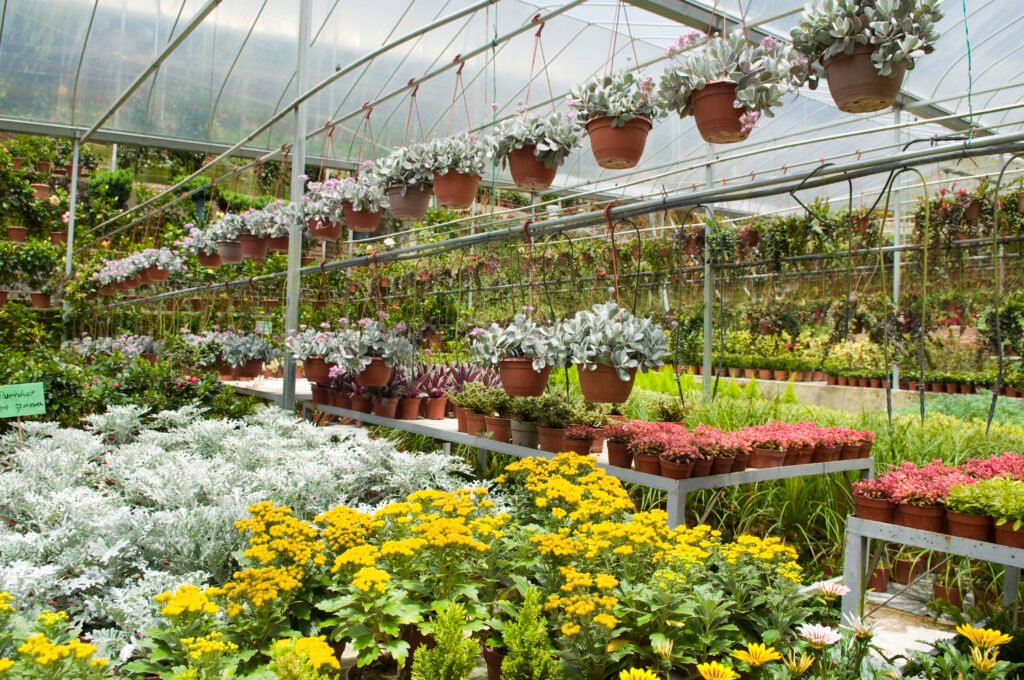
Shading Is Not Only About Reducing Light
Shading is often misunderstood as a simple method of making the greenhouse darker.
In commercial greenhouse production, one of the main purposes of shading is to control the heat load created by solar radiation.
External shading can block part of the solar energy before it enters the greenhouse, making it especially effective for reducing heat gain.
Internal shading is more useful for fine light regulation and, depending on the screen type, can also reduce heat loss during winter nights.
For flower crops, the shading percentage should never be selected arbitrarily.
Excessive shading can reduce photosynthesis, slow growth, and produce weaker stems.
Insufficient shading during periods of intense radiation can result in excessive canopy temperature, leaf scorch, reduced flower color quality, and shorter flowering duration.
Modern commercial flower greenhouses therefore often use adjustable shading systems rather than fixed shade levels.
A good control strategy should respond to solar radiation, greenhouse temperature, and crop growth stage.
Light Management Determines the Production Rhythm of Commercial Flowers
For commercial flowers, light affects more than plant growth. It also influences scheduling.
Different flower species respond differently to day length.
Chrysanthemums are a classic example of a photoperiod-sensitive crop. By using blackout screens or supplemental lighting, growers can manipulate flowering time and coordinate production with specific market windows.
In high-latitude regions, natural winter light may be insufficient for strong flower production. Supplemental lighting can help increase photosynthetic activity and maintain growth rates.
Modern greenhouse lighting strategies are not based only on lamp wattage. Growers increasingly pay attention to the amount of usable light actually reaching the plant.
Two commonly used concepts are PPFD and DLI.
DLI, or Daily Light Integral, can be understood as the total amount of photosynthetically useful light received by the crop over an entire day.
This is important because crop development depends not only on light intensity at one moment but on the cumulative amount of useful light received throughout the day.
If winter DLI remains too low for long periods, plant growth and flower quality can decline even when greenhouse temperature is well controlled.
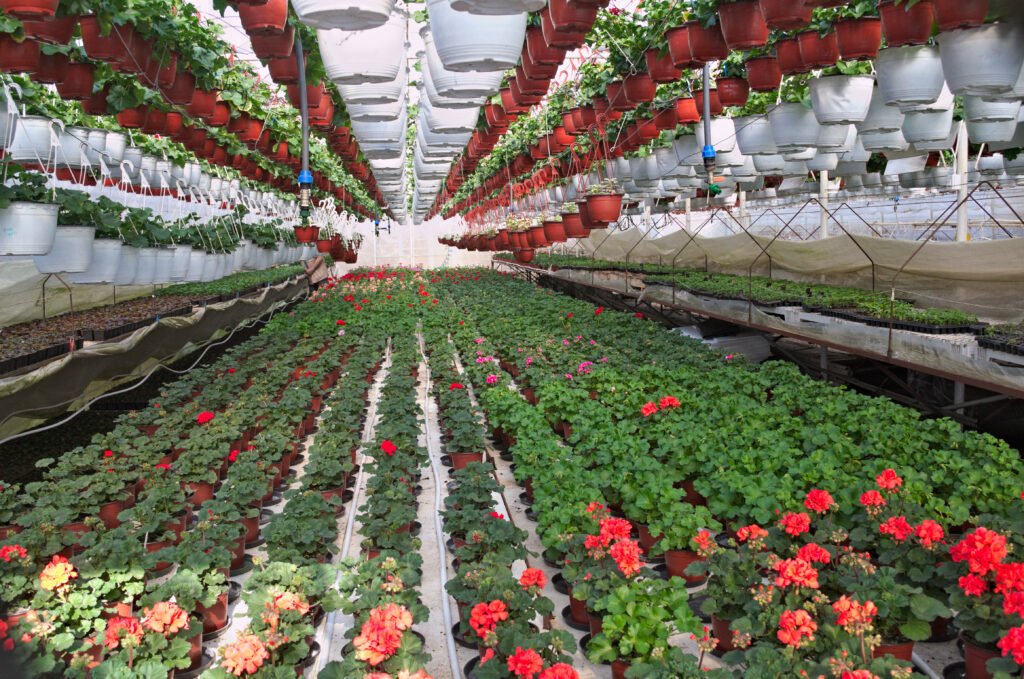
Irrigation Design Should Be Based on the Root-Zone Environment
In commercial flower production, irrigation is not simply about giving plants enough water.
The real objective is to maintain the correct balance of water, oxygen, and nutrients around the roots.
When the substrate remains too wet for too long, root-zone oxygen declines and root activity can suffer.
If irrigation intervals are too long, the plant may experience water stress.
For this reason, many advanced greenhouse systems use relatively small irrigation volumes applied more frequently.
Irrigation frequency can then be adjusted according to radiation, temperature, plant size, substrate characteristics, and crop water use.
On a bright sunny day, transpiration may increase significantly, so irrigation frequency may need to rise.
On cloudy winter days, plant water demand falls and irrigation should usually be reduced.
This is one reason why modern irrigation systems are increasingly integrated with greenhouse climate-control systems.
Irrigation is no longer treated as an independent operation. It becomes part of the total environmental management strategy.
Fertigation Affects Both Yield and Marketable Flower Quality
Uniformity is extremely important in commercial flower production.
For cut flowers, large differences in nutrient status between plants can result in uneven stem diameter, stem length, and flowering time.
Fertigation systems improve consistency by applying nutrients through irrigation water at controlled concentrations.
Electrical conductivity, or EC, is commonly used as an indicator of the overall concentration of dissolved salts in the nutrient solution.
If EC is too low, plants may not receive enough nutrients.
If EC becomes too high, root-zone salinity may increase and cause stress.
pH is equally important because it affects the availability of many plant nutrients.
Commercial growers therefore often adjust EC, pH, and nutrient formulation according to crop stage rather than using the same nutrient concentration throughout the entire production cycle.
In substrate-grown systems, drainage percentage and drainage EC are also useful indicators.
They help growers determine whether salts are accumulating in the root zone and whether the irrigation strategy should be adjusted.
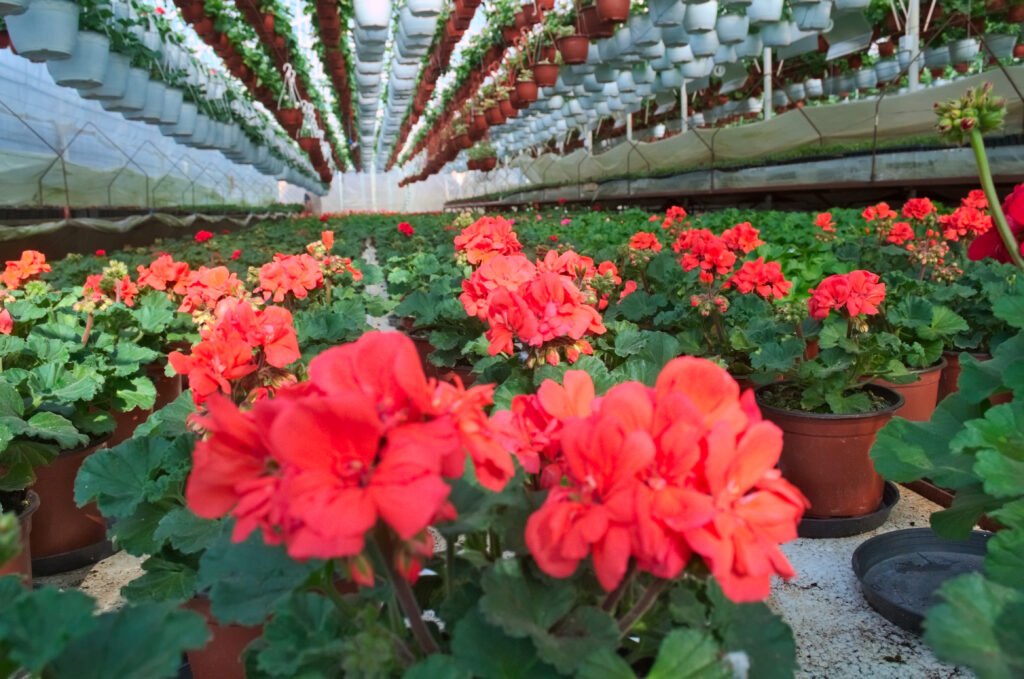
Winter Insulation Can Determine the Long-Term Energy Cost
In colder regions, heating is often one of the largest operating expenses in flower production.
For this reason, insulation should be considered during the greenhouse design phase rather than added after the greenhouse has already been built.
Glass, polycarbonate, and film coverings all have different thermal properties.
Double-layer inflated film, multi-wall polycarbonate panels, and energy screens can significantly reduce night-time heat loss.
Thermal screens are particularly important in many commercial greenhouse systems.
When closed at night, they reduce the effective volume that must be heated and limit heat loss toward the roof and glazing.
In regions with expensive energy, a well-designed insulation strategy can directly affect whether a commercial flower greenhouse remains profitable over the long term.
This is why professional greenhouse planning should consider not only capital cost but also expected annual energy consumption per square meter.
Disease Prevention Begins with Greenhouse Design
Commercial flowers are highly sensitive to appearance.
Even if overall yield remains acceptable, spots on petals or damaged leaves can significantly reduce market value.
Botrytis and other fungal diseases are common concerns in flower greenhouses.
These diseases are often associated with high humidity, condensation, and poor air movement.
Therefore, disease prevention actually begins at the greenhouse design stage.
Condensation on greenhouse coverings can become a problem if water droplets fall directly onto flowers or leaves.
Proper ventilation, heating, and air circulation can help reduce condensation.
Some advanced greenhouse management strategies use a combination of low-level heating and limited ventilation at night to remove humid air.
Although this approach consumes some energy, it can reduce disease pressure and protect crop quality.
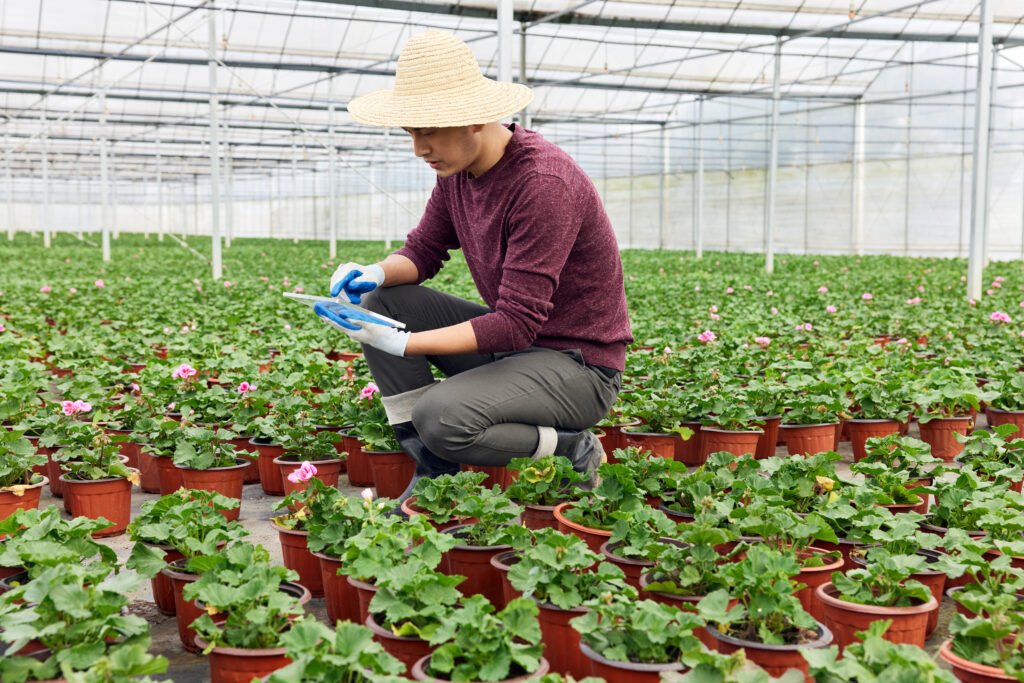
The Real Value of Climate Control Is Coordination Between Systems
A greenhouse may contain many pieces of equipment, but more equipment does not necessarily mean better climate control.
The key advantage of an advanced environmental-control system is coordination.
For example, when temperature begins to rise, the system may first open the roof vents.
If temperature continues to increase, the external shade screen may deploy.
If temperature is still too high, evaporative cooling or fogging may then be activated.
However, if humidity is already excessive, additional fogging may be inappropriate.
This illustrates why greenhouse climate control is not simply a matter of “turning on the fans when it gets hot.”
It is a multivariable control problem.
Temperature, humidity, solar radiation, wind speed, rainfall, CO₂, and plant transpiration all interact.
The ability to coordinate these factors is one of the major differences between a modern commercial greenhouse and a simple protective structure.
Commercial Greenhouses Should Be Designed for Extreme Weather, Not Average Weather
Both structural design and climate-control design should consider extreme conditions rather than only average weather data.
A region may have a comfortable average summer temperature, but still experience several periods each year when temperatures exceed 40°C.
If the crop is highly sensitive to heat, the cooling system must be capable of managing those extreme periods.
The same principle applies to structural safety.
Wind loads, snow loads, heavy rainfall, and storms may occur infrequently, but they can cause severe damage if the structure is under-designed.
Professional greenhouse engineering therefore relies on local historical weather data, structural codes, and risk conditions rather than selecting steel tube sizes based only on previous experience.
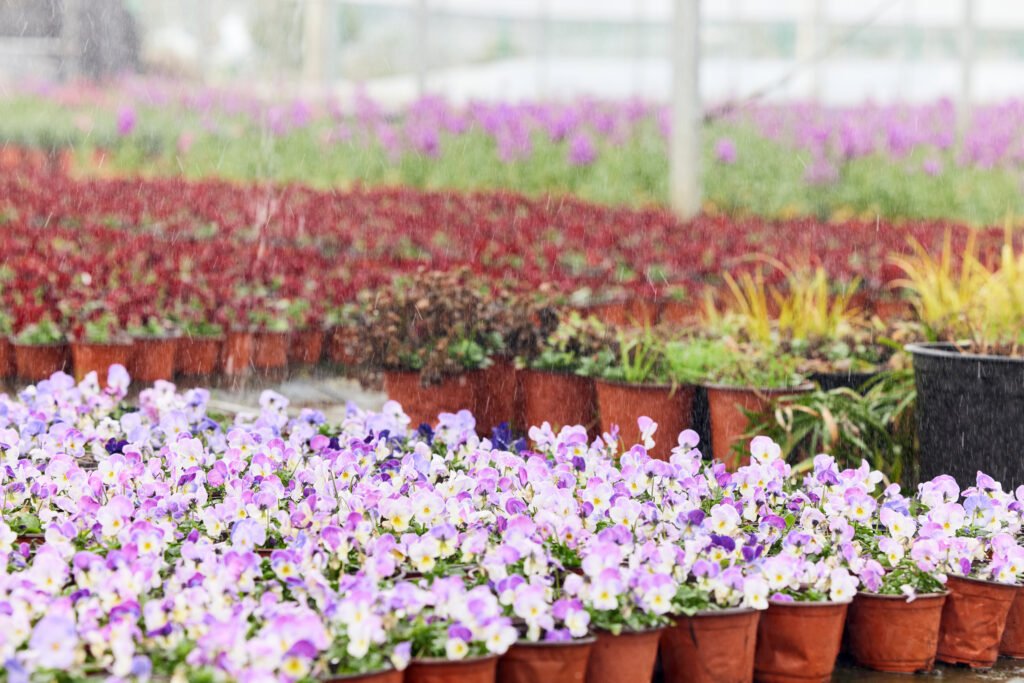
The Ultimate Goal of Commercial Greenhouse Design Is Stability
The biggest difference between commercial flower production and hobby growing is the need for reliable supply.
Flower markets are highly time-sensitive.
Valentine’s Day, Mother’s Day, Christmas, wedding seasons, and other events can create sharp peaks in demand.
If greenhouse conditions are unstable, flowering can occur several days too early or too late, significantly affecting selling price.
For this reason, commercial greenhouse design should not focus only on maximizing production on the best days of the year.
The real objective is to create a production environment that is stable and predictable throughout the crop cycle.
This is why automation, environmental control, and precision irrigation are becoming increasingly important in commercial flower production.
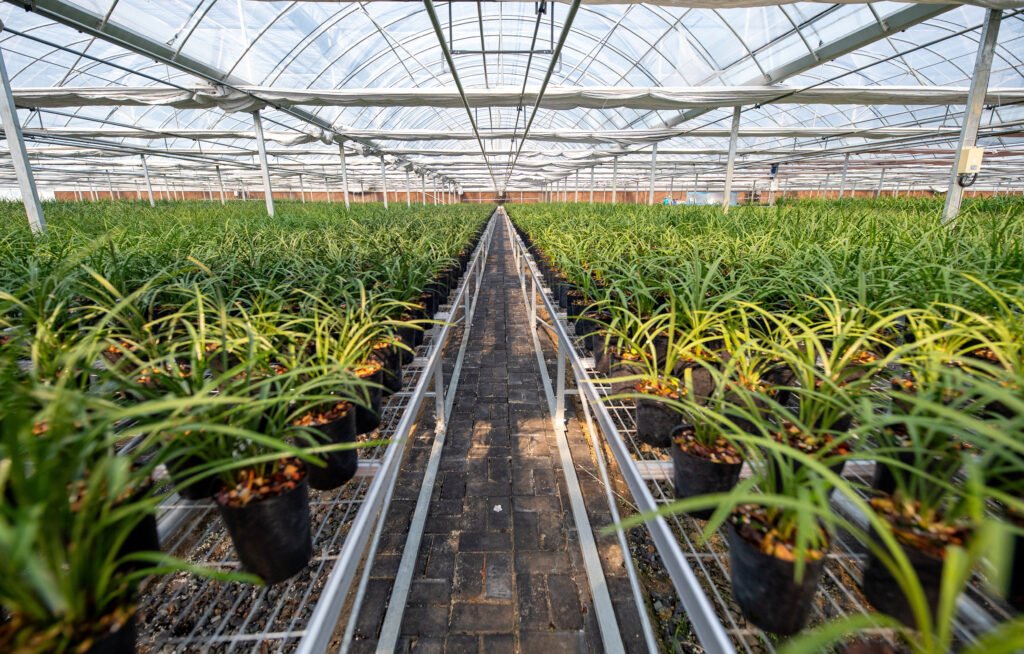
Commercial flower greenhouse design is a multidisciplinary process involving agriculture, structural engineering, environmental control, irrigation, energy management, and plant physiology.
A good greenhouse is not necessarily the one with the most equipment.
It is the one in which the structure, ventilation, shading, irrigation, heating, cooling, and climate-control systems all work toward the same objective:
creating a stable and economically sustainable growing environment for the crop.
In practical projects, the most appropriate greenhouse design depends on local climate, flower variety, production method, energy prices, labor costs, market requirements, and available investment.
Only after these factors are clearly defined should the designer determine greenhouse span, height, covering material, ventilation area, shading capacity, heating requirement, and irrigation strategy.
For a true commercial flower project, greenhouse design should therefore begin with one question:
What environment does the crop need?
It should not begin with:
What type of greenhouse should we buy?
That is the fundamental logic behind professional commercial flower greenhouse design.