

From Traditional Farming to Protected Agriculture: How Tomato Production Is Changing
Tomatoes are one of the most important agricultural crops worldwide. From small family farms to large commercial agricultural enterprises, tomatoes play an important role in global food production and agricultural economies.
However, compared with many other crops, commercial tomato production has a relatively high dependence on environmental conditions.
From seedling growth to fruit harvesting, tomatoes go through several important growth stages, including:
- vegetative growth;
- flowering;
- fruit formation;
- fruit ripening.
During each stage, environmental conditions directly influence final yield, quality, and production stability.
In traditional agriculture, farmers mainly rely on natural conditions to provide the necessary growing environment.
Planting schedules, irrigation decisions, and harvesting periods are often determined by seasonal patterns and farming experience.
This approach can work well in regions with stable climates.
However, modern agriculture is facing a new challenge:
Natural growing conditions are becoming increasingly unpredictable.
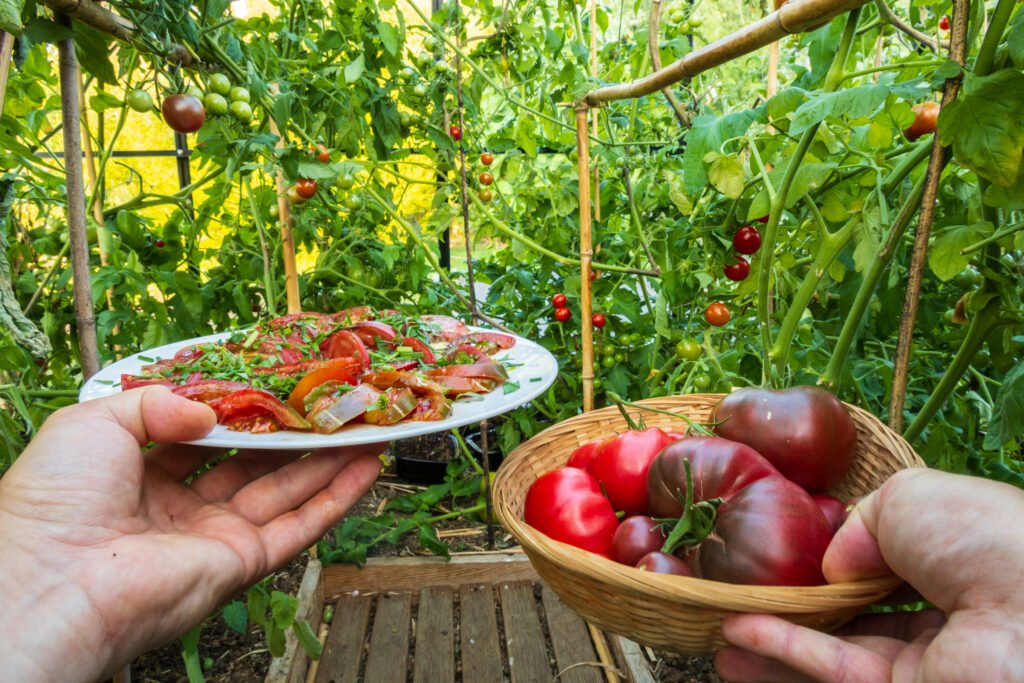
How Climate Change Is Affecting Traditional Tomato Production
The biggest characteristic of outdoor tomato farming is that crops are directly exposed to the natural environment.
This means plants must continuously adapt to:
- temperature changes;
- rainfall variations;
- wind conditions;
- humidity fluctuations.
Together, these factors determine the overall performance of tomato production.
Challenges Caused by Temperature Changes
Tomatoes are warm-season crops, but this does not mean that higher temperatures always result in better growth.
For commercial tomato production, temperature stability is extremely important.
When temperatures remain too high for extended periods, plants may experience environmental stress.
For example:
- plant growth may become less efficient;
- flowering performance may be affected;
- fruit development may become unstable.
This explains why some regions with abundant sunlight still struggle to achieve consistent tomato production.
The challenge is not a lack of sunlight, but an imbalance in the growing environment.
Challenges Caused by Rainfall Changes
Water is essential for tomato growth.
However, natural rainfall does not always meet the requirements of commercial production.
The reason is that crops need stable and manageable water conditions, rather than unpredictable rainfall patterns.
Continuous rainfall may result in:
- excessive moisture around plant roots;
- increased humidity levels;
- higher disease risks.
For commercial growers, the biggest concern is often not a single rainfall event damaging crops, but the long-term impact on:
- product quality;
- harvesting schedules;
- production planning.
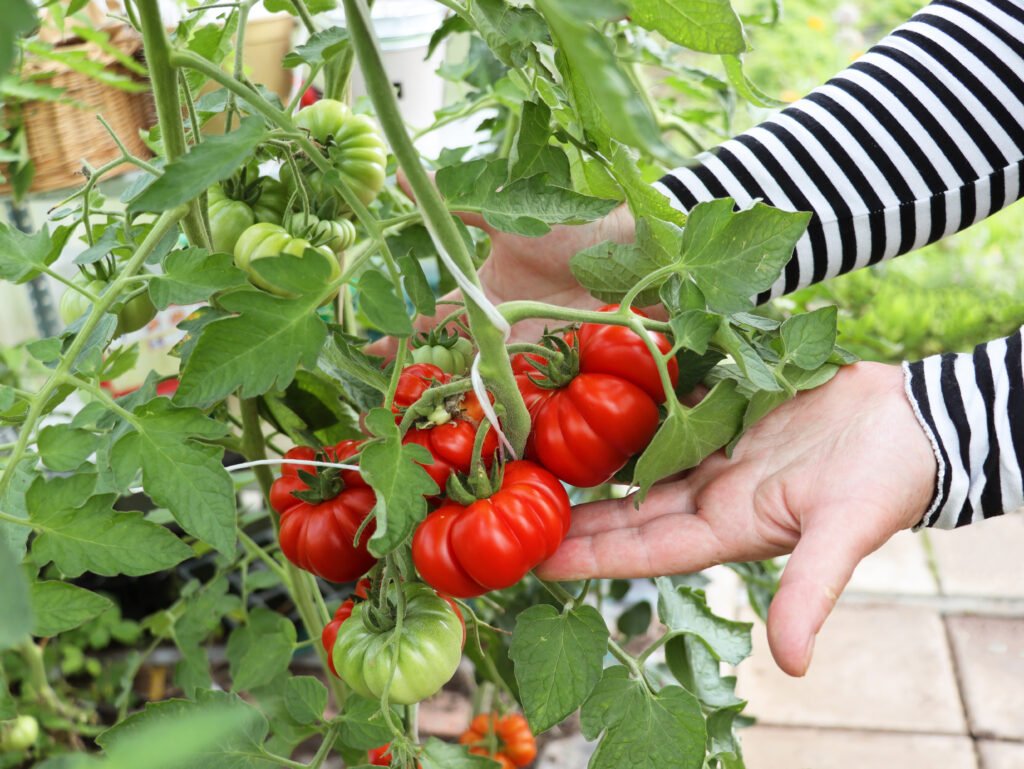
Why Commercial Tomato Production Is Moving Toward Greenhouse Farming
The development of greenhouse agriculture represents a major transformation in farming methods.
Traditional farming:
Agriculture adapts to nature.
Modern protected agriculture:
Agriculture uses technology to optimize the growing environment.
A greenhouse does not create a completely artificial world.
In fact, a well-designed greenhouse still relies on natural resources such as:
- sunlight;
- air circulation;
- natural temperature changes.
Its purpose is to provide protection and improve environmental stability.
A greenhouse does not replace nature.
Instead, it helps crops reduce the impact of extreme environmental changes.
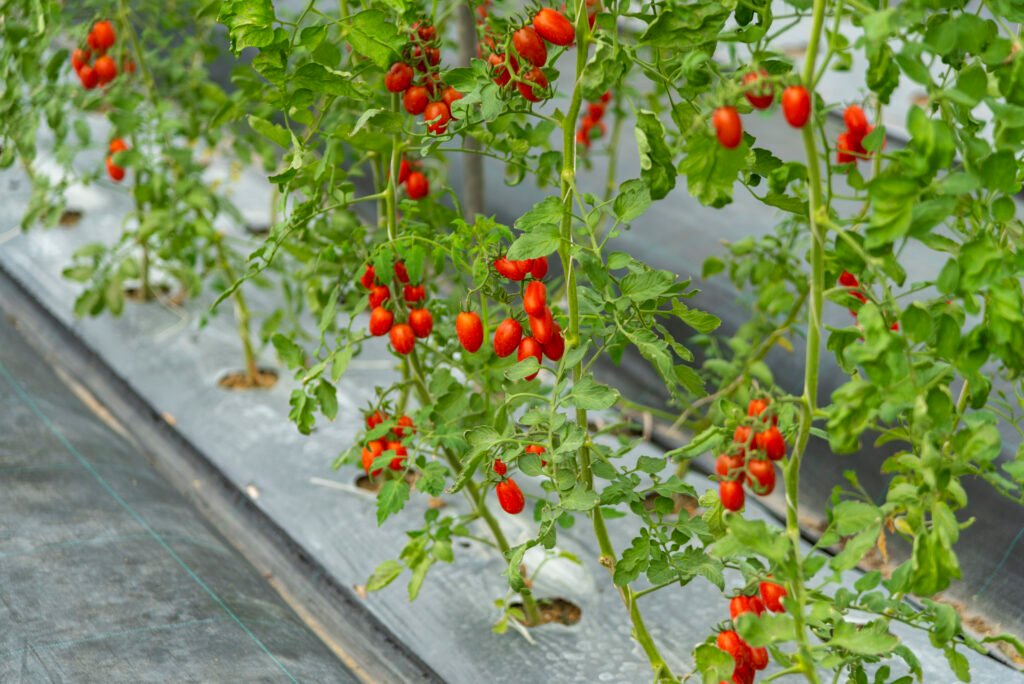
How Tomato Greenhouses Improve Commercial Production
Creating a More Stable Growing Environment
The most important goal of commercial agriculture is not achieving the highest yield in a single season.
It is achieving stable and predictable production over time.
For example, a tomato farm supplying supermarkets needs to plan:
- harvesting periods;
- product supply;
- quality consistency.
If production completely depends on weather conditions, long-term planning becomes extremely difficult.
A greenhouse helps reduce environmental fluctuations and makes agricultural production more manageable.
The Difference Between Greenhouse Farming and Traditional Farming
Many people believe that:
“A greenhouse is simply a structure covering plants.”
However, the biggest difference between greenhouse farming and outdoor farming is not the physical structure.
It is the change in agricultural management methods.
In outdoor farming:
Farmers mainly observe natural conditions and respond accordingly.
In greenhouse farming:
Farmers can design a more suitable growing environment and manage production based on crop requirements.
This allows agriculture to gradually move from experience-based farming toward more scientific and systematic production.
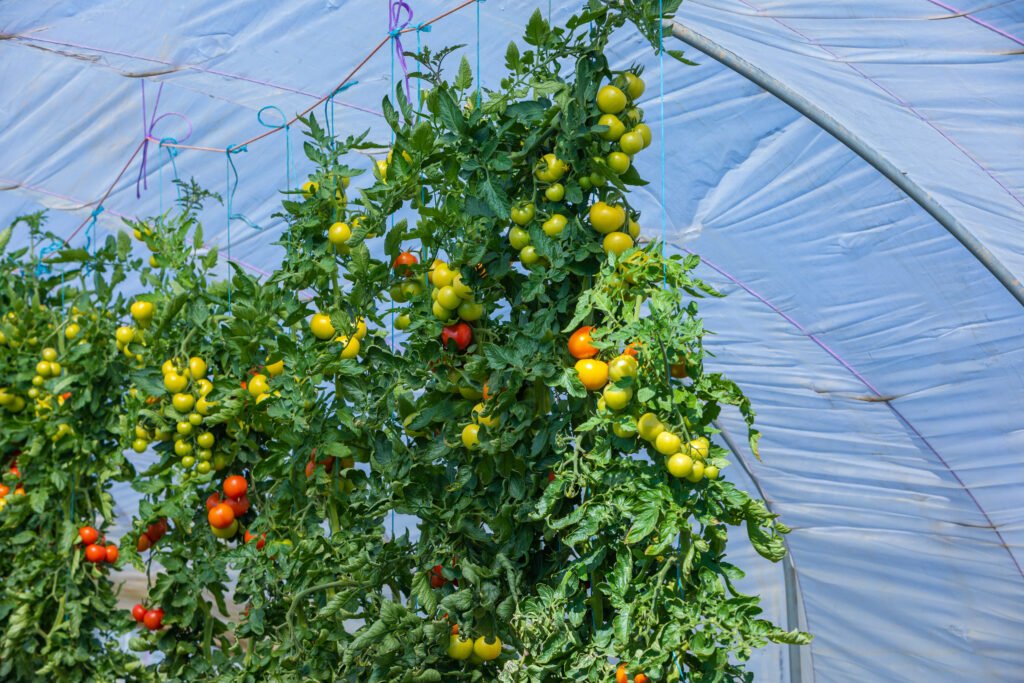
Tomato Greenhouses Focus Not Only on Yield, but Also on Quality
As agricultural markets continue to develop, consumer and buyer expectations are changing.
In the past, the main question was:
“Can farmers produce enough tomatoes?”
Today, the market increasingly focuses on:
- consistent quality;
- uniform appearance;
- stable supply.
For commercial growers, increasing yield is only the first step.
Real competitiveness comes from the ability to provide reliable, high-quality products over the long term.
Therefore, modern tomato greenhouse production focuses more on:
creating stable growing conditions rather than simply expanding planting areas.
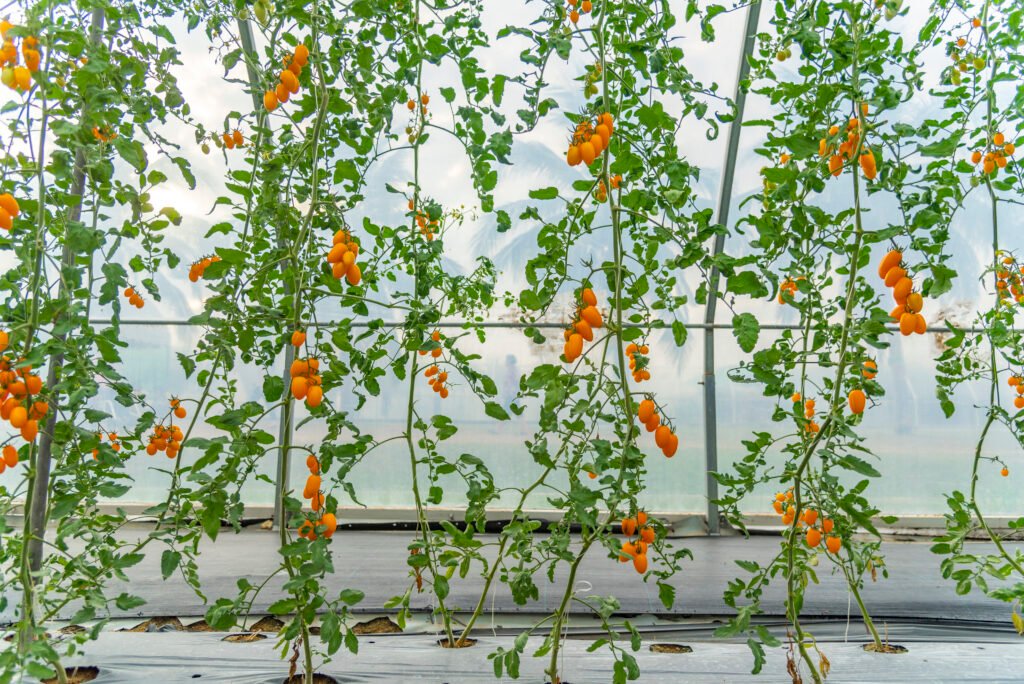
Why Different Regions Require Different Tomato Greenhouse Solutions
Agricultural conditions vary greatly around the world.
A greenhouse design that works well in one region may not be suitable for another.
Tropical and Hot Climate Regions
Examples include:
- parts of Africa;
- the Middle East;
- Southeast Asia.
The main challenge in these areas is often not insufficient sunlight, but excessive heat accumulation.
Therefore, greenhouse design needs to focus on:
- maintaining air movement;
- reducing heat stress;
- supporting healthy plant growth.
Regions with Heavy Rainfall
In humid and rainy areas, the main challenge is often not water availability, but water management.
Greenhouses help:
- reduce the direct impact of excessive rainfall;
- improve growing conditions;
- reduce humidity-related problems.
Cold Climate Regions
In colder areas, the biggest limitation is the shorter growing season.
Greenhouses create opportunities to:
- extend production periods;
- provide more suitable growing conditions;
- improve seasonal flexibility.
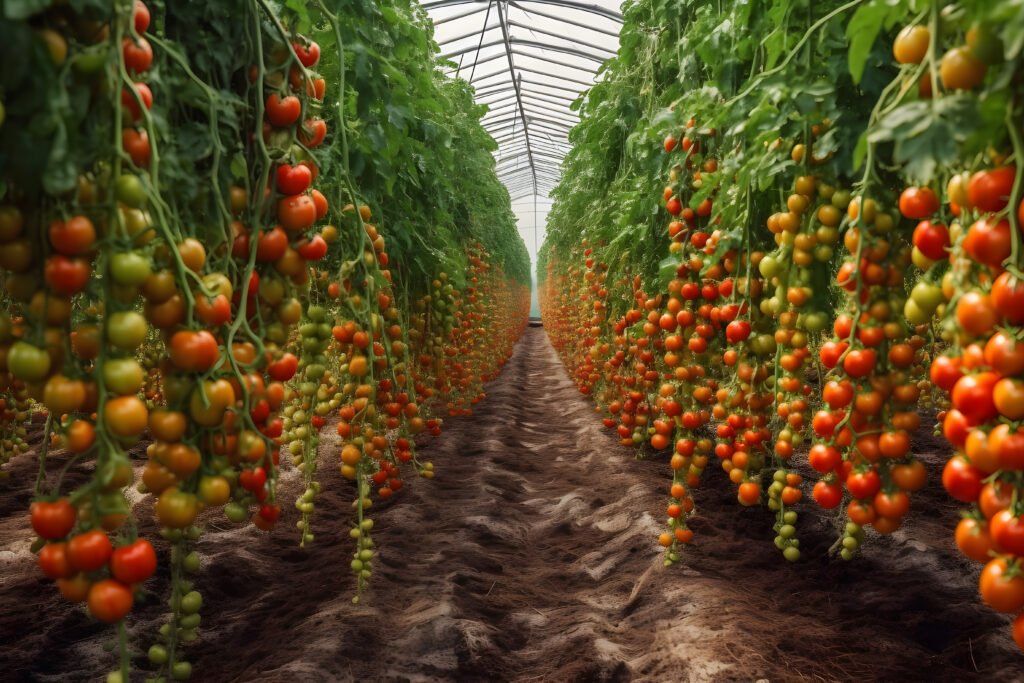
Why Tunnel Greenhouses Are Widely Used for Tomato Production
During the development of commercial agriculture, not every farm requires a highly complex greenhouse system.
For many agricultural projects, tunnel greenhouses provide a practical and flexible solution.
Tunnel greenhouses use a simple arched structure to create a protected growing environment.
Their value lies in providing:
- basic crop protection;
- improved growing stability;
- natural environmental conditions.
They are suitable for:
- small and medium-sized farms;
- developing agricultural projects;
- seasonal crop production.
Many agricultural businesses begin with tunnel greenhouses and gradually expand toward larger protected agriculture systems.
The Future Development of Commercial Tomato Greenhouses
The future challenge of agriculture is not simply increasing farmland area.
The key question is how to improve production efficiency while facing:
- limited land resources;
- climate uncertainty;
- increasing pressure on natural resources.
Therefore, greenhouse agriculture is continuing to evolve.
Future commercial tomato production will focus more on:
- efficient resource utilization;
- stable production systems;
- higher-quality agricultural products;
- sustainable farming practices.
Greenhouses are no longer simply protective structures.
They are becoming an important foundation of modern agricultural production systems.
Commercial tomato greenhouse solutions represent an important transformation in modern agriculture.
A greenhouse is not simply a building that replaces traditional farming.
Instead, it is a carefully designed production environment that helps agriculture adapt to future challenges.
For commercial growers, the value of a greenhouse is not only higher production potential, but also:
- reduced production risks;
- improved supply stability;
- long-term sustainable farming development.
As global agriculture continues to move toward modernization, commercial tomato greenhouses will play an increasingly important role in future food production.