
How Does a Greenhouse Work?
A greenhouse is much more than a simple transparent building that keeps plants warm. It is a carefully designed agricultural system that creates a controlled environment where plants can grow efficiently throughout the year.
From small backyard greenhouses to large commercial agricultural facilities covering thousands of square meters, the fundamental purpose remains the same: to provide plants with optimal growing conditions by controlling environmental factors that influence plant development.
But how exactly does a greenhouse work?
The answer involves a combination of physics, biology, and modern agricultural engineering.
A greenhouse works by allowing solar radiation to enter through transparent covering materials, converting that energy into heat, reducing heat loss, and controlling environmental conditions such as:
- Temperature
- Humidity
- Light
- Air movement
- Carbon dioxide concentration
- Water supply
- Nutrient availability
Unlike outdoor farming, where crops are exposed to unpredictable weather conditions, greenhouse cultivation allows growers to create a stable microclimate that supports higher productivity, better crop quality, and extended growing seasons.
Understanding how a greenhouse works is essential for anyone involved in modern agriculture, greenhouse construction, or controlled environment farming.
What Is a Greenhouse?
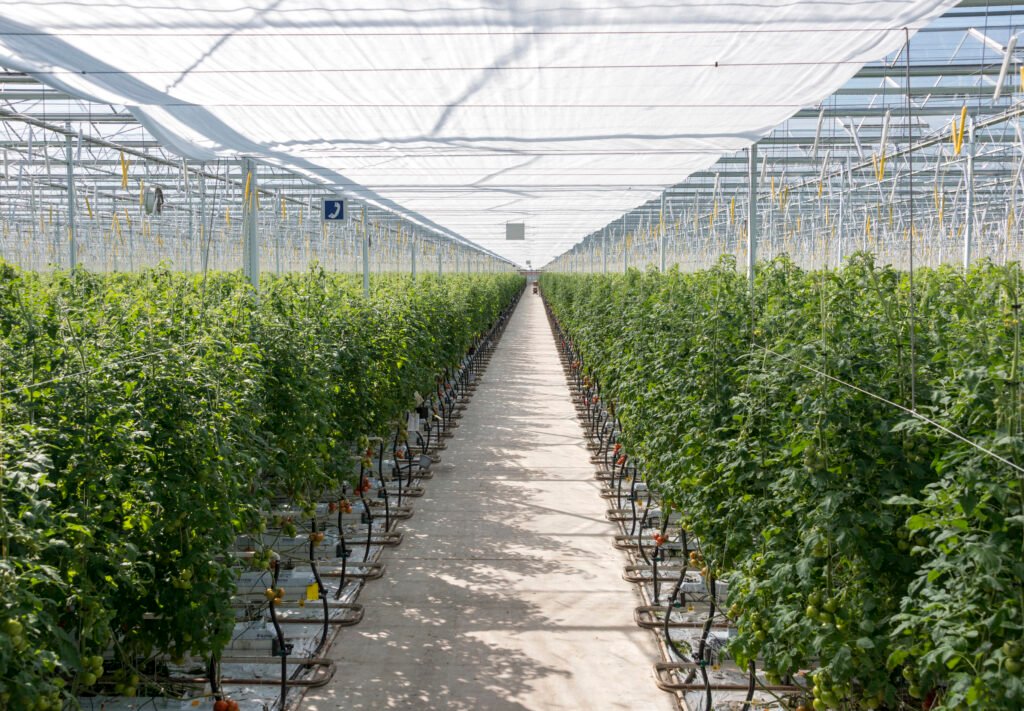
A greenhouse is an enclosed structure designed for growing plants under controlled environmental conditions.
The structure usually consists of:
- A supporting frame
- Transparent covering materials
- Ventilation systems
- Heating and cooling equipment
- Irrigation systems
- Climate monitoring technology
The covering allows sunlight to enter while reducing the loss of thermal energy.
Common greenhouse covering materials include:
| Material | Common Application |
|---|---|
| Glass | Commercial greenhouses, research facilities |
| Polycarbonate panels | Modern energy-efficient greenhouses |
| Polyethylene film | Large-scale vegetable production |
The main difference between greenhouse farming and traditional outdoor farming is environmental control.
In an open field, farmers must adapt to nature.
In a greenhouse, growers can modify the environment to meet plant requirements.
The Basic Working Principle of a Greenhouse
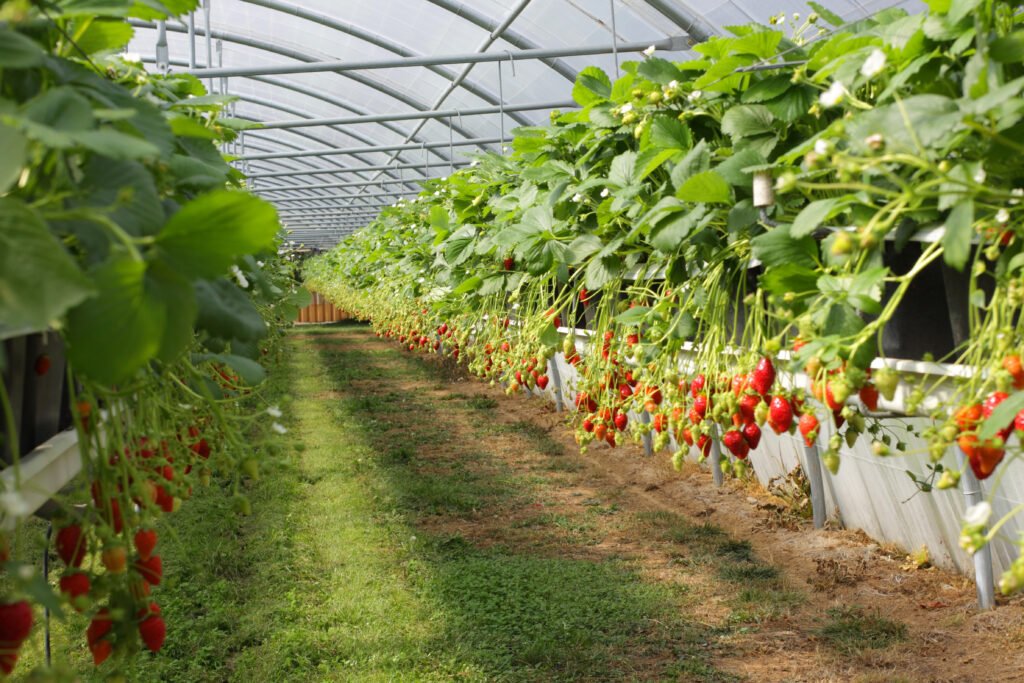
The operation of a greenhouse is based on a simple but powerful process:
1. Solar Energy Enters the Greenhouse
The sun provides the primary energy source for greenhouse operation.
Transparent materials such as glass or polycarbonate allow visible sunlight to pass through.
When sunlight enters the greenhouse, it reaches:
- Plant leaves
- Soil
- Growing containers
- Water
- Structural components
These surfaces absorb solar energy and become warmer.
2. Solar Radiation Becomes Heat
After absorbing sunlight, objects inside the greenhouse release thermal energy.
The warm surfaces emit infrared radiation, increasing the temperature of the surrounding air.
Because the greenhouse is enclosed, this heat remains inside longer compared with an open outdoor environment.
This creates a warmer internal climate.
3. Heat Loss Is Reduced
A greenhouse does not create heat by itself.
Instead, it works by reducing how quickly heat escapes.
Heat loss is reduced through:
Physical Barrier Protection
The greenhouse structure blocks wind, which normally removes warm air from plants.
Insulating Materials
Modern greenhouse coverings slow down heat transfer.
Thermal Storage
Soil, water tanks, and building materials absorb heat during the day and release it slowly at night.
The Science Behind the Greenhouse Effect
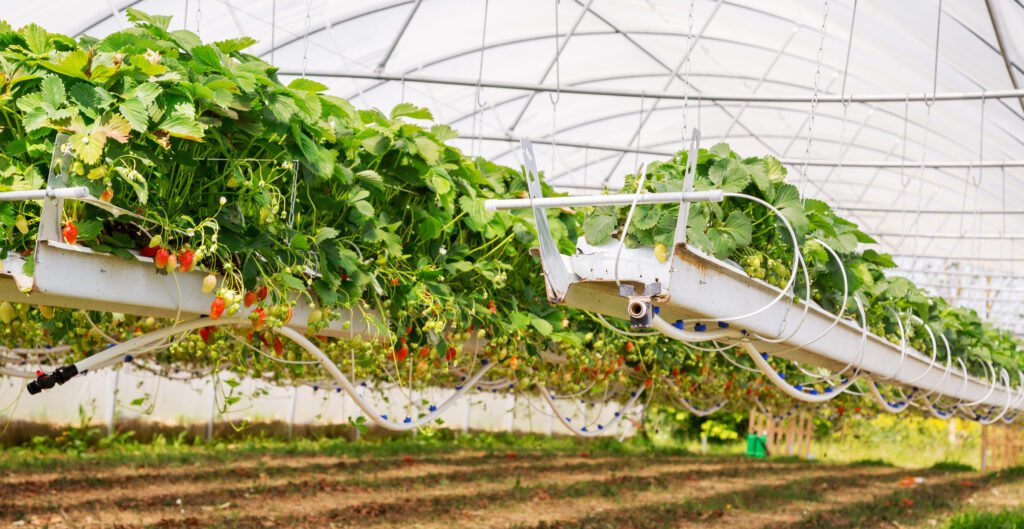
The greenhouse effect is based on energy movement.
During the daytime:
- Short-wave solar radiation enters the greenhouse.
- Plants and surfaces absorb solar energy.
- Absorbed energy becomes heat.
- Heat accumulates inside the structure.
At night:
- Plants and soil release stored heat.
- The covering reduces heat loss.
- The internal temperature remains higher than outside.
This natural process creates a more stable growing environment.
Why Is a Greenhouse Warmer Than Outside?
Many people believe glass itself creates heat.
However, glass does not generate energy.
The sun provides the energy, while the greenhouse structure helps retain it.
Several factors explain why greenhouse temperatures are usually higher.
Reduced Wind Exposure
Wind has a major cooling effect outdoors.
In open fields:
- Warm air is constantly removed.
- Plant surfaces lose heat quickly.
- Temperature changes rapidly.
Inside a greenhouse:
- Air movement is controlled.
- Heat remains around plants longer.
- Temperature becomes more stable.
Thermal Mass Effect
Certain materials absorb and store heat.
Examples include:
- Soil
- Concrete floors
- Water containers
- Stone surfaces
During sunny periods, these materials collect heat.
At night, they slowly release stored energy, reducing temperature drops.
This is especially important during cold seasons.
Insulation Performance
Modern greenhouse materials improve heat retention.
For example:
Double-layer Polyethylene Film
Two layers of plastic film create an air pocket that improves insulation.
Twin-wall Polycarbonate Panels
Multiple layers trap air and reduce heat transfer.
These technologies help commercial growers reduce heating costs.
The Role of Temperature in Greenhouse Production
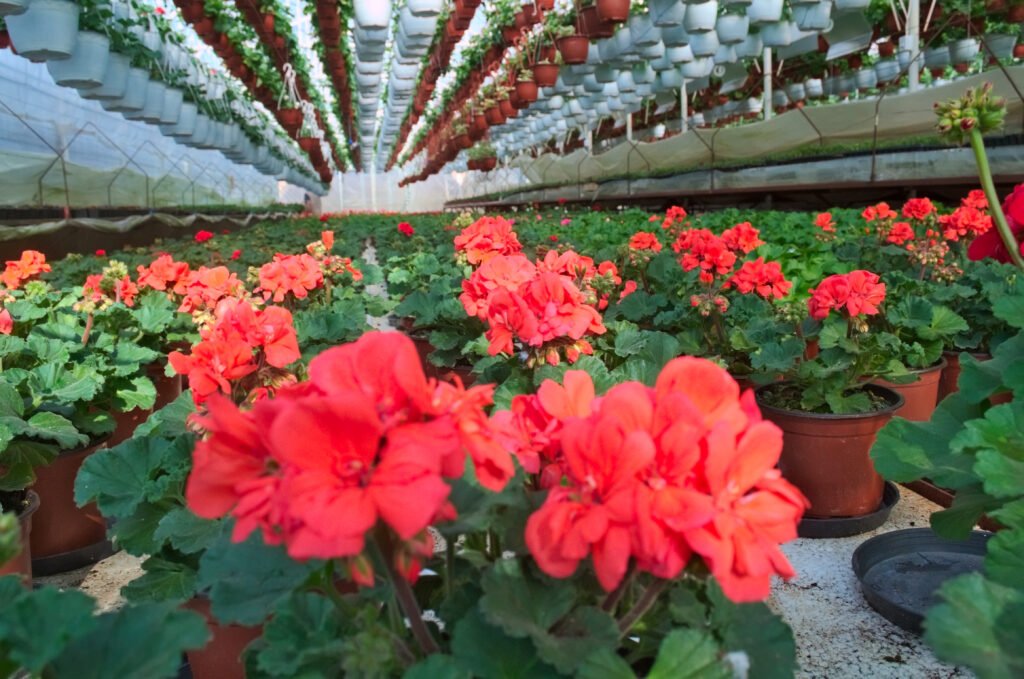
Temperature is one of the most important factors affecting plant growth.
Every crop has a preferred temperature range.
Maintaining proper temperature influences:
- Seed germination
- Root development
- Photosynthesis
- Flowering
- Fruit production
- Crop quality
Effects of Low Temperature
When temperatures drop too low:
- Plant metabolism slows
- Nutrient absorption decreases
- Growth becomes slower
- Flowers may fail to develop
Cold stress can permanently reduce crop yield.
Effects of High Temperature
Excessive heat can cause:
- Leaf damage
- Flower dropping
- Poor pollination
- Reduced fruit quality
- Increased water consumption
For this reason, greenhouse growers must carefully balance heating and cooling.
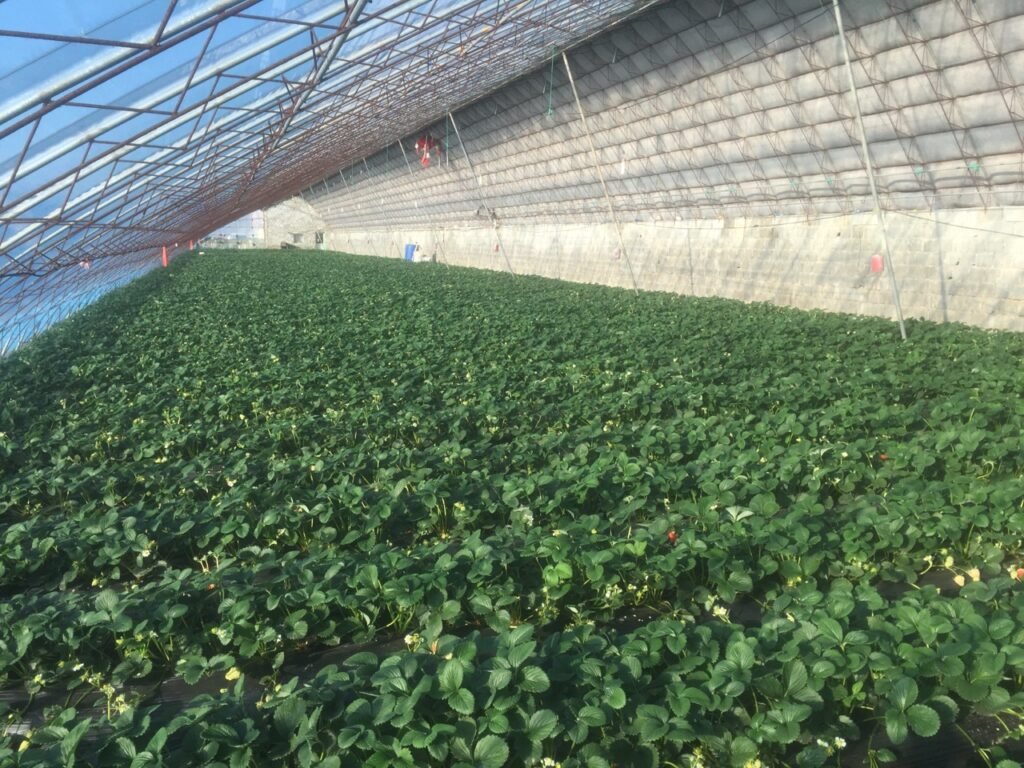
Ideal Greenhouse Temperatures for Common Crops
| Crop | Day Temperature | Night Temperature |
|---|---|---|
| Tomato | 22–26°C | 18–20°C |
| Cucumber | 24–28°C | 18–20°C |
| Pepper | 22–28°C | 18–21°C |
| Lettuce | 16–20°C | 10–15°C |
| Strawberry | 18–24°C | 12–16°C |
How Light Works Inside a Greenhouse
Light is the foundation of plant growth.
Through photosynthesis, plants convert:
- Light energy
- Carbon dioxide
- Water
into:
- Sugars
- Oxygen
- Plant biomass
A greenhouse optimizes light availability by controlling:
- Covering material
- Shade levels
- Supplemental lighting
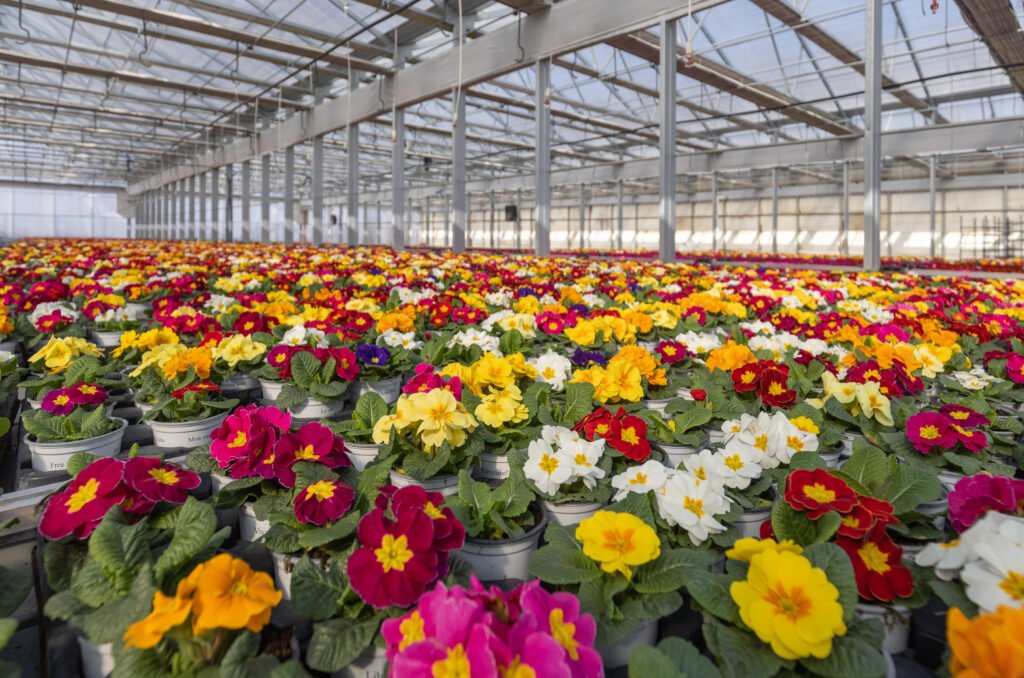
Light Transmission of Greenhouse Materials
Different materials allow different amounts of sunlight to enter.
Glass
Advantages:
- Excellent transparency
- Long lifespan
Polycarbonate
Advantages:
- Good light diffusion
- Better insulation
Plastic Film
Advantages:
- Affordable
- Suitable for large structures
Supplemental Lighting in Modern Greenhouses
In regions with short winter days, natural sunlight may not be enough.
Commercial growers often install LED grow lights.
Artificial lighting helps:
- Extend daylight hours
- Increase photosynthesis
- Improve crop consistency
- Support year-round production
Modern LED systems can also adjust light spectrum according to plant growth stages.