
Comment fonctionne une serre ?
Une serre est bien plus qu'un simple bâtiment transparent destiné à maintenir les plantes au chaud. Il s'agit d'un système agricole soigneusement conçu qui crée un environnement contrôlé permettant aux plantes de pousser efficacement tout au long de l'année.
Qu'il s'agisse de petites serres de jardin ou de grandes installations agricoles commerciales s'étendant sur des milliers de mètres carrés, l'objectif fondamental reste le même : afin d'offrir aux plantes des conditions de croissance optimales en contrôlant les facteurs environnementaux qui influencent leur développement.
Mais comment fonctionne exactement une serre ?
La réponse repose sur une combinaison de physique, de biologie et d'ingénierie agricole moderne.
Une serre fonctionne en laissant passer le rayonnement solaire à travers des matériaux de couverture transparents, en transformant cette énergie en chaleur, en limitant les pertes thermiques et en régulant les conditions environnementales telles que :
- Température
- Humidité
- Lumière
- Circulation de l'air
- Concentration en dioxyde de carbone
- Approvisionnement en eau
- Disponibilité des nutriments
Contrairement à l'agriculture en plein air, où les cultures sont exposées à des conditions météorologiques imprévisibles, la culture sous serre permet aux producteurs de créer un microclimat stable qui favorise une productivité accrue, une meilleure qualité des récoltes et des saisons de culture prolongées.
Comprendre le fonctionnement d'une serre est essentiel pour toute personne travaillant dans le domaine de l'agriculture moderne, de la construction de serres ou de l'agriculture en environnement contrôlé.
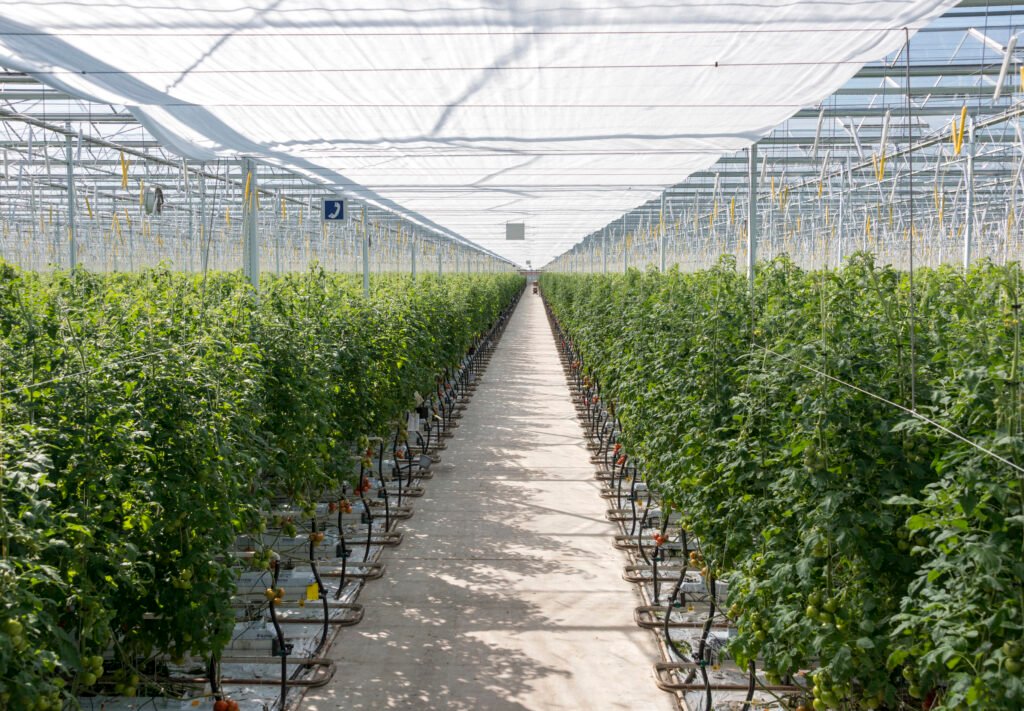
Qu'est-ce qu'une serre ?
Une serre est une structure fermée conçue pour cultiver des plantes dans des conditions environnementales contrôlées.
La structure se compose généralement de :
- Un châssis de support
- Matériaux de revêtement transparents
- Systèmes de ventilation
- Équipements de chauffage et de climatisation
- Systèmes d'irrigation
- Technologies de surveillance climatique
Ce revêtement laisse passer la lumière du soleil tout en réduisant les pertes d'énergie thermique.
Parmi les matériaux couramment utilisés pour le revêtement des serres, on trouve :
| Matériau | Formulaire de candidature commun |
|---|---|
| Verre | Serres commerciales, centres de recherche |
| Panneaux en polycarbonate | Serres modernes à haute efficacité énergétique |
| Film en polyéthylène | Production maraîchère à grande échelle |
La principale différence entre la culture sous serre et la culture traditionnelle en plein air réside dans contrôle environnemental.
Dans les champs, les agriculteurs doivent s'adapter à la nature.
Dans une serre, les producteurs peuvent adapter l'environnement aux besoins des plantes.
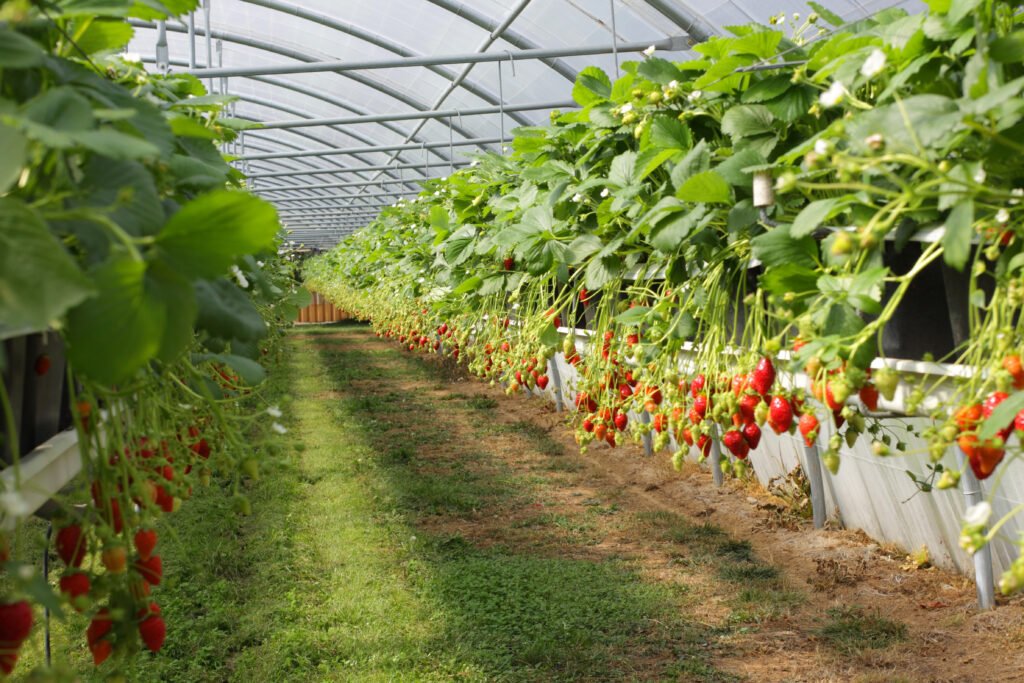
Le principe de fonctionnement de base d'une serre
Le fonctionnement d'une serre repose sur un processus simple mais efficace :
1. L'énergie solaire fait son entrée dans la serre
Le soleil constitue la principale source d'énergie pour l'exploitation des serres.
Les matériaux transparents, tels que le verre ou le polycarbonate, laissent passer la lumière du soleil.
Lorsque la lumière du soleil pénètre dans la serre, elle atteint :
- Feuilles de plantes
- Sol
- Jardinières
- Eau
- Éléments de structure
Ces surfaces absorbent l'énergie solaire et se réchauffent.
2. Le rayonnement solaire se transforme en chaleur
Après avoir absorbé la lumière du soleil, les objets présents à l'intérieur de la serre dégagent de l'énergie thermique.
Les surfaces chaudes émettent un rayonnement infrarouge, ce qui fait augmenter la température de l'air ambiant.
Comme la serre est fermée, cette chaleur reste à l'intérieur plus longtemps que dans un environnement extérieur à ciel ouvert.
Cela permet d'obtenir un climat intérieur plus chaud.
3. Réduction des pertes thermiques
Une serre ne produit pas de chaleur d'elle-même.
Au contraire, son principe de fonctionnement consiste à réduire la vitesse à laquelle la chaleur s'échappe.
Les pertes thermiques sont réduites grâce à :
Protection par barrière physique
La structure de la serre fait barrage au vent, qui, normalement, emporte l'air chaud au-delà des plantes.
Matériaux isolants
Les revêtements modernes des serres ralentissent le transfert de chaleur.
Stockage thermique
Le sol, les réservoirs d'eau et les matériaux de construction absorbent la chaleur pendant la journée et la restituent lentement pendant la nuit.
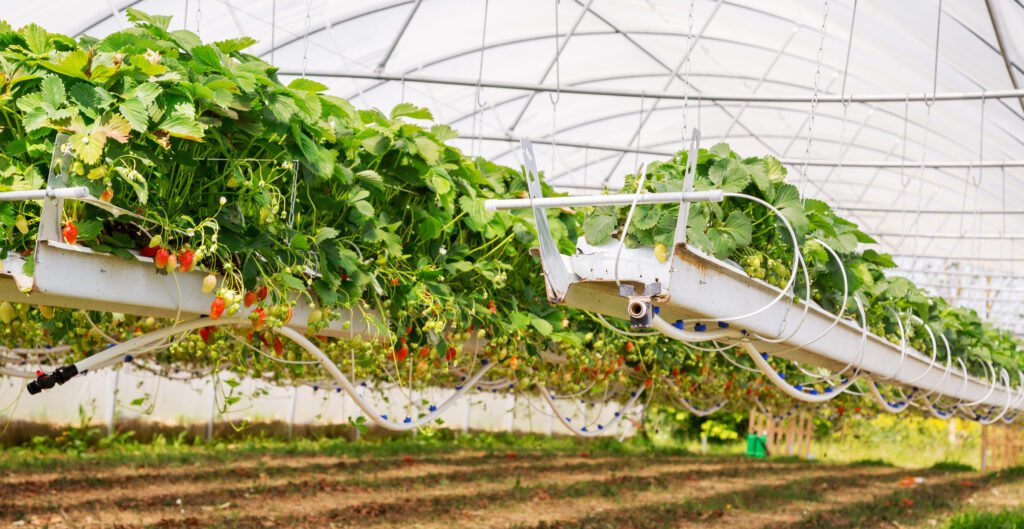
Les fondements scientifiques de l'effet de serre
L'effet de serre repose sur la circulation de l'énergie.
Pendant la journée :
- Le rayonnement solaire à ondes courtes pénètre dans la serre.
- Les plantes et les surfaces absorbent l'énergie solaire.
- L'énergie absorbée se transforme en chaleur.
- La chaleur s'accumule à l'intérieur de la structure.
Le soir :
- Les plantes et le sol libèrent la chaleur qu'ils ont emmagasinée.
- Le revêtement réduit les pertes de chaleur.
- La température intérieure reste plus élevée que celle de l'extérieur.
Ce processus naturel crée un environnement de croissance plus stable.
Pourquoi fait-il plus chaud dans une serre qu'à l'extérieur ?
Beaucoup de gens pensent que c'est le verre lui-même qui génère de la chaleur.
Cependant, le verre ne produit pas d'énergie.
Le soleil fournit l'énergie, tandis que la structure de la serre permet de la retenir.
Plusieurs facteurs expliquent pourquoi les températures à l'intérieur des serres sont généralement plus élevées.
Exposition réduite au vent
À l'extérieur, le vent a un effet rafraîchissant important.
En pleine campagne :
- L'air chaud est évacué en permanence.
- Les surfaces végétales perdent rapidement de la chaleur.
- La température change rapidement.
À l'intérieur d'une serre :
- La circulation de l'air est régulée.
- La chaleur reste plus longtemps autour des plantes.
- La température devient plus stable.
Effet de masse thermique
Certains matériaux absorbent et emmagasinent la chaleur.
En voici quelques exemples :
- Sol
- Sols en béton
- Récipients pour l'eau
- Surfaces en pierre
Lorsqu'il fait beau, ces matériaux emmagasinent la chaleur.
La nuit, ils libèrent progressivement l'énergie emmagasinée, ce qui atténue les baisses de température.
C'est particulièrement important pendant les saisons froides.
Performances d'isolation
Les matériaux utilisés aujourd’hui pour la construction des serres améliorent la rétention de la chaleur.
Par exemple :
Film en polyéthylène double couche
Deux couches de film plastique forment une poche d'air qui améliore l'isolation.
Panneaux en polycarbonate à double paroi
Les différentes couches retiennent l'air et limitent le transfert de chaleur.
Ces technologies permettent aux producteurs professionnels de réduire leurs frais de chauffage.
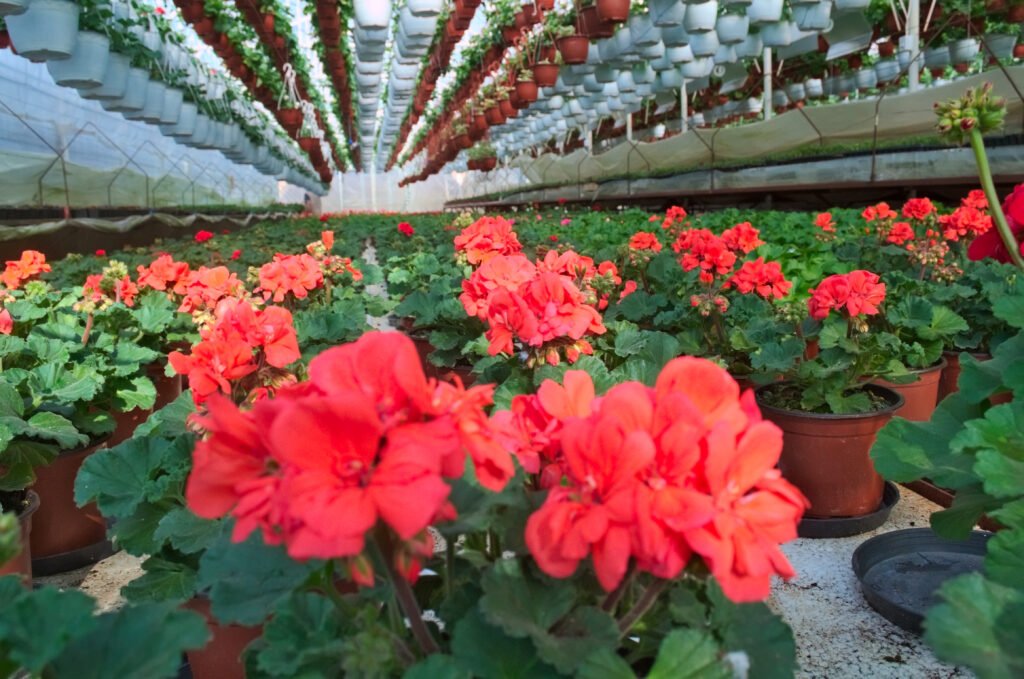
Le rôle de la température dans la production sous serre
La température est l'un des facteurs les plus importants qui influencent la croissance des plantes.
Chaque culture a une plage de températures optimale.
Le maintien d'une température adéquate a une incidence sur :
- Germination des graines
- Développement des racines
- Photosynthèse
- Floraison
- Production fruitière
- Qualité des récoltes
Effets des basses températures
Lorsque les températures baissent trop :
- Le métabolisme des plantes ralentit
- L'absorption des nutriments diminue
- La croissance ralentit
- Il se peut que les fleurs ne se développent pas
Le stress dû au froid peut réduire de manière irréversible le rendement des cultures.
Effets des températures élevées
Une chaleur excessive peut entraîner :
- Dégâts sur les feuilles
- Chute des fleurs
- Mauvaise pollinisation
- Baisse de la qualité des fruits
- Augmentation de la consommation d'eau
C'est pourquoi les producteurs sous serre doivent trouver le juste équilibre entre chauffage et refroidissement.
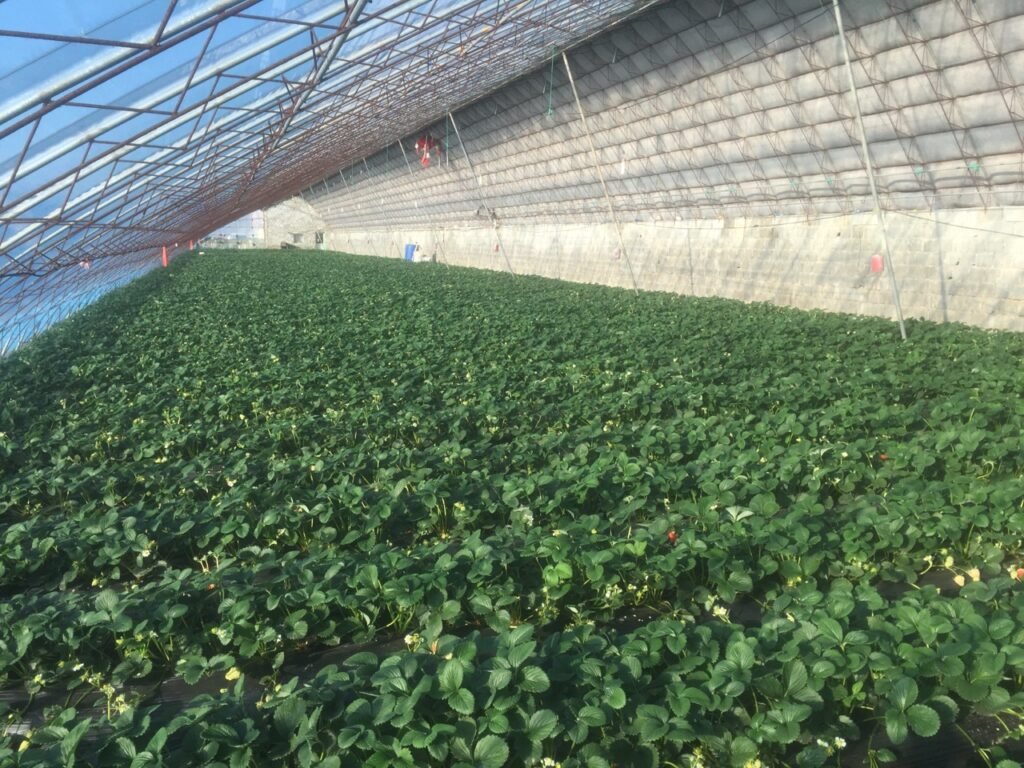
Températures idéales en serre pour les cultures courantes
| Recadrer | Température diurne | Température nocturne |
|---|---|---|
| Tomate | 22–26 °C | 18 à 20 °C |
| Concombre | 24–28 °C | 18 à 20 °C |
| Poivre | 22–28 °C | 18 à 21 °C |
| Laitue | 16 à 20 °C | 10 à 15 °C |
| Fraise | 18 à 24 °C | 12 à 16 °C |
Comment fonctionne la lumière à l'intérieur d'une serre
La lumière est essentielle à la croissance des plantes.
Grâce à la photosynthèse, les plantes transforment :
- Énergie lumineuse
- Dioxyde de carbone
- Eau
en :
- Sucres
- Oxygène
- Biomasse végétale
Une serre optimise l'apport en lumière en régulant :
- Matériau de couverture
- Niveaux d'ombrage
- Éclairage d'appoint
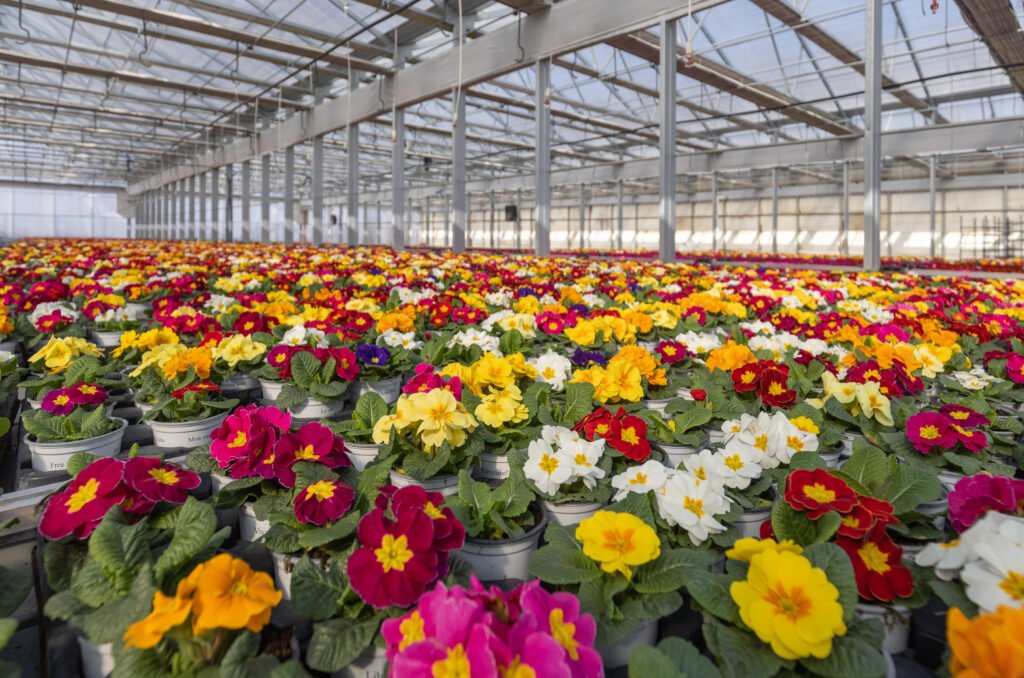
Transmission lumineuse des matériaux utilisés pour les serres
Selon les matériaux, la quantité de lumière solaire qui pénètre varie.
Verre
Avantages :
- Excellente transparence
- Longue durée de vie
Polycarbonate
Avantages :
- Bonne diffusion de la lumière
- Une meilleure isolation
Film plastique
Avantages :
- Abordable
- Convient aux grandes structures
Éclairage d'appoint dans les serres modernes
Dans les régions où les journées d'hiver sont courtes, la lumière naturelle du soleil peut ne pas suffire.
Les producteurs professionnels installent souvent des lampes de culture à LED.
L'éclairage artificiel permet de :
- Prolonger la durée de la lumière du jour
- Augmenter la photosynthèse
- Améliorer l'uniformité des cultures
- Favoriser une production tout au long de l'année
Les systèmes LED modernes permettent également d'adapter le spectre lumineux en fonction des stades de croissance des plantes.