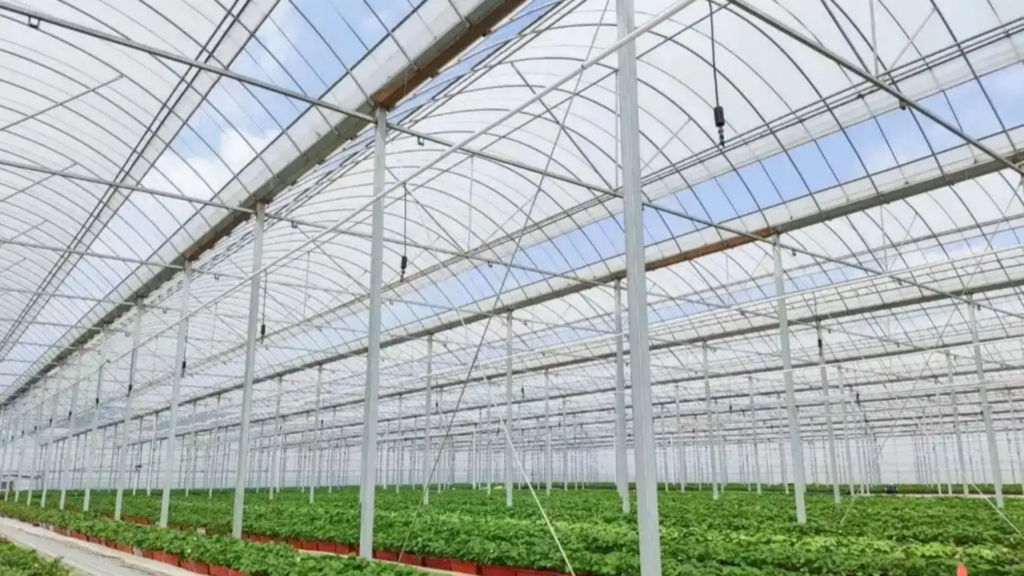
L'agriculture sous serre constitue un élément essentiel de l'agriculture moderne, car elle offre un environnement contrôlé aux cultures et permet une production tout au long de l'année ainsi qu'une gestion efficace. Parmi les différents types de serres, serres filmées à travées multiples sont devenues un choix idéal pour la culture des fruits et légumes grâce à leur structure modulable, leur faible coût et leur aptitude à la culture à grande échelle.
Présentation de Serres à film à travées multiples
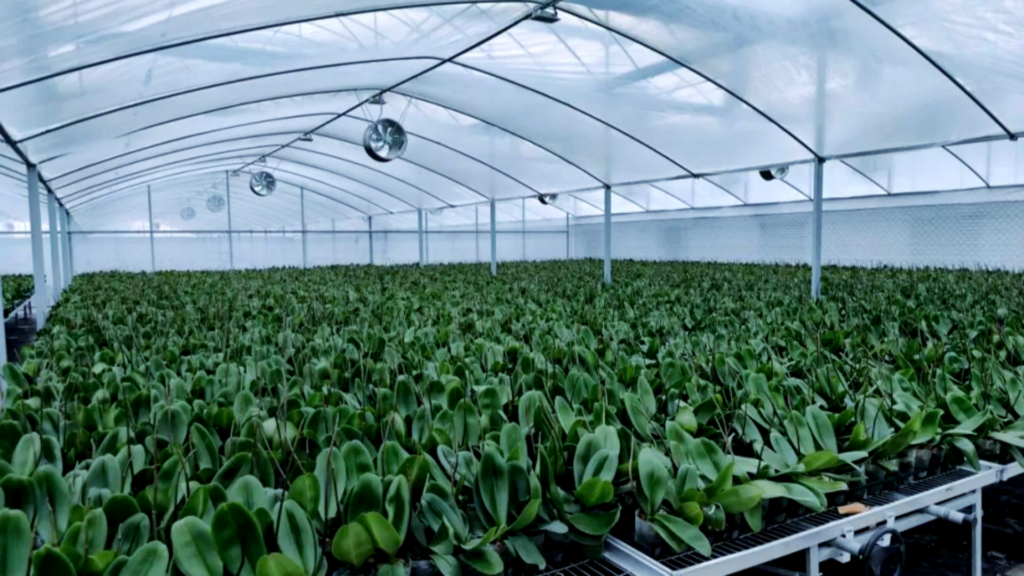
Une serre à film à travées multiples se compose de plusieurs structures en film en forme d'arc continues, soutenues par une charpente en acier ou en aluminium. Ses principales caractéristiques sont les suivantes :
- Conception à grande portée: Peut couvrir des dizaines, voire des centaines de mètres d'espace continu, ce qui le rend idéal pour la culture à grande échelle.
- Avantage en termes de coûts: Par rapport aux serres en verre, les matériaux en film plastique sont moins chers et l'investissement initial est moindre.
- Environnement contrôlé: Grâce à des systèmes d'ombrage, de ventilation, de chauffage et d'irrigation, il est possible de réguler avec précision la température, l'humidité et la luminosité.
- Construction flexible: La largeur et la longueur peuvent être adaptées en fonction de la forme et de la taille du terrain, ce qui facilite l'extension.
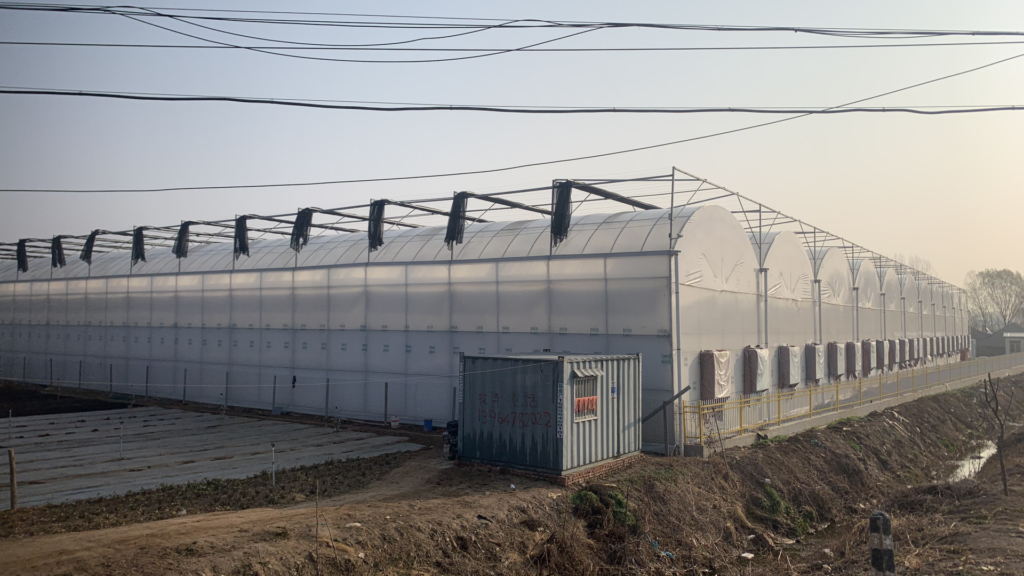
Légumes adaptés à Serres à film à travées multiples
Les serres à plusieurs travées recouvertes d'un film plastique offrent une température et une humidité stables, ce qui les rend idéales pour les légumes-feuilles et les légumes-fruits à forte valeur ajoutée, notamment :
- Légumes-feuilles: Laitue, épinards, roquette, chou frisé, etc., qui ont des cycles de croissance courts et des exigences environnementales élevées.
- Légumes-fruits: Les tomates, les concombres, les poivrons et les aubergines, qui ont besoin d'une lumière suffisante et d'une température stable.
- Légumes-racines: Carottes, radis, betteraves, qui peuvent être cultivés plus tôt ou plus tard afin de prolonger l'approvisionnement du marché.
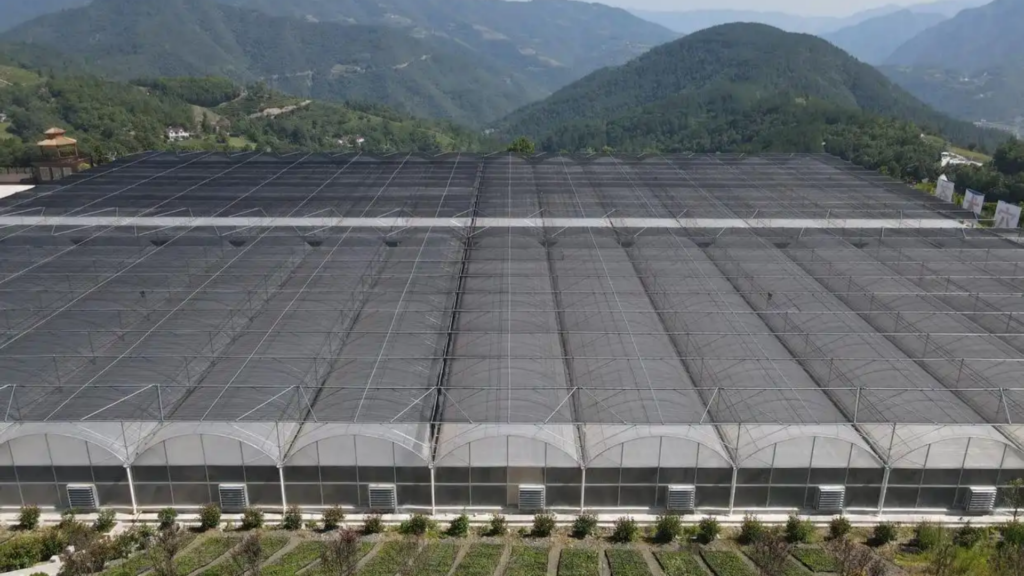
Fruits adaptés à Serres à film à travées multiples
Les serres à film à plusieurs travées conviennent également à la culture efficace de fruits tropicaux et subtropicaux :
- Fraises: La culture sous serre permet de prolonger la période de récolte et d'améliorer la qualité des fruits.
- Baies: comme les framboises et les myrtilles, en évitant les ravageurs, les maladies et les conditions météorologiques extrêmes.
- Semis et fruits en pot: Les plants d'agrumes et d'autres fruits peuvent être cultivés en serre afin d'améliorer leur taux de survie et d'accélérer leur croissance.
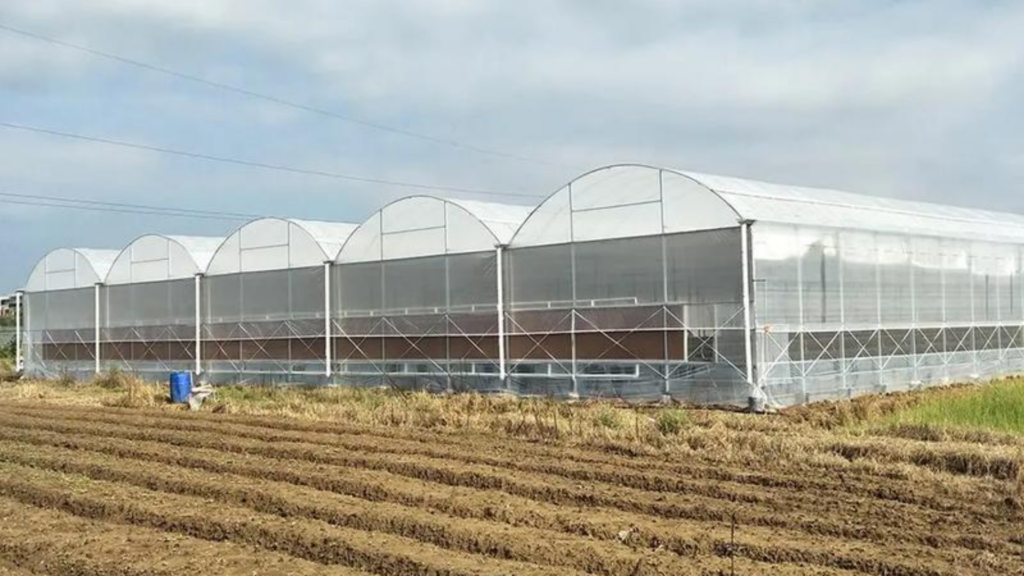
Recommandations en matière de conception structurelle pour Serres à film à travées multiples
La conception d'une serre à film à plusieurs travées doit tenir compte du type de culture, du climat local et des exigences de gestion, en respectant les points clés suivants :
- Portée et hauteur d'avant-toit
- Les portées typiques varient entre 6 et 12 mètres, les structures à portées multiples pouvant être adaptées en fonction de la largeur du terrain.
- Une hauteur d'avant-toit adéquate (2,5 à 4 mètres) favorise la circulation de l'air et réduit le stress thermique subi par les cultures.
- Structure porteuse
- Des tubes en acier ou en acier galvanisé sont utilisés pour la charpente porteuse principale, garantissant ainsi durabilité et résistance à la corrosion.
- L'espacement entre les poutres et les arcs doit tenir compte de l'épaisseur de la couche de neige et de la charge de neige ; il est généralement de 2 à 3 mètres.
- Film de protection
- On utilise généralement un film en polyéthylène (PE) très transparent, avec, en option, des films à double couche pour une meilleure isolation.
- Veillez à ce que la bâche soit tendue de manière uniforme afin d'assurer une bonne résistance au vent et un écoulement adéquat de l'eau de pluie.
- Systèmes de ventilation et d'ombrage
- Installez des évents de toit et des rideaux enroulables sur les parois latérales pour assurer une ventilation naturelle ou mécanique.
- Les filets d'ombrage permettent de réguler l'intensité lumineuse afin de protéger les légumes à feuilles et les légumes-fruits des rayons du soleil.
- Irrigation et fertilisation
- Configurez des systèmes d'irrigation goutte à goutte ou de fertigation afin d'assurer un apport uniforme en eau et en nutriments, ce qui permet d'améliorer le rendement et la qualité.
- Conception modulaire
- Les serres à plusieurs travées peuvent être construites par sections afin de faciliter leur agrandissement et leur entretien.
- La conception modulaire facilite l'installation de systèmes de surveillance intelligents destinés au contrôle automatisé de l'environnement.
Avantages de la culture
Grâce à une conception adéquate et à une gestion moderne, les serres à film à travées multiples peuvent offrir :
- Production tout au long de l'année: Un approvisionnement régulier en fruits et légumes, même en hiver.
- Rendement et efficacité élevés: Une diminution de la fréquence des ravageurs et des maladies, un rendement plus élevé par unité de surface et une meilleure qualité.
- Économies d'eau et de nutriments: Les systèmes d'irrigation modernes permettent une meilleure utilisation des ressources.
- Atténuation des risques: Protection contre le vent, la pluie, le gel et d'autres aléas naturels, offrant ainsi un environnement sûr aux cultures.