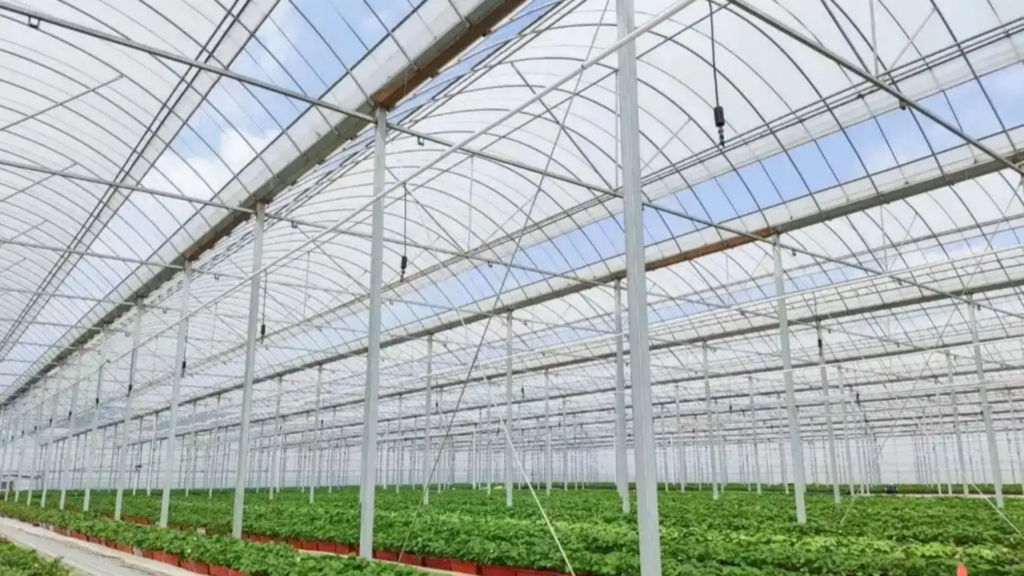
A agricultura em estufa é uma componente importante da agricultura moderna, proporcionando um ambiente controlável para as culturas e permitindo a produção durante todo o ano e uma gestão eficiente. Entre os vários tipos de estufas, estufas de película multi-span tornaram-se uma escolha ideal para o cultivo de vegetais e frutas devido à sua estrutura flexível, baixo custo e adequação à plantação em grande escala.
Visão geral de Estufas de película multi-span
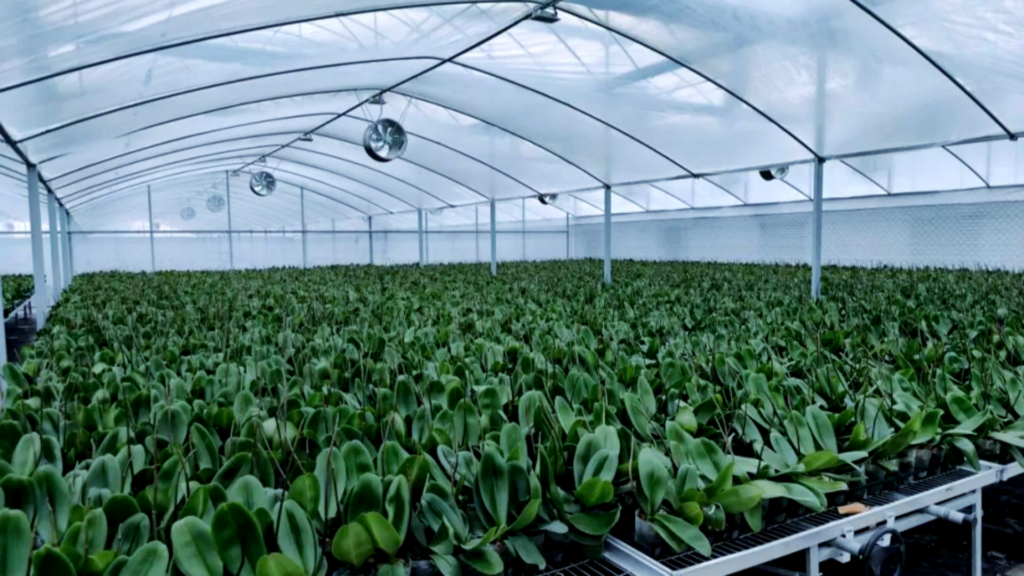
Uma estufa de película com vários vãos é constituída por várias estruturas de película contínuas em forma de arco, suportadas por uma estrutura de aço ou alumínio. As suas principais caraterísticas incluem:
- Conceção de grande envergadura: Pode cobrir dezenas ou mesmo centenas de metros de espaço contínuo, adequado para o cultivo de culturas em grande escala.
- Vantagem em termos de custos: Em comparação com as estufas de vidro, os materiais das películas são mais baratos e o investimento inicial é menor.
- Ambiente controlável: Com sistemas de sombreamento, ventilação, aquecimento e irrigação, a temperatura, a humidade e a luz podem ser reguladas com precisão.
- Construção flexível: O vão e o comprimento podem ser ajustados de acordo com a forma e o tamanho do terreno, permitindo uma fácil expansão.
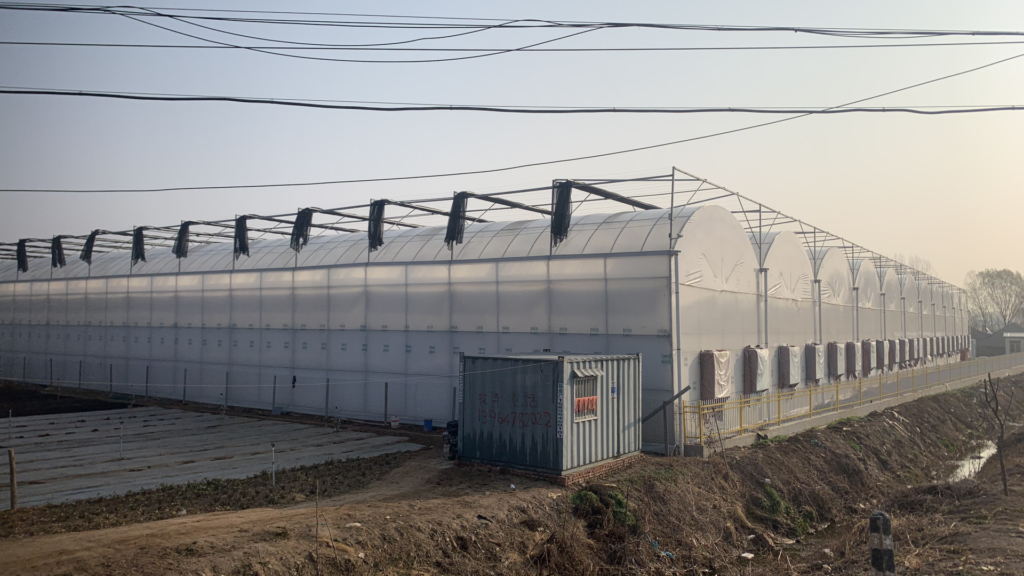
Legumes Adequado para Estufas de película multi-span
As estufas de película de vários vãos proporcionam uma temperatura e humidade estáveis, tornando-as ideais para vegetais de folha e frutos de elevado valor, incluindo
- Vegetais de folha: Alface, espinafres, rúcula, couve, etc., com ciclos de crescimento curtos e elevadas exigências ambientais.
- Legumes de fruto: Tomates, pepinos, pimentos, beringelas, que necessitam de luz suficiente e de uma temperatura estável.
- Vegetais de raiz: Cenouras, rabanetes, beterrabas, que podem ser cultivadas mais cedo ou mais tarde para alargar a oferta no mercado.
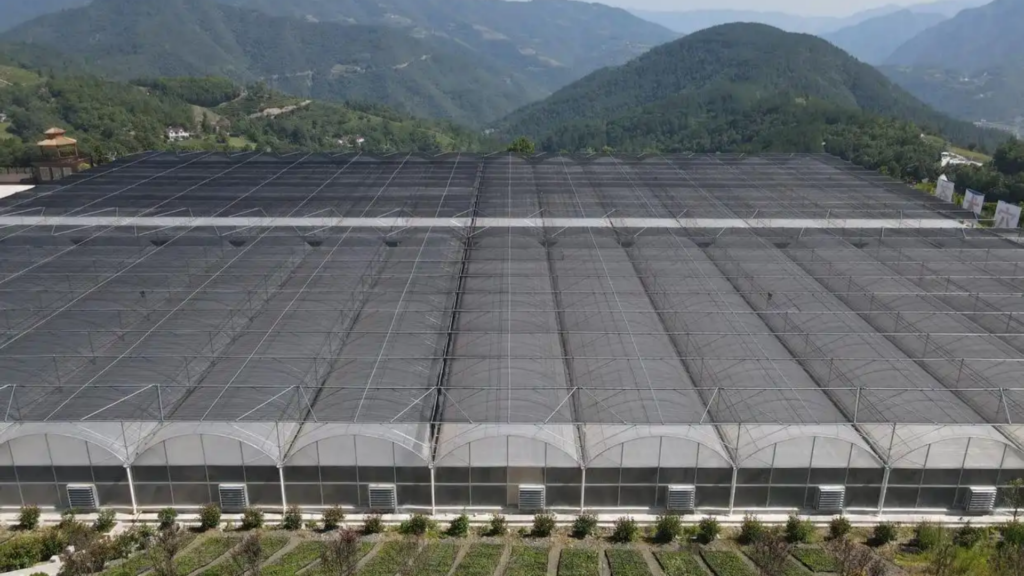
Frutos Adequados para Estufas de película multi-span
As estufas de película multi-span são também adequadas para o cultivo eficiente de frutos tropicais e subtropicais:
- Morangos: O ambiente de estufa pode prolongar o período de colheita e melhorar a qualidade dos frutos.
- Bagas: Como as framboesas e os mirtilos, evitando pragas, doenças e condições climatéricas extremas.
- Plântulas e frutos em vasos: As plântulas de citrinos e de outras frutas podem ser cultivadas em estufas para melhorar as taxas de sobrevivência e acelerar o crescimento.
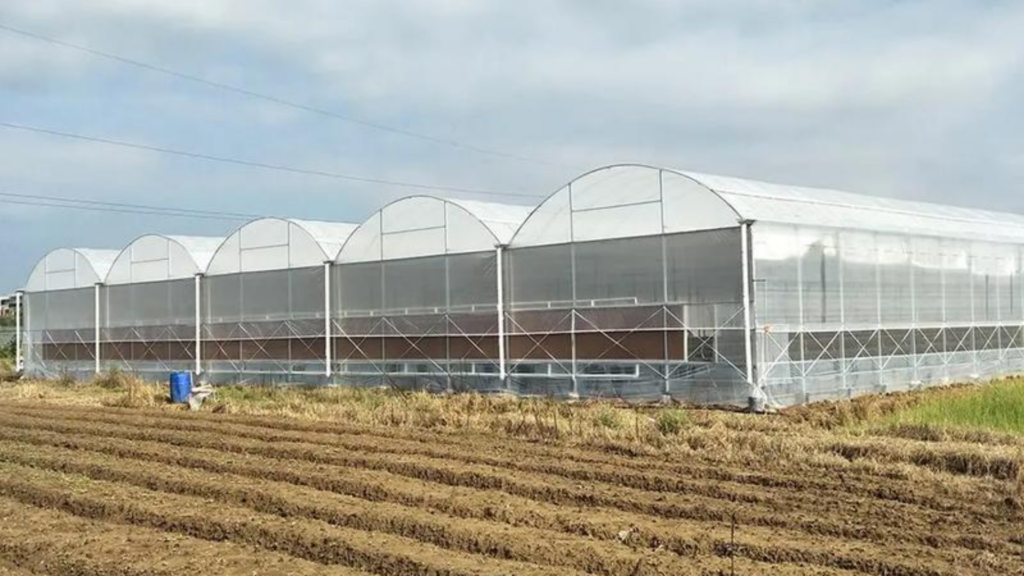
Recomendações de conceção estrutural para Estufas de película multi-span
A conceção de uma estufa de película com vários vãos deve ter em conta o tipo de cultura, o clima local e os requisitos de gestão, com os seguintes pontos-chave
- Vão e altura do beiral
- Os vãos típicos variam entre 6 e 12 metros, com estruturas de vários vãos ajustáveis de acordo com a largura do terreno.
- A altura adequada do beiral (2,5-4 metros) ajuda a circulação do ar e reduz o stress térmico nas culturas.
- Estrutura de apoio
- Os tubos de aço ou de aço galvanizado são utilizados como estrutura principal de suporte de carga, proporcionando durabilidade e resistência à corrosão.
- O espaçamento entre as vigas e os arcos deve ter em conta a espessura da película e a carga de neve, normalmente 2-3 metros.
- Cobertura de película
- A película de polietileno (PE) de alta transparência é normalmente utilizada, com películas opcionais de dupla camada para um melhor isolamento.
- Assegure-se de que a película está uniformemente tensionada para resistência ao vento e drenagem adequada da água da chuva.
- Sistemas de ventilação e de sombreamento
- Instalar aberturas de ventilação no teto e cortinas de enrolar nas paredes laterais para ventilação natural ou mecânica.
- As redes de sombreamento podem ajustar a intensidade da luz para proteger os vegetais de folha e de fruto da luz solar intensa.
- Irrigação e fertilização
- Configurar sistemas de irrigação por gotejamento ou fertirrigação para garantir um fornecimento uniforme de água e nutrientes, melhorando o rendimento e a qualidade.
- Conceção modular
- As estufas com vários vãos podem ser construídas em secções para facilitar a expansão e a manutenção.
- O design modular facilita a instalação de sistemas de monitorização inteligentes para controlo ambiental automatizado.
Vantagens do cultivo
Com uma conceção adequada e uma gestão moderna, as estufas de película com vários vãos podem ser alcançadas:
- Produção durante todo o ano: Fornecimento estável de legumes e frutas mesmo no inverno.
- Elevado rendimento e eficiência: Redução da incidência de pragas e doenças, maior rendimento por unidade de área e melhor qualidade.
- Poupança de água e de nutrientes: Os sistemas de irrigação modernos melhoram a utilização dos recursos.
- Atenuação dos riscos: Proteção contra o vento, a chuva, a geada e outros riscos naturais, proporcionando um ambiente seguro para as culturas.