
When people choose a greenhouse, they often focus first on the diameter of the steel tube, the wall thickness, or the thickness of the galvanized coating. Much less attention is usually paid to the actual grade of steel used to manufacture the tube.
For a commercial greenhouse designed for long-term use, however, tube size is only one part of structural performance. The yield strength, tensile performance, formability, weldability, and the role of the steel within the overall structural system can all influence how much wind, snow, equipment load, and crop load the greenhouse can safely withstand.
In greenhouse manufacturing in China, Q195, Q235, and Q355 are among the most commonly used structural steel grades. They should not simply be viewed as “low-grade, medium-grade, and high-grade” materials. Instead, they are different strength classes intended for different structural roles.
To understand the difference, it is useful to begin with the concept of yield strength.
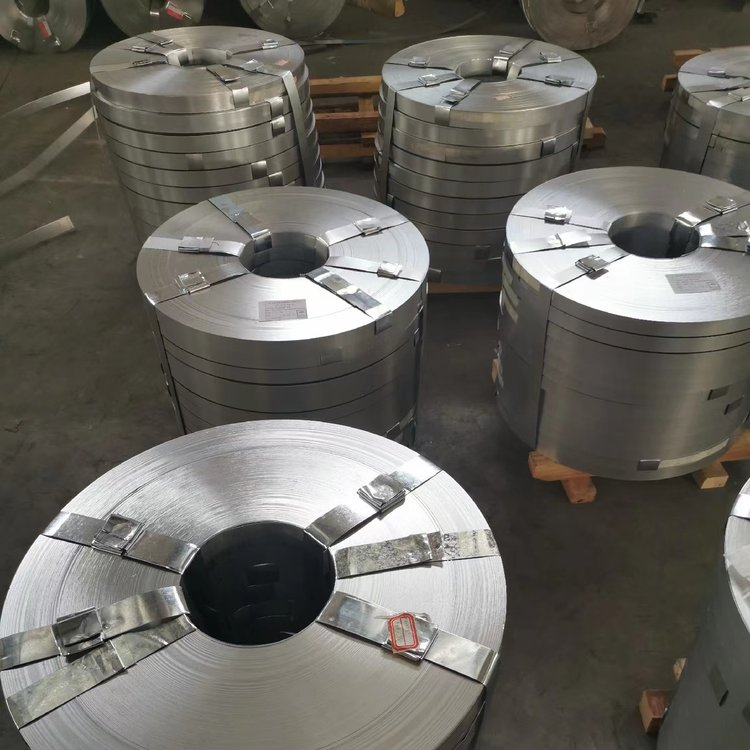
What Do Q195, Q235, and Q355 Actually Mean?
When steel is subjected to an external force, it first undergoes elastic deformation.
If the load is relatively small, the steel can largely return to its original shape once the force is removed. However, once the stress reaches a certain critical level, the steel begins to undergo permanent plastic deformation.
That critical point is associated with yield strength.
In simple terms, yield strength represents:the stress level a steel material can withstand before permanent deformation begins.
In the Chinese grades Q195, Q235, and Q355, the letter “Q” refers to yield strength, while the number indicates the nominal strength level in MPa.
In general terms:
Q195 is a lower-strength structural steel, Q235 is a medium-strength and widely used structural steel, and Q355 is a higher-strength structural steel.
However, it would be misleading to conclude that Q355 is always “better” than Q235.
The safety of a greenhouse is determined by much more than material strength alone.
Greenhouse Structures Do Not Usually Fail Simply Because the Steel Is “Too Weak”
A greenhouse has one very important structural characteristic:many of its members are long, slender, and made from relatively thin-walled steel tubes.
For this type of structure, one of the major risks is not necessarily the steel being pulled apart or crushed. Instead, structural instability can become the controlling issue.
For example, a tall greenhouse column may bend or buckle under lateral wind load even if the steel itself has a high yield strength, especially if the cross-section is too small, the wall is too thin, or the spacing between columns is too large.
This is why a thin Q355 tube is not automatically safer than a properly designed Q235 tube with a larger and more suitable cross-section.
Material strength tells us how much stress the steel itself can withstand. A greenhouse structure must also answer other questions:
- Will the member bend excessively?
- Will it buckle?
- Will the connection fail?
- Will the foundation resist uplift?
- Will the entire greenhouse remain stable as a three-dimensional system?
From an engineering perspective, steel grade is only one part of the design.
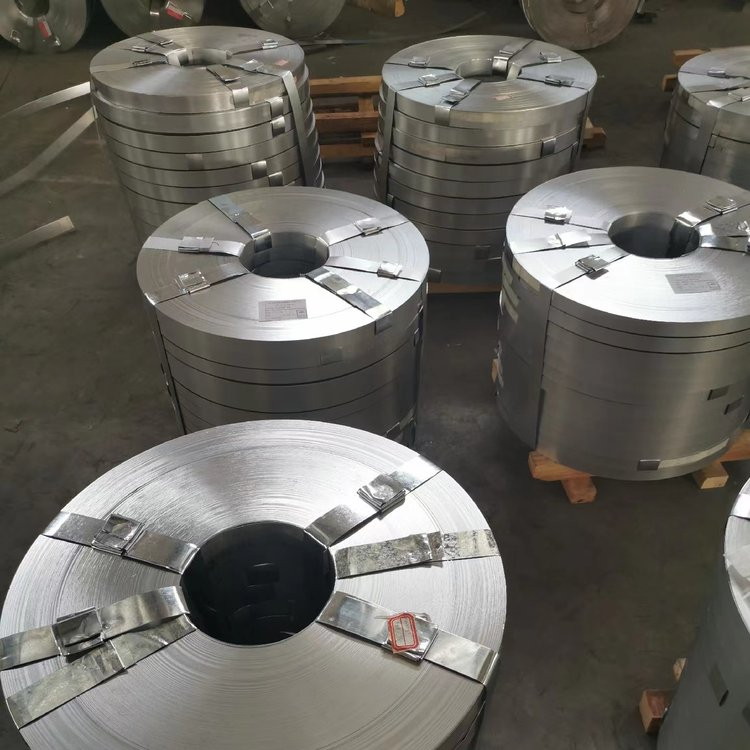
The Role of Q195 Is Not Simply “Low Cost”
Q195 is often considered a basic or economical steel, but that does not mean it has no engineering value.
In components with relatively low load demand, small cross-sections, or where good formability is useful, Q195 can be an economical and practical choice.
It may be used in:
- Small tunnel greenhouses;
- Light-duty agricultural structures;
- Auxiliary bracing;
- Small-diameter support tubes;
- Secondary enclosure members;
- Non-critical structural components.
These elements do not necessarily carry the main wind load or roof load, so using high-strength steel everywhere would not always provide a meaningful advantage.
If every component in a greenhouse were replaced with Q355, the increase in cost might not produce a proportional increase in overall structural performance.
The practical role of Q195 is therefore better described as:an economical material for light-duty structures and non-critical load-bearing components.
However, once greenhouse span, height, wind exposure, or covering weight increases, Q195 becomes less suitable for major structural members.
Why Q235 Has Become a Main Structural Steel for Greenhouses
Q235 is one of the most widely used structural steels in the Chinese greenhouse industry.
Its main advantage is balance.
It offers:
- Moderate strength;
- Good weldability;
- Good forming performance;
- Stable availability;
- Relatively economical cost.
For this reason, Q235 is commonly used for:
- Columns;
- Arches;
- Beams;
- Longitudinal members;
- Bracing;
- Trusses;
- Gutter supports;
- Door frames;
- Other general load-bearing components.
For many conventional commercial film greenhouses, Q235 provides a good balance between structural safety and total project cost.
This is one of the main reasons it is so widely used in multi-span film greenhouses.
If a greenhouse is not exposed to unusually high wind, snow, or large-span conditions, Q235 is often a very practical choice.
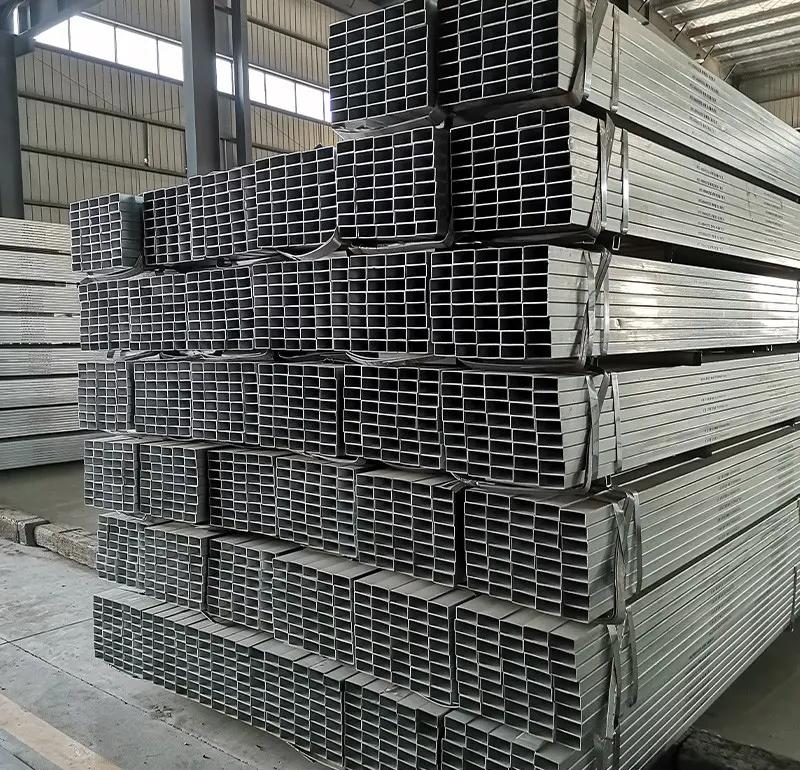
Where Q355 Shows Its Real Advantage
The main value of Q355 is not that it is a “premium” steel.
Its real advantage is that it provides a higher strength reserve for the same cross-section.
This may not make a dramatic difference in a small greenhouse, but the value becomes much more significant in projects with:
- Large spans;
- High gutter heights;
- High roof ridges;
- Strong winds;
- Coastal or island exposure;
- Heavy snow;
- Glass covering;
- Polycarbonate covering;
- Major trusses;
- Critical columns;
- High-load structural zones.
For example, as greenhouse span increases to 9 m, 10 m, or even 12 m, the internal forces in roof arches and main structural members increase significantly.
If the project is also located in a coastal area, on an island, or in an open plain, wind load may become the dominant design factor.
At that point, simply increasing the thickness of Q235 members can increase total steel weight, transport cost, and installation difficulty.
Using Q355 may allow the engineer to achieve a higher strength level without a large increase in member size.
This makes Q355 especially valuable in large commercial greenhouses, glasshouses, polycarbonate greenhouses, high-clearance structures, and high-wind locations.
Its real purpose is not to replace all ordinary steel, but to place higher-strength material where higher strength is actually needed.
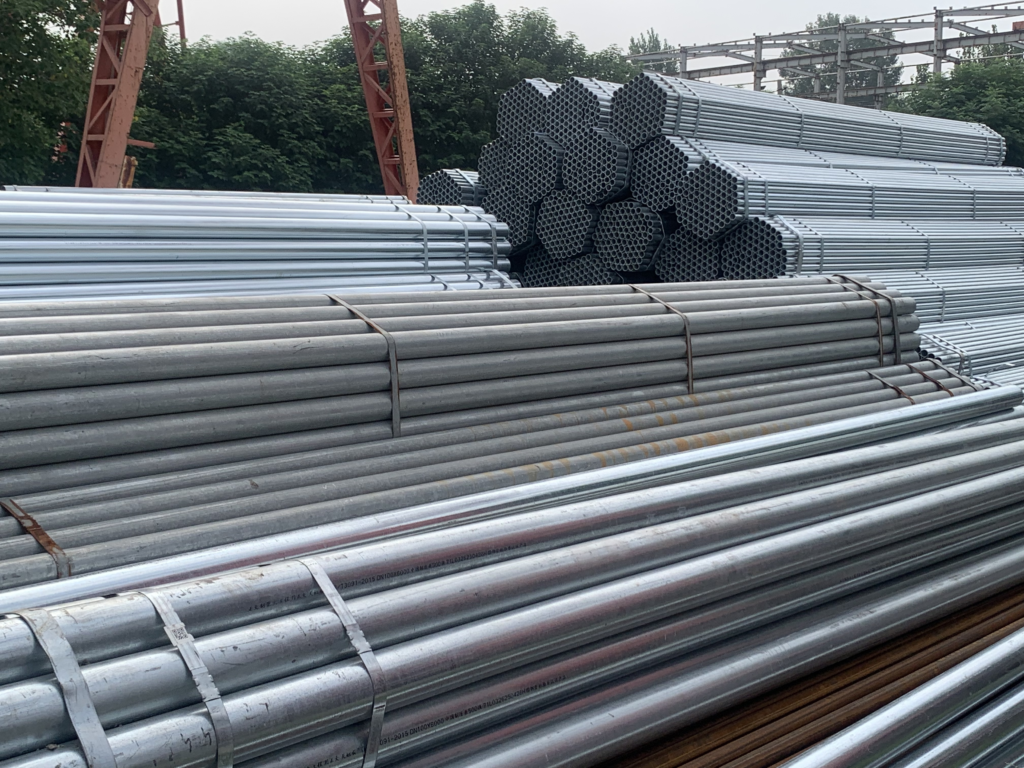
Why One Greenhouse May Use Several Steel Grades at the Same Time
A mature greenhouse design does not necessarily use the same steel grade for every component.
Different parts of the structure perform very different functions.
Main columns may carry major vertical and lateral loads. Main trusses may resist large bending forces. Secondary braces may mainly stabilize the overall structure.
If every component uses the same steel grade, two problems can occur:
Either important members may not have enough capacity, or many secondary members may be over-specified.
A more rational design may use:
- Q355 for critical load-bearing members;
- Q235 for general structural members;
- Q195 or another suitable material for lighter secondary components.
This approach allows high-strength steel to be used where it provides real value, while avoiding unnecessary material cost elsewhere.
High-Strength Steel Does Not Mean the Tube Can Be Made Arbitrarily Thin
Because Q355 has a higher yield strength, some buyers assume that wall thickness can simply be reduced significantly.
In theory, higher-strength steel can help reduce structural weight in some applications. In practice, the relationship is not that simple.
Many greenhouse members are slender compression members.
As the wall becomes thinner, the critical problem may shift away from yield strength and toward local or overall buckling.
For example:
A thin-walled square tube may experience local plate buckling, while a very slender round tube may fail through overall instability.
In such cases, changing the material from Q235 to Q355 does not automatically solve the geometric stability problem.
The real value of high-strength steel is therefore not unlimited thinning. It gives the engineer more flexibility to optimize the structure.
Why Wind Load Matters So Much in Greenhouse Steel Selection
For many agricultural greenhouses, wind load is one of the most important structural design factors.
A greenhouse is relatively lightweight, but it has a very large surface area exposed to wind.
A multi-span greenhouse that is tens or even hundreds of meters long can experience substantial horizontal forces under strong wind conditions.
Wind does not simply “push” the greenhouse from one side.
It can create:
- Positive pressure on windward walls;
- Suction on roof surfaces;
- Uplift forces;
- High local pressure at end walls;
- Large pressure differences when vents or doors are open.
This is why strong-wind greenhouse design often focuses heavily on:
- End walls;
- Main columns;
- Roof arches;
- Bracing systems;
- Foundation anchorage;
- Longitudinal stability.
In ordinary climates, Q235 may be sufficient for many structural members. In coastal, island, or high-wind locations, critical members may need to be upgraded to Q355.
The correct steel grade depends on the actual design load, not simply on the country where the greenhouse is built.
Greenhouse Safety Comes from the Structural System, Not from One Steel Grade
A greenhouse behaves as one complete structural frame.
Columns, arches, longitudinal members, cross bracing, end-wall reinforcement, connections, and foundations all work together.
If one important part of this stability system is missing or under-designed, higher-strength steel alone may not solve the problem.
For example:
A greenhouse without sufficient longitudinal bracing may sway excessively under wind.
A poorly reinforced end wall may become the first point of failure.
A weak foundation may allow the greenhouse to lift before the steel members themselves reach their strength limit.
For this reason, professional greenhouse structural design must consider:material strength, member size, bracing, connections, and foundations as one complete system.
Steel Grade and Corrosion Protection Must Be Evaluated Separately
Another common misunderstanding is to treat Q235 or Q355 as if they also describe corrosion resistance.
They do not.
Q195, Q235, and Q355 describe the mechanical properties of the steel.
Terms such as:
- Hot-dip galvanized;
- Pre-galvanized;
- Sendzimir galvanized;
- Z275;
describe the corrosion-protection system or zinc coating.
A greenhouse tube can therefore be:
- Q235 hot-dip galvanized;
- Q355 hot-dip galvanized;
- Q235 with a Z275 continuous galvanized coating;
- Q355 with another galvanized protection system.
A durable greenhouse requires both:sufficient structural strength and sufficient corrosion protection.
Why Corrosion Protection Is Especially Important in Greenhouses
Greenhouse interiors commonly contain:
- High humidity;
- Condensation;
- Irrigation water;
- Fertilizers;
- Agrochemicals;
- Temperature fluctuations.
In coastal locations, salt spray may also accelerate corrosion.
Even if Q355 is used, poor corrosion protection can still reduce structural life because corrosion gradually reduces the effective steel thickness.
In that case, the problem is not that the original steel grade was too weak. The problem is that the structural section becomes smaller over time.
For greenhouse applications, corrosion resistance can therefore be just as important as steel strength.
Hot-Dip Galvanizing, Pre-Galvanizing, and Steel Grade Are Different Concepts
Terms such as:
Hot-dip galvanized
Pre-galvanized
Sendzimir
Z275
describe surface protection or zinc coating systems.
Q195, Q235, and Q355 describe material strength.
These two groups of information should always be evaluated separately.
The steel grade influences load-bearing capacity, while the galvanized coating mainly influences long-term corrosion resistance.
The Same Q235 Grade Cannot Always Be Treated as Identical at Every Thickness
A purchase order that only says:
“Material: Q235”
does not provide all the information needed for structural design.
In structural steel standards, minimum yield strength requirements may vary with material thickness.
Therefore, professional design must also identify:
- Tube dimensions;
- Wall thickness;
- Steel grade;
- Applicable material standard;
- Manufacturing method;
- Delivery condition where relevant.
This is especially important in larger greenhouse projects.
Simply stating “we use Q355” does not prove that the structure is safe.
What matters is where Q355 is used, what section and thickness are selected, and whether the complete structure has been calculated for the required loads.
Why Glass Greenhouses Usually Require More High-Strength Steel
Plastic film is very light, so the permanent load of a film greenhouse is relatively low.
Glass greenhouses are very different.
Glass is heavier and also more sensitive to structural deformation.
If the main frame deforms excessively, it can affect not only structural stability but also glazing integrity, seals, and connection systems.
For this reason, glass greenhouses usually place greater emphasis on:
- Column stiffness;
- Truss stiffness;
- Joint deformation;
- Overall frame stability.
As a result, Q355 may be used more extensively than in a conventional film greenhouse.
Polycarbonate greenhouses generally fall somewhere between film and glass structures.
Greenhouse Steel Selection Is Ultimately a Balance Between Safety and Economy
Engineering is not about using the most expensive material everywhere.
If Q235 safely satisfies the design requirements of a project, replacing every member with Q355 may provide little practical benefit.
On the other hand, in a large high-wind greenhouse, trying to save money by using lower-strength steel everywhere may require thicker members and more reinforcement, which can increase the total weight of steel.
Therefore, the real comparison should be:the total structural efficiency and cost of the greenhouse while meeting the required design loads.
It should not simply be:
“Which steel grade is cheaper per ton?”
How Chinese Steel Grades Compare with European, American, and Japanese Grades
In international greenhouse projects, overseas customers may be more familiar with European, ASTM, or JIS steel grades.
From a general strength-level perspective:
- Q195 is close to lower-strength European grades such as S185;
- Q235 is often compared with EN S235, ASTM A36, and JIS SS400;
- Q355 is often compared with EN S355, ASTM A572 Grade 50, and JIS SM490.
These comparisons are useful for understanding relative strength levels, but they should not be interpreted as exact equivalence.
Different standards may specify different requirements for:
- Chemical composition;
- Yield strength;
- Tensile strength;
- Elongation;
- Impact toughness;
- Thickness range;
- Delivery condition.
For example, European grades such as S235JR, S355JR, S355J0, and S355J2 also include different impact toughness requirements.
So international steel comparisons should be understood as:similar strength classes, not automatically interchangeable standards.
Which Steel Grade Is Best for a Greenhouse?
There is no single answer.
A small seasonal tunnel greenhouse in a mild climate may perform very well with Q195 or Q235.
A conventional commercial multi-span film greenhouse may use Q235 for most structural members.
A taller, wider greenhouse with heavier covering materials may use a combination of Q235 and Q355.
A greenhouse located on a windy island, in a coastal region, or in a heavy-snow area may require a larger proportion of Q355 in critical structural members.
The correct starting question is therefore not:
“Which steel grade should we use?”
It is:
“What loads must this greenhouse resist?”
The difference between Q195, Q235, and Q355 is not simply a difference in material price. It is a difference in strength class, structural role, and engineering efficiency.
Q195 is generally more suitable for light-duty and secondary components. Q235 is widely used as the main structural steel in conventional commercial greenhouses. Q355 becomes more valuable in large-span, high-clearance, high-wind, heavy-covering, and high-standard greenhouse projects.
However, no steel grade alone can guarantee greenhouse safety.
A reliable greenhouse must consider:steel properties, tube dimensions, wall thickness, structural stability, wind and snow loads, connections, foundations, and corrosion protection as one integrated system.
Professional greenhouse engineering is therefore not about using the highest-strength steel everywhere.