
Understanding Greenhouse Design from the Perspective of Climate, Crops, and Agricultural Production
A greenhouse is not simply a structure covered with plastic film, glass, or insect netting. It is a complete agricultural system that combines structural engineering, material technology, environmental control, irrigation systems, and crop production management.
The main purpose of a greenhouse is to reduce the impact of external environmental changes on crops and create a more stable growing environment.
Through the combination of greenhouse structures, covering materials, ventilation systems, shading systems, irrigation systems, and environmental control equipment, growers can create conditions that are more suitable for plant growth.
However, there is no universal greenhouse design that works for every farm.
Different countries, climates, crops, and production goals require different greenhouse solutions.
For example:
- Greenhouses in the Netherlands and other cold regions focus more on insulation, light efficiency, and energy management.
- Greenhouses in the Middle East focus more on shading, ventilation, and cooling.
- Tropical regions focus more on insect protection, rain protection, and humidity control.
- Coastal areas require stronger corrosion resistance and wind-resistant structures.
Therefore, choosing a greenhouse should not be based only on price. It should start with understanding the agricultural requirements and local environmental conditions.
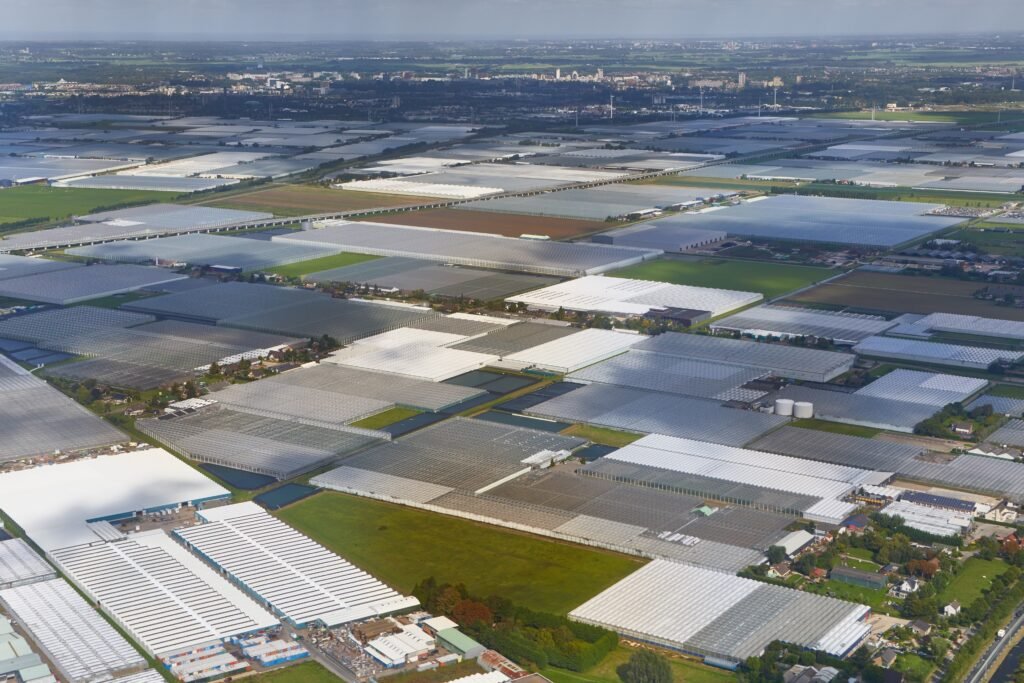
Greenhouse Design Starts with Climate Conditions
Many people focus on greenhouse size, appearance, or construction cost when planning a project. However, the most important factor in greenhouse design is actually the local climate.
A greenhouse creates a buffer between plants and the natural environment.
When outside temperatures are too high, the greenhouse needs to help reduce heat stress. When outside temperatures are low, the greenhouse needs to minimize heat loss.
For example, greenhouse projects in the Middle East face challenges from high temperatures and strong solar radiation.
The main goal is not heat preservation, but temperature reduction.
Therefore, greenhouse designs in hot climates usually focus on:
- Large ventilation areas
- Roof ventilation systems
- Side curtain ventilation
- Shading systems
- Evaporative cooling systems
- Fan and cooling systems
These solutions help reduce internal temperatures and protect crops from heat stress.
In contrast, European regions with cold winters face different challenges.
The main questions are:
How can heat be maintained inside the greenhouse?
How can sunlight be used more efficiently?
How can energy consumption be reduced?
Therefore, greenhouses in colder climates usually focus more on:
- Thermal insulation
- Structural sealing
- Light transmission design
- Heating systems
This is why one greenhouse design cannot simply be copied and applied to every region in the world.
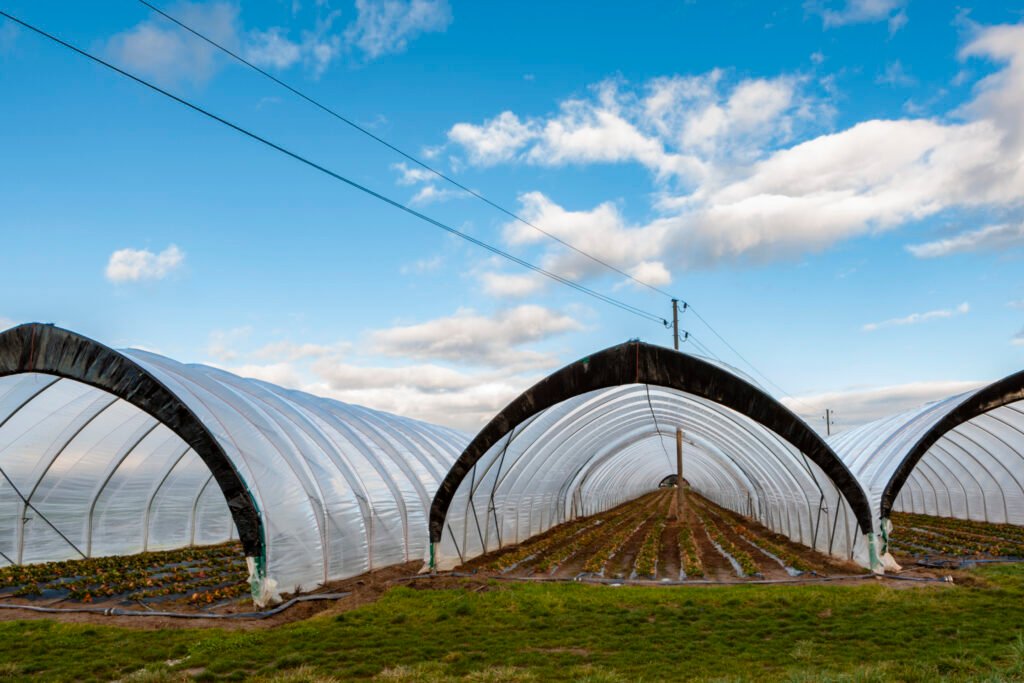
Different Greenhouse Types Developed for Different Agricultural Needs
The development of greenhouse structures is closely related to the evolution of agriculture.
The simplest greenhouse concept is to use transparent covering materials to create a warmer and more stable environment than the outside conditions.
With the development of agricultural technology, different types of greenhouses have gradually been created.
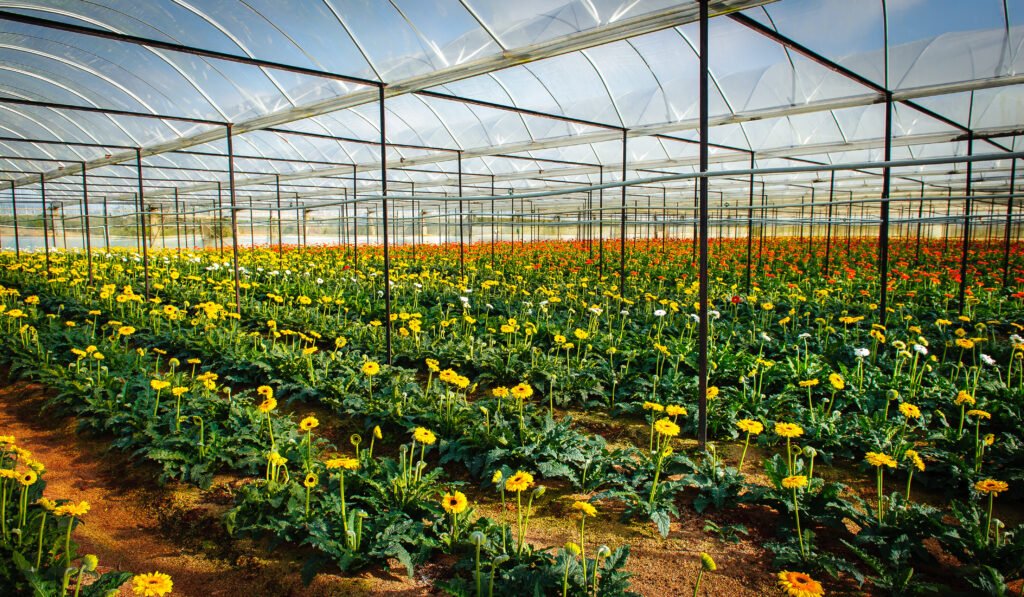
Plastic Film Greenhouses
Plastic film greenhouses are among the most widely used greenhouse types worldwide.
They use plastic film as the covering material to allow sunlight to enter while reducing heat loss.
Because plastic film greenhouses have relatively lower construction costs and flexible designs, they are widely used for:
- Vegetable production
- Flower cultivation
- Nursery production
- Commercial farming projects
For many agricultural projects in developing countries, plastic film greenhouses provide a cost-effective solution for protected cultivation.
Net Houses / Insect Net Greenhouses
Net houses have a different design concept from traditional greenhouses.
Instead of creating a completely enclosed environment, they use insect nets and shading nets to improve growing conditions while maintaining natural ventilation.
Therefore, net houses are widely used in tropical and hot climate regions.
For example:
- Southeast Asia
- Some Middle Eastern regions
- South American regions
In these areas, the main agricultural challenges are often:
- High temperature
- Strong sunlight
- Insect pressure
Rather than creating a highly controlled environment, net houses provide an economical way to solve these challenges.
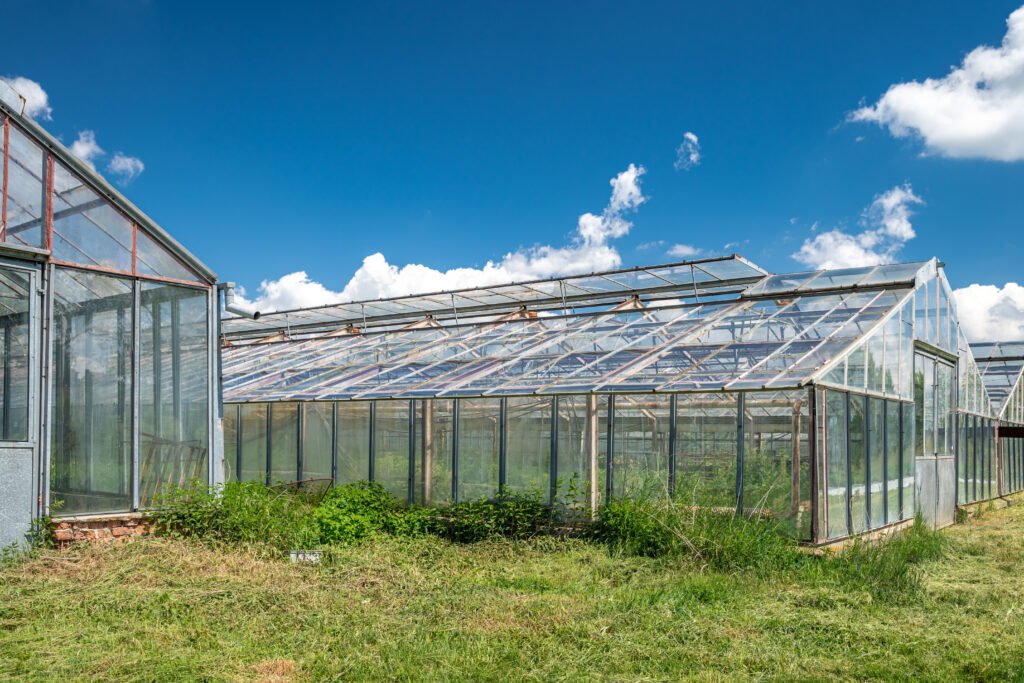
Glass Greenhouses
Glass greenhouses represent a higher level of environmental control in agriculture.
Because glass provides excellent light transmission and long service life, it is commonly used for:
- High-value crop production
- Commercial large-scale farms
- Smart agriculture projects
However, glass greenhouses usually require more complex designs and supporting systems, resulting in higher investment costs.
Crops Determine Greenhouse Design, Not the Other Way Around
One common misunderstanding is that a high-quality greenhouse can grow any type of crop.
In reality, greenhouse design must always be based on crop requirements.
Different plants have different needs for:
- Temperature
- Humidity
- Light
- Water
- Nutrients
For example, tomatoes.
Commercial tomato production usually requires higher greenhouse structures because plants continue growing vertically and need support systems.
Tomatoes also have higher requirements for:
- Temperature stability
- Air circulation
- Water and nutrient management
Therefore, tomato greenhouses usually require more professional structural and environmental designs.
Leafy vegetables, such as lettuce and Chinese cabbage, have different requirements.
They usually focus more on:
- Temperature management
- Water supply
- Hydroponic systems
Flower production often requires even more precise control of:
- Light conditions
- Temperature changes
- Humidity levels
Therefore, a greenhouse is not an independent building. It is part of a complete agricultural production system.
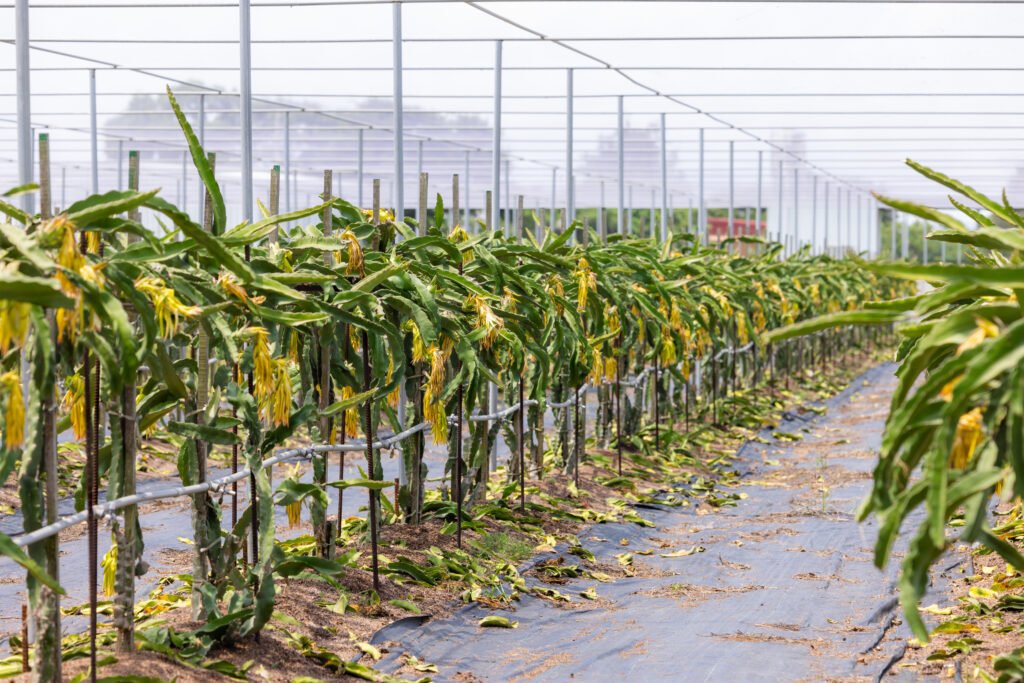
Why Greenhouse Structures and Materials Matter
Many people notice the covering material first when looking at a greenhouse.
However, the structural system is actually the foundation that determines greenhouse safety and service life.
A greenhouse structure needs to withstand:
- Wind loads
- Rain and snow loads
- Its own weight
- Crop and equipment loads
Therefore, steel quality and structural design directly affect greenhouse durability.
For example:
In standard agricultural areas, Q235 steel is commonly used because of its good balance between cost and performance.
For larger spans, stronger wind conditions, or higher structural requirements, higher-strength steel such as Q355 or other high-strength materials may be selected.
At the same time, corrosion protection is another critical factor.
Greenhouses are exposed to:
- High humidity
- Irrigation water
- Fertilizers
for long periods.
Therefore, hot-dip galvanized steel structures are widely used in modern greenhouse construction.
A Good Greenhouse Should Consider Future Development
Agricultural projects are usually long-term investments.
A farm may only require basic facilities today, but future development may include:
- Expanding planting areas
- Adding automatic irrigation
- Introducing smart control systems
- Installing fertigation systems
Therefore, future upgrades should be considered during the initial design stage.
A well-designed greenhouse system should not only meet today’s needs but also provide flexibility for future improvements.
There Is No Best Greenhouse, Only the Most Suitable Greenhouse
Choosing the right greenhouse is essentially about finding a balance between agricultural production and the natural environment.
A suitable greenhouse needs to consider:
- Local climate conditions
- Crop characteristics
- Production goals
- Investment plans
- Future development direction
There is no universal greenhouse that fits every region.
A truly successful greenhouse design is one that is adapted to local environmental conditions and agricultural requirements, allowing structures, materials, and agricultural technologies to work together.
As global agriculture moves toward higher efficiency, water conservation, and smarter production methods, greenhouses are no longer just growing facilities. They are becoming an essential foundation of modern agriculture.