
Greenhouse insect netting is an important material widely used in modern protected agriculture. It is normally installed over greenhouse side vents, roof vents, ventilation openings, entrances, and other areas connected to the outdoor environment.
Its main function is to reduce the entry of insects through physical exclusion while maintaining sufficient airflow for greenhouse ventilation.
Compared with pest control methods that rely mainly on chemical pesticides, insect netting provides continuous passive protection. As long as the material remains intact and is properly installed, it can provide long-term protection without frequent operation.
For this reason, insect-proof netting is widely used in vegetable greenhouses, nurseries, flower houses, hydroponic farms, and other professional growing facilities.
In greenhouse production, many pests do more than directly damage leaves, young shoots, flowers, or fruits. Some species can also transmit plant viruses and diseases.
Aphids, whiteflies, and thrips are common examples in protected horticulture. These pests are small, reproduce quickly, and can spread rapidly under the stable temperature and humidity conditions found inside greenhouses.
Therefore, insect netting is not simply a material used to “keep insects out.” It acts as the first physical barrier in an integrated crop protection system.
By reducing pest entry, insect netting can help lower pesticide use, reduce the risk of virus transmission, improve crop quality, and support Integrated Pest Management, commonly known as IPM.
When selecting greenhouse insect netting, mesh count should not be considered as the only important parameter.
Many buyers simply ask whether a net is 30 mesh, 40 mesh, or 50 mesh. However, mesh count alone does not fully describe its pest-exclusion performance.
A more professional specification should also consider actual aperture size, yarn diameter, open area ratio, warp and weft density, and fabric weight.
Different manufacturers may use different methods to describe mesh count. Two products with the same nominal mesh specification may have different aperture sizes and very different airflow performance because of differences in yarn thickness.
For professional greenhouse projects, actual aperture size and open area ratio are often more meaningful than mesh count alone.
One of the most important technical considerations in insect netting is the balance between pest exclusion and ventilation.
Smaller openings usually provide better protection against small insects, but they also create greater resistance to airflow.
If a naturally ventilated greenhouse is covered with very fine insect netting, the effective air exchange rate may decrease.
Reduced ventilation can increase greenhouse temperature and humidity and may also affect crop transpiration and the overall internal microclimate.
This is why finer netting does not automatically mean better greenhouse performance.
Different insect species require different levels of protection.
Larger flying insects can often be excluded with general-purpose insect netting, while whiteflies require smaller openings.
Thrips are even smaller, so anti-thrips screens normally require much finer apertures.
For tomatoes, peppers, cucumbers, flowers, and nursery plants, whitefly and thrips control may be especially important.
The net specification should therefore be selected according to the main target pest rather than using one standard specification for every project.
Open area ratio is another critical performance parameter.

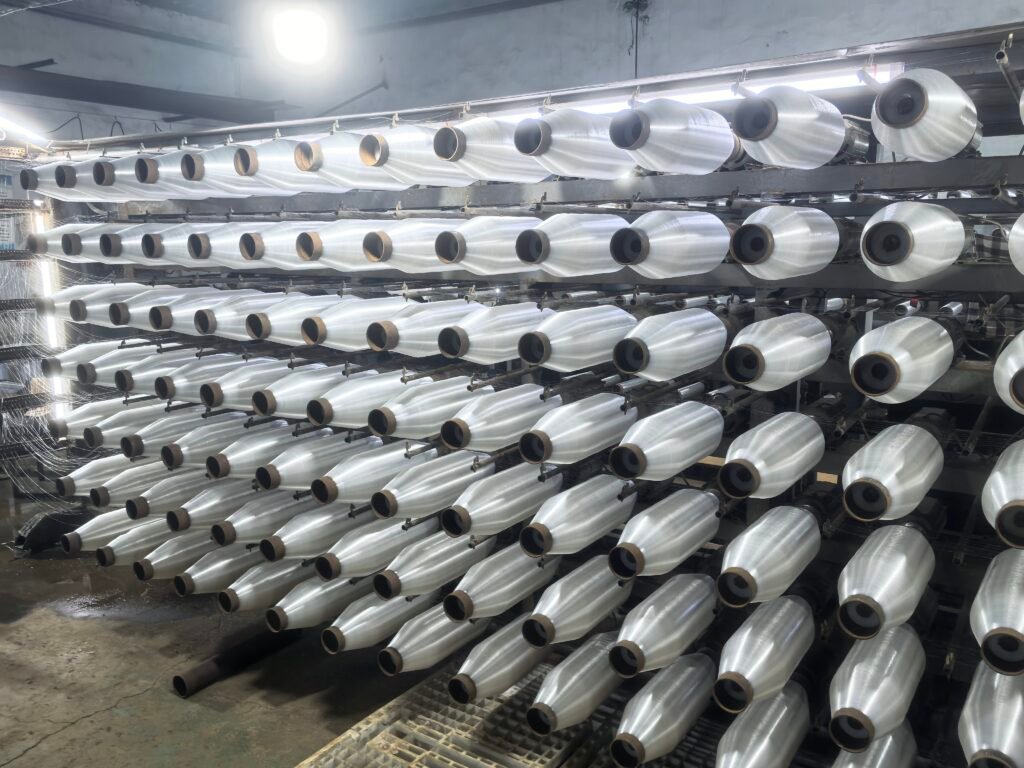
It represents the percentage of the net surface that actually allows air to pass through.
If thicker yarn is used, the open area is reduced even when the mesh count remains the same.
If thinner yarn is used, the net can provide a higher open area and therefore better airflow.
For this reason, two insect nets with the same mesh count may perform very differently inside a greenhouse.
In naturally ventilated structures, insect netting directly affects the efficiency of roof and side ventilation.
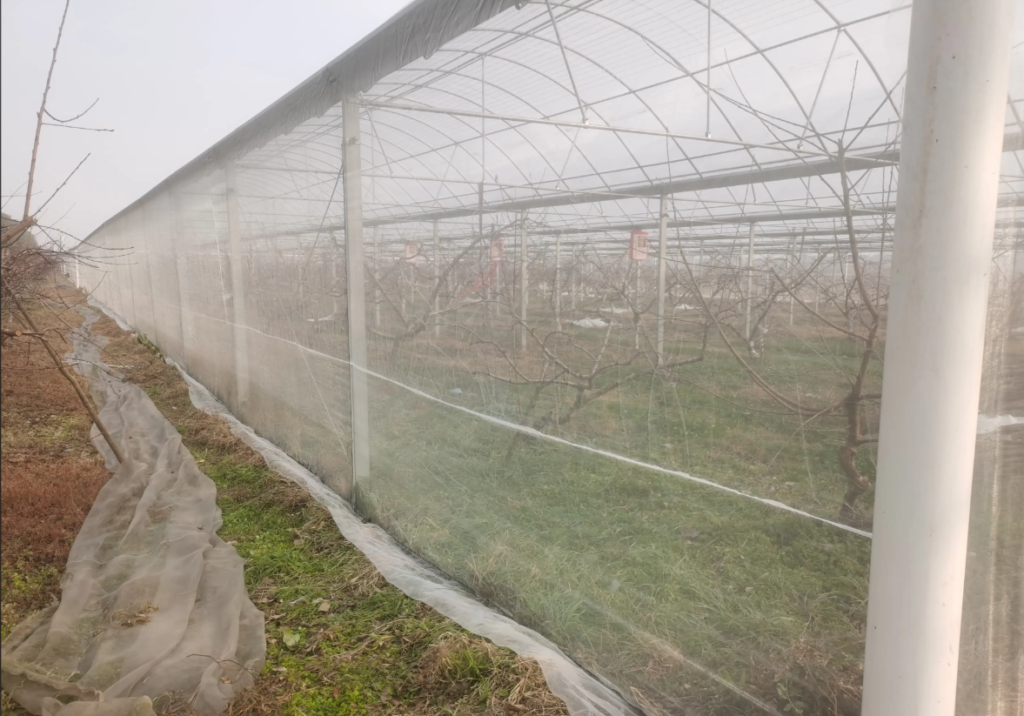
The net creates additional resistance at side roll-up vents, butterfly roof vents, and continuous roof openings.
Professional greenhouse ventilation design should therefore consider greenhouse height, vent area, local wind conditions, crop type, and insect net characteristics together.
The same principle applies to mechanically ventilated greenhouses.
For example, fan-and-pad cooling systems depend on a stable flow of air through the greenhouse.
Air enters through the cooling pad and is pulled across the greenhouse by exhaust fans.
If high-density insect netting is installed at the air inlet, additional resistance is created.
This can reduce the effective fan airflow, lower cooling pad performance, and decrease the overall air exchange rate.
As a result, insect netting and mechanical cooling systems should be designed as one integrated system rather than treated independently.
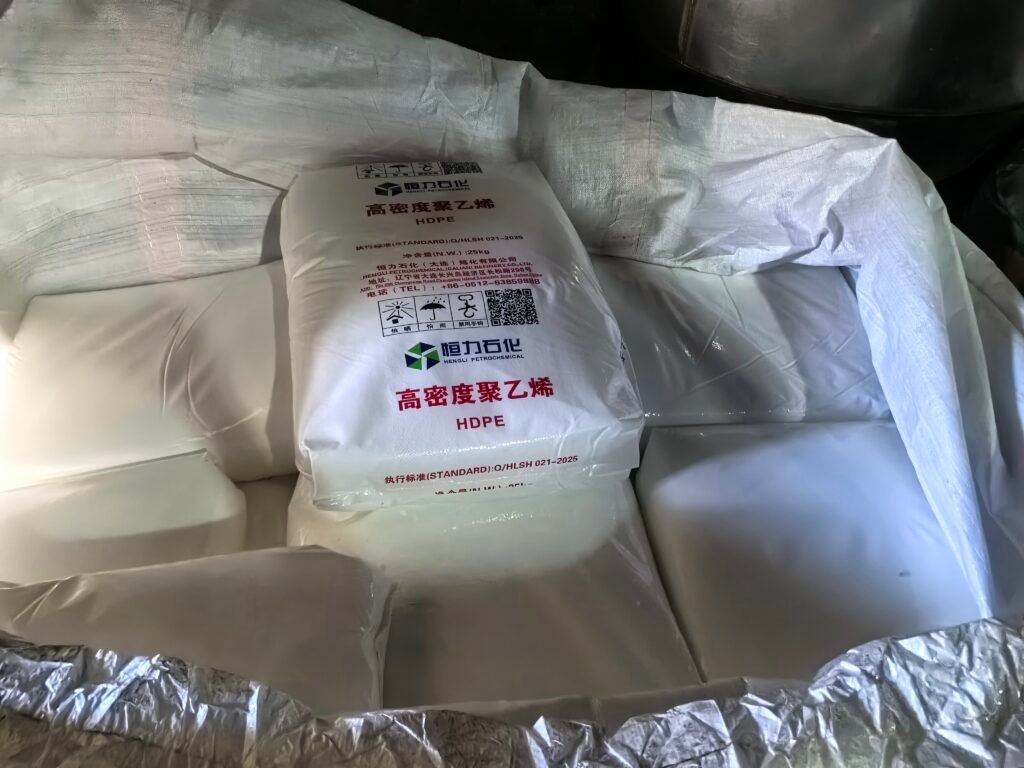
From a material perspective, modern agricultural insect netting is commonly produced from HDPE, or High-Density Polyethylene.
HDPE is lightweight, water resistant, corrosion resistant, easy to process into fine yarn, and suitable for outdoor agricultural applications.
UV stabilizers are normally added to improve resistance to long-term solar exposure.
UV resistance is especially important because greenhouse netting remains exposed to sunlight, heat, wind, and ultraviolet radiation for long periods.
Without sufficient UV stabilization, the yarn can gradually become brittle, lose strength, crack, and eventually fail.
This is particularly important in regions with high solar radiation, including Spain, Mediterranean areas, the Middle East, Africa, Australia, and tropical climates.
The color of insect netting can also influence greenhouse conditions.
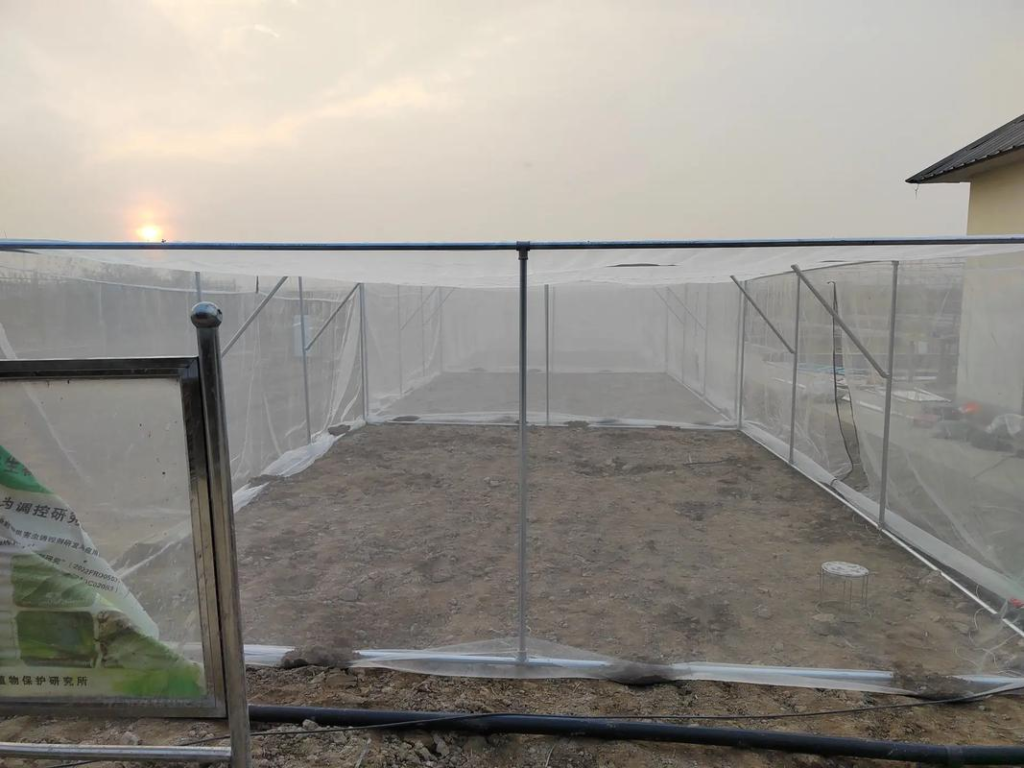
Common colors include white, natural, grey, and black.
White insect netting is widely used in professional greenhouses because it generally provides good light transmission and causes less shading than darker materials.
However, the most appropriate color should still be selected according to the greenhouse design, crop type, and local light conditions.
Although insect netting can reduce the number of pests entering from outside, it cannot eliminate every pest problem.
Infested seedlings, workers, tools, packaging materials, or other items can introduce insects into the greenhouse.
Frequent door opening, damaged netting, or poorly sealed connections can also reduce the effectiveness of the protection system.
For this reason, professional greenhouses normally combine insect netting with other measures such as double-door entrances, plant inspection, sanitation, sticky traps, biological control, and responsible pesticide use.
Together, these measures form an integrated pest management system.
Double-door entrances are particularly important in high-standard greenhouse facilities.
They normally use an outer door, a buffer area, and an inner door to avoid direct communication between the greenhouse interior and the outdoor environment.
This structure can significantly reduce insect entry through frequently used access points and is commonly found in nurseries, hydroponic facilities, and high-value crop production.
Installation quality is just as important as the netting material itself.
Connections between the net and greenhouse profiles, vent edges, door frames, gutters, drive mechanisms, and pipe penetrations can all become potential insect entry points.
Even a small gap can reduce the effectiveness of the whole system.
For this reason, insect netting should be treated as part of a complete greenhouse protection system rather than simply as a roll of material.
The net should also not be installed with excessive tension.
A proper installation should be flat, stable, and free from excessive sagging while still maintaining enough flexibility.
Over-tensioning can deform the openings, create excessive stress at the edges, and reduce service life.
Correct installation therefore requires a balance between stability and material durability.
Price should not be the only consideration when purchasing insect netting.
Professional buyers should evaluate raw material quality, virgin or recycled content, UV stabilization, aperture size, mesh count, open area ratio, fabric weight, tensile strength, tear resistance, roll width, roll length, packaging, and expected service life.
For export projects, packing efficiency and transportation requirements are also important.
Overall, greenhouse insect netting is not a minor accessory.
It directly influences crop protection, airflow, temperature, humidity, energy efficiency, and crop quality.
A properly designed insect net solution should be selected according to local climate, target pests, crop type, greenhouse structure, and ventilation system.
The goal of professional greenhouse design is not simply to use the finest possible netting.
The real objective is to achieve the right balance between pest exclusion and airflow.
When insect netting is integrated with greenhouse structure, ventilation, climate control, and IPM strategies, it becomes an essential part of efficient and reliable protected agriculture.