
When people first begin planning a commercial greenhouse, it is easy to think of the project mainly as a building project. Steel frames, glass, polycarbonate panels or plastic film are often the first things that come to mind.
But a modern commercial greenhouse is much more than a protected structure.
It is a complete growing environment in which the structure, climate, water, nutrients, energy and crop management systems must work together. This is why the idea of a turnkey greenhouse project has become increasingly important in modern agriculture.
A turnkey greenhouse project is not simply the supply of greenhouse materials. It is a complete approach that takes a project from an initial agricultural idea through design, manufacturing, system integration, installation and final operation.
For an investor or grower, the main advantage is simple: instead of trying to combine many independent systems from different suppliers, the greenhouse is designed as one integrated agricultural system.
A Greenhouse Begins with the Crop, Not the Steel Structure
One of the biggest misunderstandings in greenhouse construction is that the structure should be selected first.
In reality, a good greenhouse project should begin with a much more basic question:
What are you going to grow?
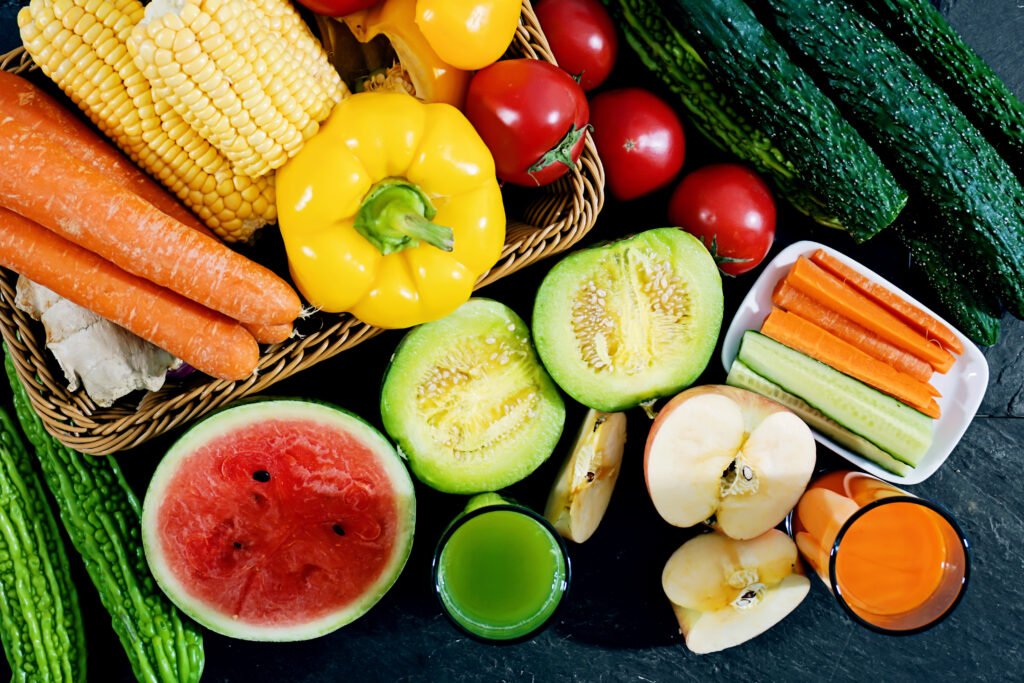
Tomatoes, cucumbers, strawberries, leafy vegetables, flowers and seedlings all create different requirements for the growing environment.
A tomato crop, for example, may require a relatively tall greenhouse because the plants grow vertically and need crop-support systems. Leafy vegetables may require a very different layout, especially when hydroponic growing systems are used. Seedling production may place more importance on temperature stability, lighting and humidity control.
The crop also determines how water and fertilizer should be delivered, how much ventilation is necessary and how precise the climate-control system needs to be.
For this reason, a professional turnkey greenhouse supplier should not begin by asking only:
“How many square meters do you need?”
The more important questions are about the crop, production method, climate and production goals.
Only after these are understood can the greenhouse itself be designed properly.
The Same Greenhouse Cannot Be Used Everywhere
A greenhouse that performs well in one country may perform poorly in another.
This is because the greenhouse is constantly interacting with the outside environment.
In a hot and dry region, the main challenge may be excessive solar radiation and high daytime temperatures. In a humid tropical climate, removing heat and moisture can become more important. In cold regions, insulation and heating may dominate the design. In coastal areas, strong winds and salt corrosion may influence both the greenhouse structure and the materials used.
This is why greenhouse design and construction should always respond to local climate conditions.
The shape of the greenhouse, the size of ventilation openings, the strength of the structure, the choice of covering material and the cooling strategy all depend on the project location.
A turnkey greenhouse project therefore begins before manufacturing.
It begins with understanding the site.
The objective is not simply to build a greenhouse that can stand there. The objective is to create a greenhouse that can provide a stable growing environment throughout the year.
The Greenhouse Structure Is Only the Foundation
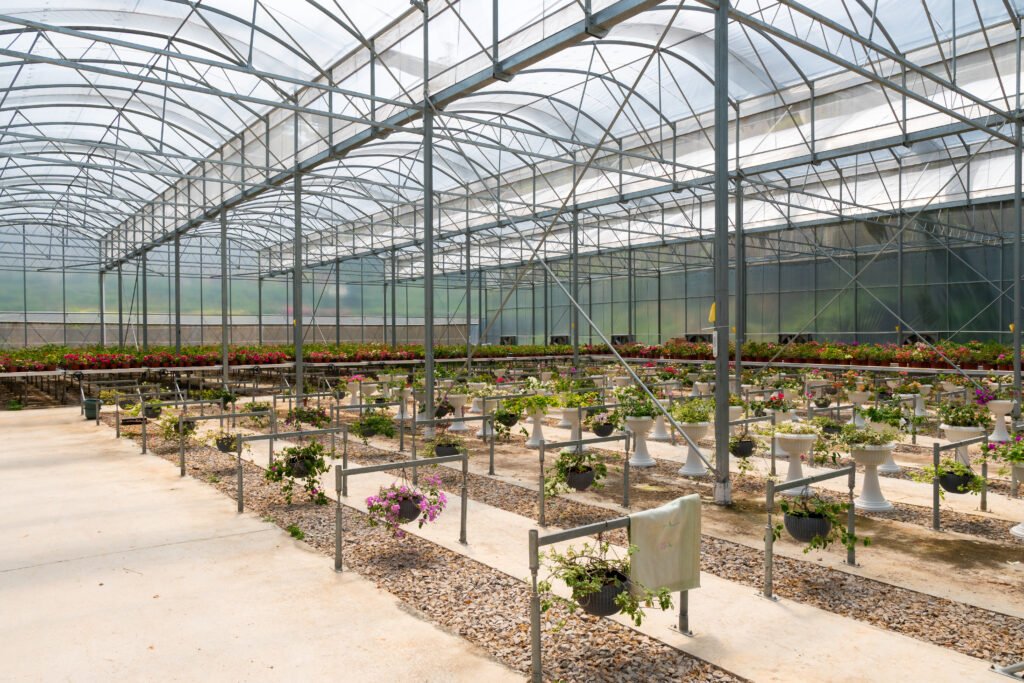
The steel structure is an important part of every greenhouse, but it is only the foundation of the agricultural system.
The structure determines the available growing space and supports the greenhouse covering, ventilation equipment, screens and other systems. It also has to withstand environmental loads such as wind and, in some regions, snow.
But the structure alone cannot create a suitable growing environment.
Imagine a greenhouse in a hot climate. Even if the steel structure is extremely strong, poor ventilation can cause temperatures inside the greenhouse to rise quickly.
Likewise, a greenhouse in a cold region may have an excellent structure but still consume excessive energy if the covering and thermal-management strategy are poorly designed.
This is why turnkey greenhouse engineering looks at the relationship between the structure and the environmental systems rather than treating them as separate products.
Why Greenhouse Covering Matters
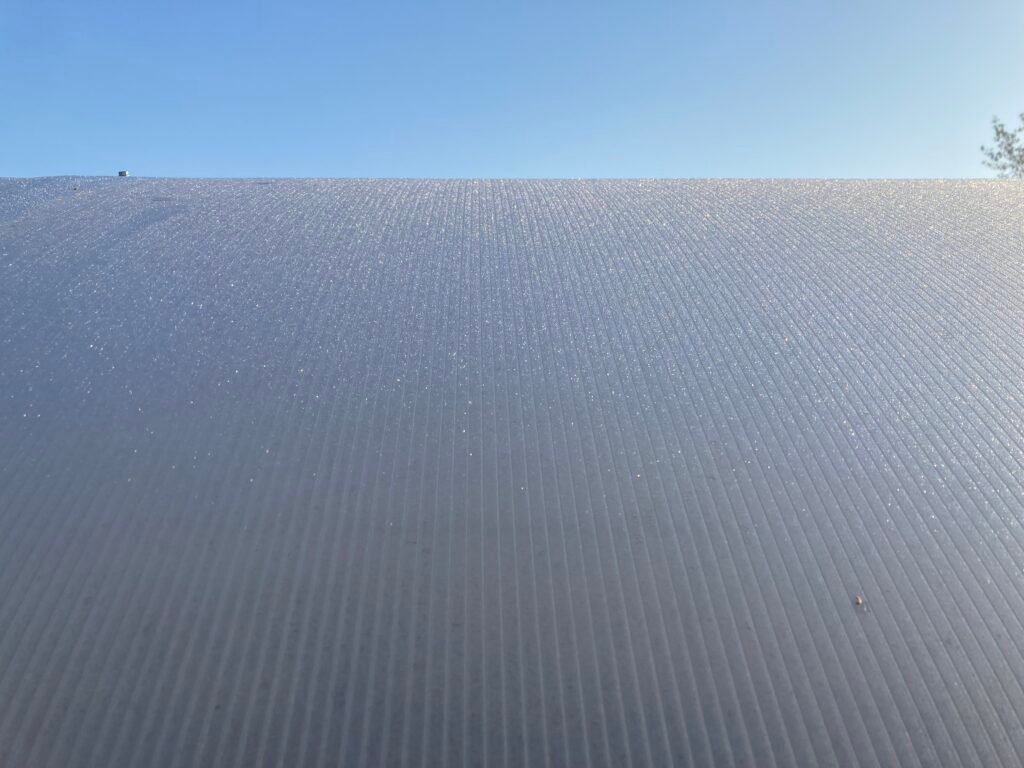
The covering material forms the boundary between the crop and the outside environment.
Different greenhouse materials allow light and heat to behave differently.
Film greenhouses are widely used because they can provide large growing areas with relatively flexible investment. Polycarbonate greenhouses offer improved insulation and durability and are often selected for projects that require greater environmental stability. Glass greenhouses are commonly associated with high-tech commercial horticulture, where light transmission and precise environmental control are particularly important.
There is no universally “best” greenhouse covering.
The correct choice depends on the crop, local climate, investment strategy and expected service life.
In a turnkey project, the covering material should therefore be selected together with the ventilation, cooling and heating strategy.
Otherwise, one system may end up working against another.
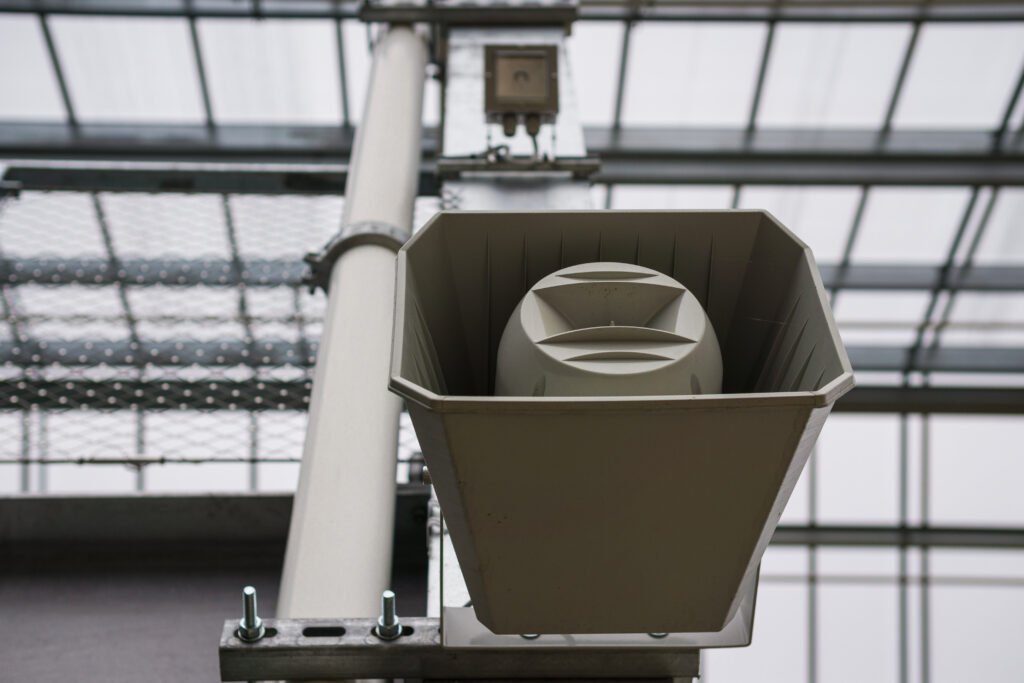
Climate Control Is the Heart of a Modern Greenhouse
Plants react continuously to temperature, humidity, radiation and air movement.
This means that a commercial greenhouse is constantly trying to maintain a balance between the conditions outside and the conditions the crop requires.
Natural ventilation is often the first method used to release excess heat. Roof vents and side vents allow warm air to escape and fresh air to enter.
But natural ventilation may not always be sufficient.
In hotter climates, additional cooling systems may be required. Fan-and-pad cooling, for example, uses evaporative cooling to reduce the temperature of incoming air. Internal circulation fans can help distribute air more evenly through the crop canopy.
Shading systems can reduce excessive solar radiation during periods of strong sunlight, while thermal screens can also help reduce energy losses in cooler conditions.
In colder climates, heating becomes another important part of the greenhouse system.
The important point is that these systems should not be selected independently.
Ventilation affects humidity. Shading affects temperature and light. Cooling affects water consumption. Heating changes both temperature and humidity.
A good turnkey greenhouse project considers these interactions from the beginning.
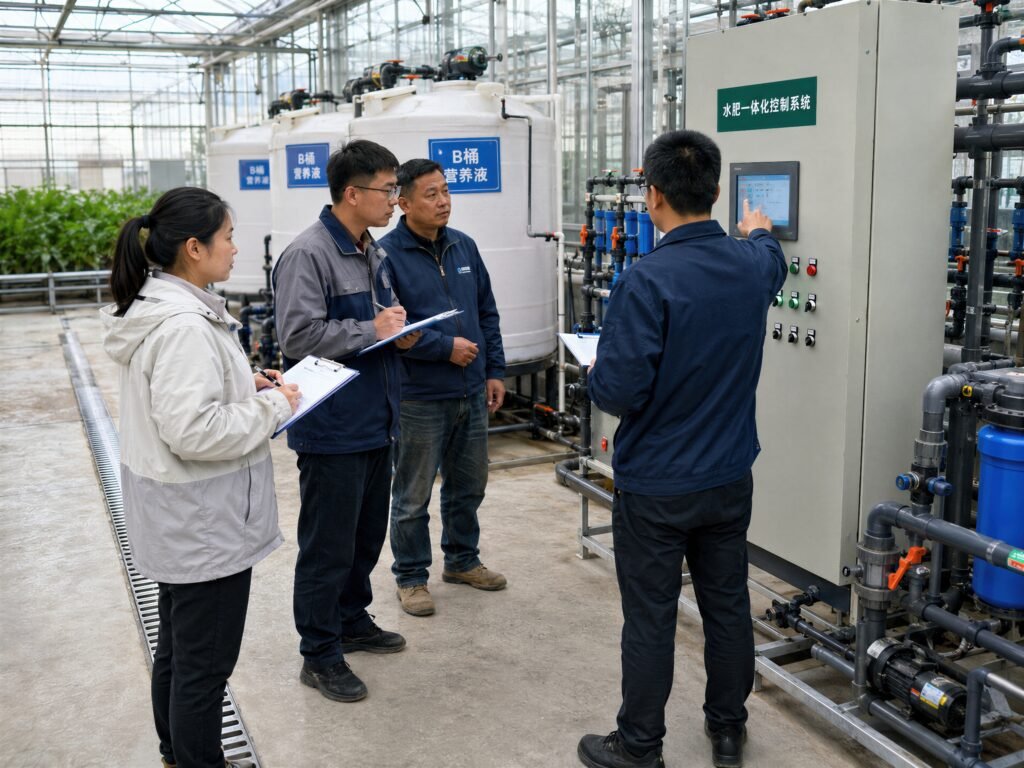
Water and Fertilizer Become Part of the Production System
In traditional agriculture, irrigation may simply mean supplying enough water to the crop.
In modern commercial greenhouse production, irrigation is usually much more precise.
Water becomes one part of a controlled growing strategy.
Fertigation systems allow nutrients to be mixed into irrigation water and delivered directly to plants according to crop requirements. Sensors and controllers can help manage parameters such as nutrient concentration and acidity.
When hydroponic or substrate growing methods are used, the relationship between water, fertilizer and the root zone becomes even more important.
The irrigation system must therefore be designed around the crop and growing method.
A greenhouse growing tomatoes in cocopeat will not necessarily use the same irrigation strategy as a greenhouse producing lettuce in an NFT system.
This is another reason turnkey greenhouse projects are useful: the growing system and greenhouse infrastructure can be designed together rather than being assembled separately later.
Automation Connects the Greenhouse Together
As greenhouse projects become larger and more sophisticated, manual control becomes increasingly difficult.
A grower cannot constantly open and close roof vents, switch cooling fans, monitor irrigation, adjust shading and control heating manually throughout the day.
Modern greenhouse automation solves this by connecting sensors with greenhouse equipment.
The control system continuously observes environmental conditions and responds according to programmed strategies.
If the greenhouse becomes too hot, ventilation may increase.
If solar radiation becomes excessive, shading may be deployed.
If irrigation conditions change, the fertigation system can adjust the watering strategy.
The greenhouse therefore begins to behave less like a passive building and more like a managed production environment.
This is one of the most important differences between a simple greenhouse structure and a modern commercial greenhouse project.
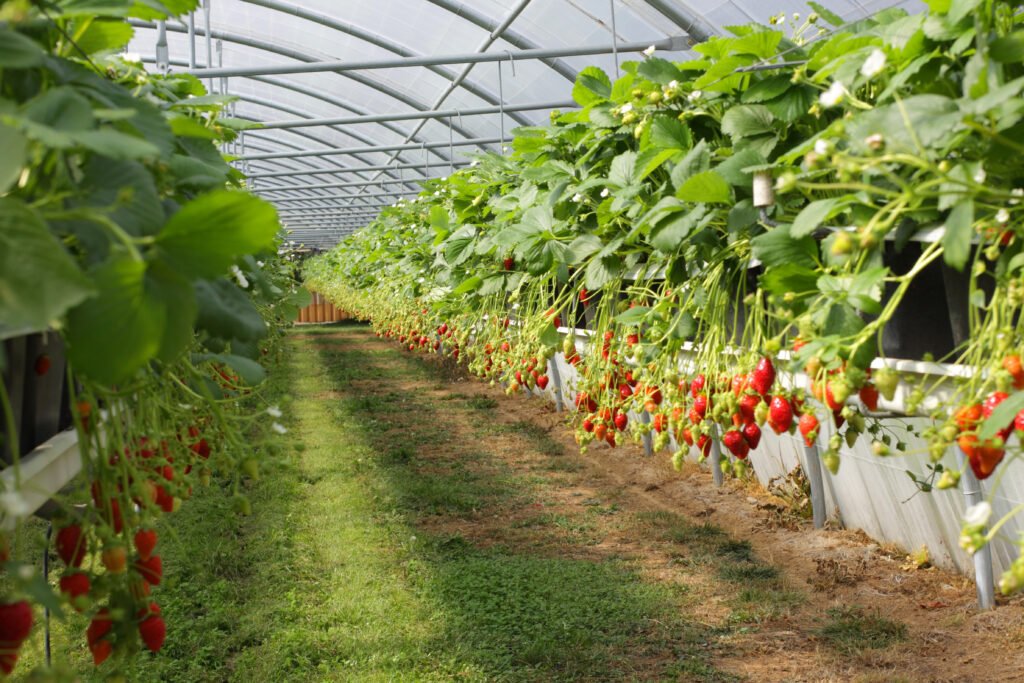
Why System Integration Matters
A greenhouse can contain many good individual products and still perform poorly.
The reason is simple:
Good components do not automatically create a good system.
A powerful cooling system may not work efficiently if the greenhouse ventilation layout is incorrect.
A sophisticated irrigation machine may not deliver good results if the hydraulic design is unsuitable.
An advanced climate controller cannot solve problems caused by an incorrectly designed structure.
This is where system integration becomes important.
In a turnkey greenhouse project, the objective is not simply to supply individual components. It is to make sure those components work together.
The structure supports the crop.
The covering controls the interaction with the outside climate.
The ventilation and cooling systems manage temperature.
The irrigation system manages the root environment.
The automation system coordinates the equipment.
Together, these elements create the production environment.
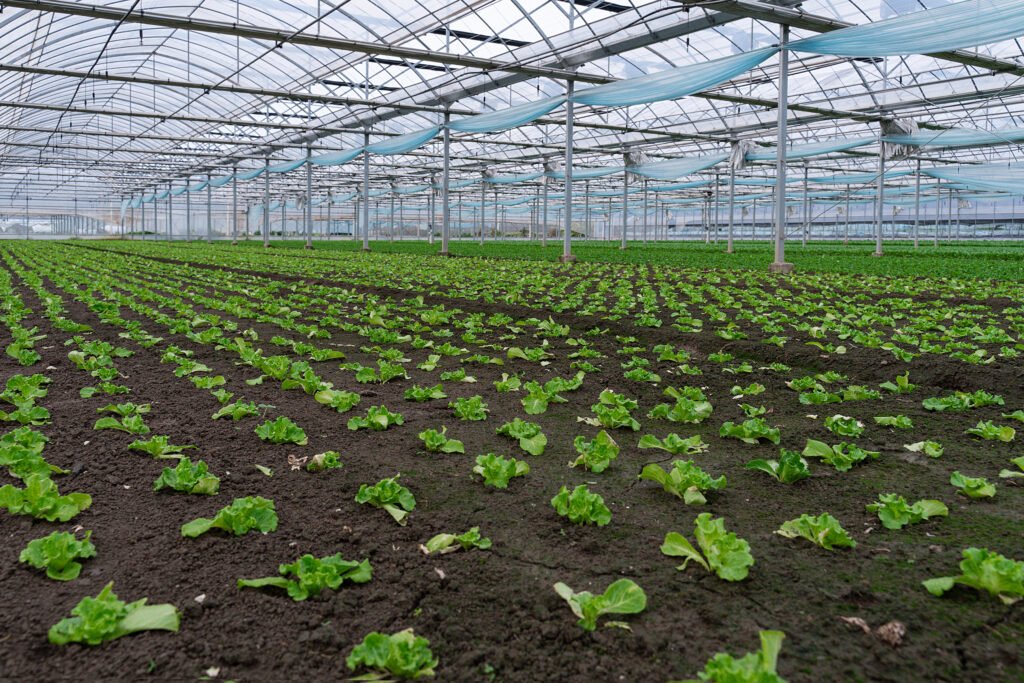
Manufacturing Is Only One Stage of the Project
For an international greenhouse project, manufacturing is often one of the most visible stages, but it is not the entire process.
After the engineering design is completed, structural components and greenhouse equipment can be manufactured and prepared for delivery.
At this stage, organization becomes extremely important.
A large greenhouse may contain thousands of components, connectors and pieces of equipment. If everything arrives at the construction site without a clear identification system, installation can become unnecessarily difficult.
Professional export projects therefore consider packing, labeling and container loading as part of project management.
The objective is not simply to put materials into a container.
The objective is to ensure that the installation team can understand what each component is and where it belongs when the shipment arrives.
Installation Turns the Design into Reality
Even a well-designed greenhouse can encounter problems if it is installed incorrectly.
Foundations, columns, trusses, covering materials, ventilation systems and equipment must all be positioned accurately.
Installation also requires coordination between different trades.
Structural work must connect correctly with mechanical systems. Irrigation lines must follow the production layout. Electrical systems must connect with control equipment. Sensors need to be installed in locations where they can provide meaningful information.
For international projects, there are several possible installation models.
Some customers prefer a complete installation team from the greenhouse supplier. Others use local construction workers with experienced technical supervisors. In some projects, the supplier provides detailed installation drawings and technical guidance.
The best approach depends on project size, local labor conditions and the complexity of the greenhouse systems.
Commissioning Is When the Greenhouse Becomes a Working System
Finishing construction does not mean the greenhouse is ready for production.
The final stage is commissioning.
This is when the different greenhouse systems are tested together.
Ventilation equipment must operate correctly. Cooling systems need to be checked under working conditions. Irrigation systems must be tested and calibrated. Sensors must report reliable information. Controllers must respond correctly to environmental changes.
Operators also need to understand how the greenhouse works.
A well-designed system is only useful if the people operating it know how to respond to different conditions.
Commissioning therefore connects engineering with actual agricultural production.
Only after this stage does the greenhouse truly become a functioning production facility.
Why Turnkey Greenhouse Projects Are Becoming More Popular
As commercial agriculture becomes more technology-driven, greenhouse projects are becoming increasingly complex.
A modern greenhouse may involve structural engineering, irrigation, cooling, heating, automation, electrical systems, water treatment and crop-production technology.
If every system is purchased independently, the investor must become the project integrator.
That can create problems when different suppliers have different technical standards or different assumptions about how the greenhouse will operate.
When something goes wrong, responsibility can also become unclear.
The structure supplier may say the problem is caused by the cooling system. The cooling supplier may blame the greenhouse design. The irrigation company may say the problem is related to water pressure.
A turnkey approach reduces this fragmentation.
Instead of treating the greenhouse as a collection of products, the project is treated as one agricultural system.
Is a Turnkey Greenhouse Always the Best Choice?
Not necessarily.
Some experienced growers already have strong local engineering teams and long-term relationships with different equipment suppliers. In these cases, purchasing systems separately may work very well.
But for investors entering a new market, expanding into a new crop or developing a large commercial greenhouse, a turnkey approach can simplify the project significantly.
It gives the project a clearer technical framework.
The most important advantage is not that everything comes from one company.
The real advantage is that someone is responsible for thinking about how everything works together.
How to Evaluate a Turnkey Greenhouse Supplier
When choosing a turnkey greenhouse supplier, the first question should not simply be:
“How much does the greenhouse cost per square meter?”
A much more useful question is:
What part of the complete project can the supplier actually design and deliver?
Some companies describe themselves as turnkey suppliers when they mainly manufacture greenhouse steel structures.
A true turnkey greenhouse partner should understand not only greenhouse manufacturing, but also how climate control, irrigation, crop production, installation and automation fit into the overall project.
The supplier should also be willing to understand the customer’s location and growing objectives before recommending a standard solution.
This is especially important in international projects, because the same greenhouse configuration should not simply be copied from one country to another.
A Greenhouse Should Be Designed as an Agricultural Production System
The simplest way to understand a turnkey greenhouse project is to stop thinking of the greenhouse as a building.
Think of it instead as a controlled agricultural production environment.
The steel structure provides the space.
The covering controls the boundary between the crop and the climate.
Ventilation and cooling manage temperature.
Irrigation and fertigation manage water and nutrients.
Automation coordinates the equipment.
Crop-management systems turn this controlled environment into agricultural production.
When all of these elements are designed together, the greenhouse becomes more than a protected growing area.
It becomes a complete production system.
That is the real meaning of a turnkey greenhouse project.
From Greenhouse Concept to Commercial Production
At Tianjin Golden Ocean Agricultural Facilities, we approach greenhouse projects from the perspective of complete system integration.
Rather than beginning with a fixed greenhouse model, a commercial project should first consider the local climate, crop, growing method, project scale and production objectives.
From there, the greenhouse structure, covering system, climate control, irrigation, fertigation, automation and installation strategy can be developed as parts of one project.
For international growers and agricultural investors, this approach can make the path from an initial greenhouse concept to commercial production more organized, more understandable and easier to manage.
A successful greenhouse project is not simply built. It is designed around the crop, the climate and the way the farm will actually operate.