
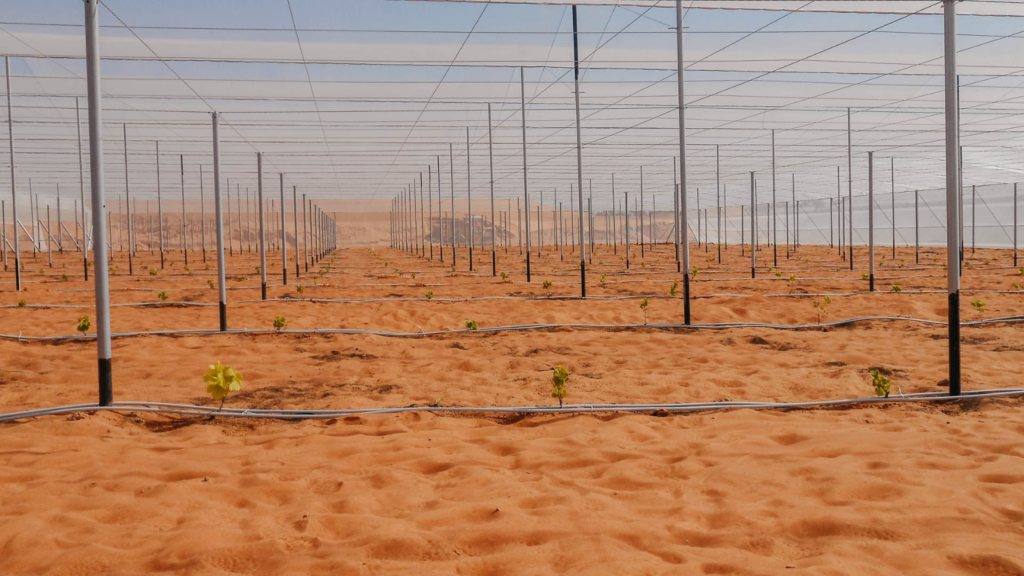
A net house usually looks much simpler than a conventional greenhouse. It has no glass walls, no polycarbonate roof, and in many cases, it does not require complicated heating or cooling equipment.
However, a commercial بيت شبكي is not simply a layer of insect netting stretched over several posts.
For a large agricultural net house to remain stable over many years of use, the posts, insect netting, steel wires, ground anchors, tensioners, and various connecting accessories must work together as one complete structural system.
This is especially important for large commercial net houses covering several hectares or even dozens of hectares. As the covered area increases, wind loads, net tension, and the forces transferred to the perimeter structure also increase.
From a structural perspective, the main components of a بيت شبكي can be divided into three systems:
1. Supporting Structure System — Posts and Main Structure
2. Covering System — Insect Netting
3. Tensioning and Anchoring System — Steel Wire, Galvanized Wire, Ground Anchors, Tensioners, and Accessories
Understanding these three systems helps growers and project investors evaluate a net house not only in terms of price, but also in terms of structural stability, durability, and long-term performance.
1. Supporting Structure System: Posts Are the Skeleton of the نت هاوس
The first major component of a net house is its supporting structure.
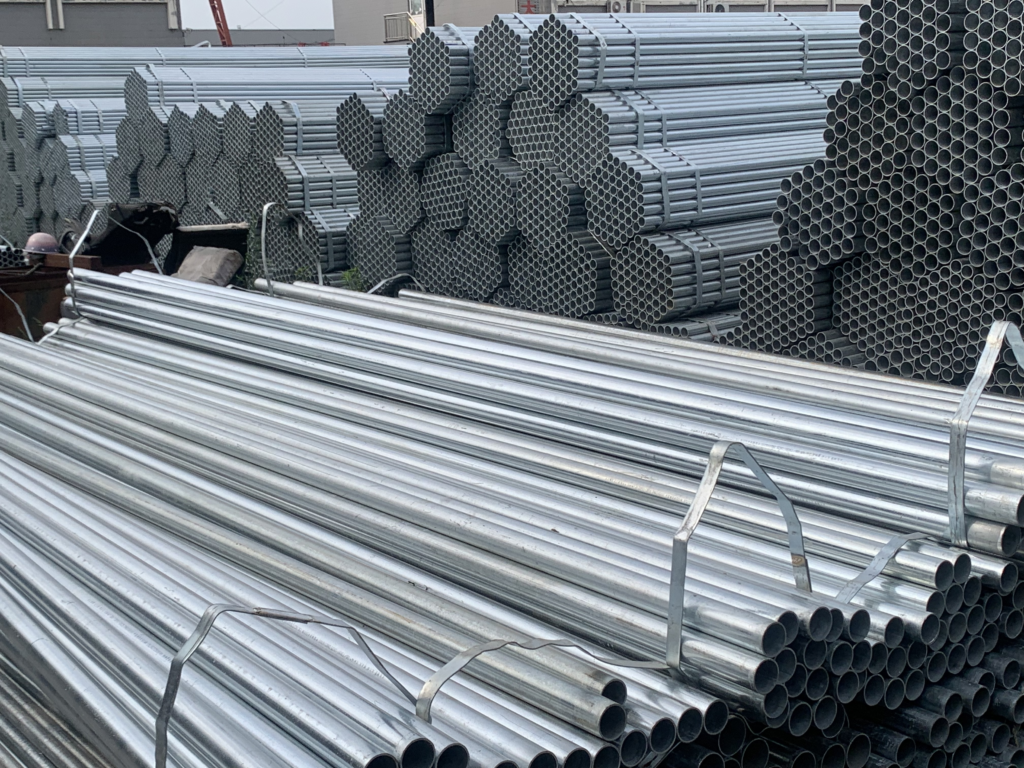
In most commercial projects, galvanized steel posts are installed throughout the growing area and around the perimeter of the structure.
Together, these posts form the basic skeleton of the net house.
Their role is not simply to support the insect net above the crops. The posts must also transfer the tension generated by the covering system and steel-wire system into the ground.
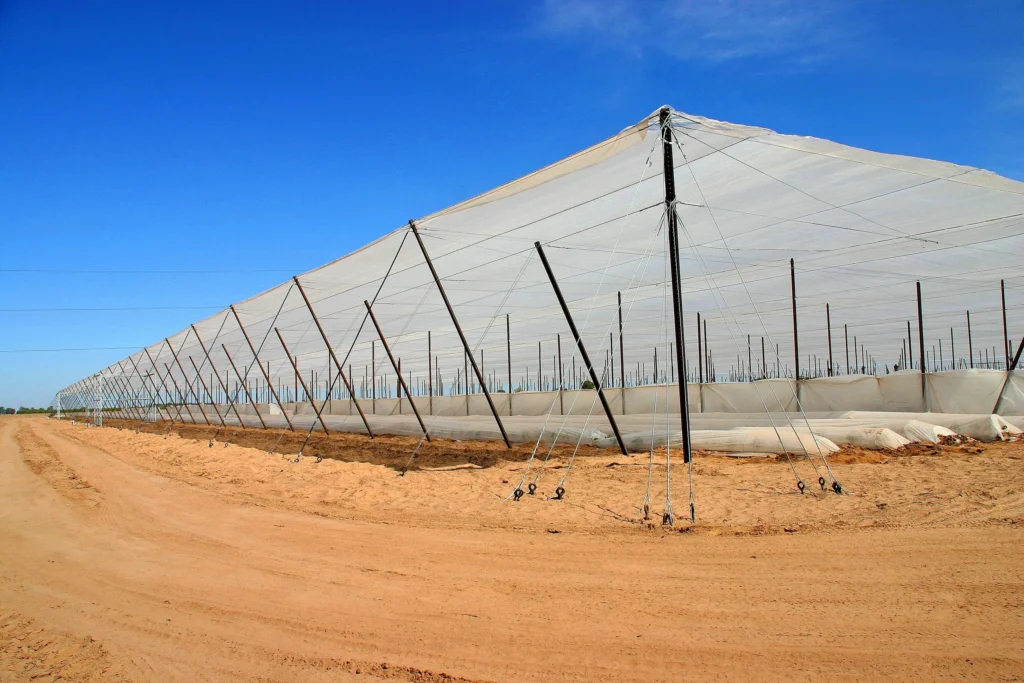
When wind acts on a large area of insect netting, the force is transferred through the net to the steel wires, then to the posts, and finally to the anchoring system and the soil.
Therefore, the design of the posts directly affects the stability of the entire net house.
Internal Posts and Perimeter Posts
Not every post in a net house performs exactly the same structural function.
Internal posts mainly support the upper wire network and maintain the required height of the structure.
Perimeter posts and corner posts usually carry greater horizontal tension because the outer insect netting and tensioning wires are generally connected to these positions.
Therefore, depending on the project area, local wind conditions, and structural layout, perimeter posts, corner posts, and other critical positions often require stronger structural configurations.
Why Galvanized Steel Is Commonly Used
Commercial net houses are continuously exposed to sunlight, rain, irrigation water, and high-humidity environments.
For this reason, corrosion resistance is very important when selecting structural materials.
Hot-dip galvanized steel is widely used in agricultural structures because the zinc coating protects the underlying steel and helps extend the service life of the structure.
The post diameter, wall thickness, spacing, and foundation method should not be determined independently. They should be considered together with the net-house height, bay spacing, local wind load, and total project area.
A 1-hectare net house and a 20-hectare net house should not automatically use exactly the same structural configuration simply because both are called Net Houses.
2. Covering System: Insect Netting Is More Than Just a Covering Material
The second major component is the covering material.
For an insect-proof بيت شبكي, the covering material is usually agricultural insect netting treated with UV protection, such as HDPE insect netting.
Its most direct function is to physically prevent pests from entering the growing area.
The mesh creates a protective barrier between the crops and the outside environment while still allowing natural airflow, thereby reducing the likelihood of insects entering the net house.
This is also one of the major differences between a net house and a conventional plastic-film greenhouse.
A plastic-film greenhouse separates the internal environment from outdoor conditions more completely, while a net house maintains a much higher level of natural ventilation.
Mesh Size Must Match the Crop and Target Pest
Insect netting should not be selected based on price alone.
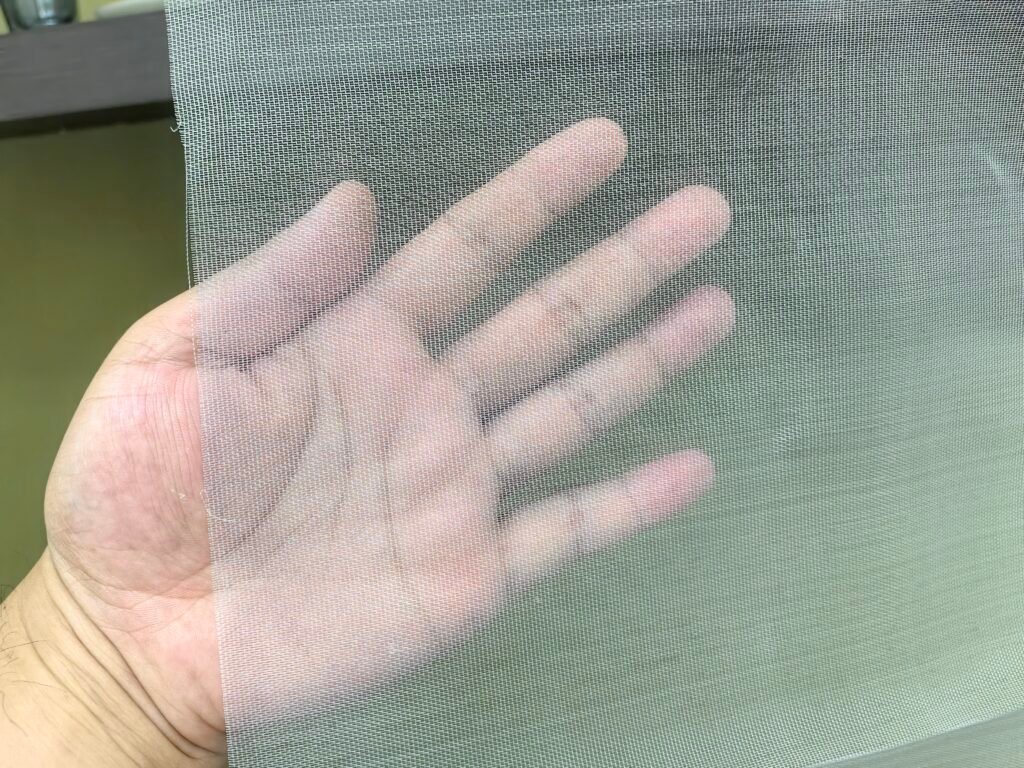
Different mesh densities provide different levels of insect exclusion and airflow.
A finer mesh can block smaller insects, but as mesh density increases, resistance to airflow generally increases as well.
Therefore, the correct insect net should be selected according to the target pests, crop type, local temperature, and ventilation requirements.
This balance is especially important in hot climates.
The goal is not simply to choose the finest possible mesh, but to provide sufficient insect protection while maintaining a growing environment with adequate ventilation.
Insect Netting Must Maintain Proper Tension
Even high-quality insect netting cannot perform well if it is installed incorrectly.
If the net is too loose, strong winds can cause excessive movement, friction, and deformation.
If the net is tensioned too tightly, excessive force may be transferred to the posts, steel wires, and the entire supporting structure.
Therefore, the covering material should not be considered separately from the steel-wire and tensioning system.
The insect netting, steel structure, and wire system must be designed as one complete load-bearing system.

3. Steel Wire, Ground Anchors, and Tensioners: The System That Holds the Structure Together
The third major component of a net house is often less visible than the posts and insect netting, but it is extremely important to the overall structure.
This system mainly includes:
steel wire or galvanized wire, ground anchors, tensioners, wire clamps, and various connecting accessories.
Together, these components form the tensioning network of the net house, helping stabilize the overall structure and keeping the covering net in the correct position and under proper tension.
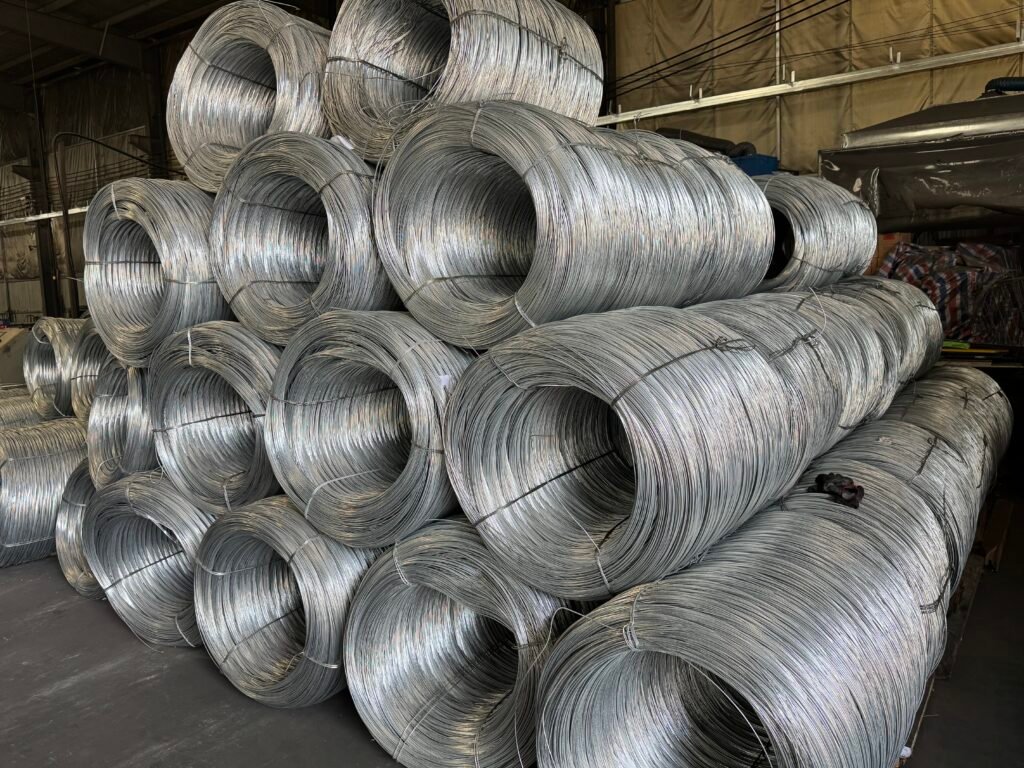
Steel Wire and Galvanized Wire
Depending on the structural design, steel wires are usually arranged horizontally, longitudinally, or diagonally.
They can perform several functions.
For example, they support the insect netting, connect different structural areas, transfer forces to perimeter posts and ground anchors, and improve the overall stability of the structure.
For a large net house, the entire wire network can be understood as a load-transfer network connecting the individual posts.
Without proper wire tension, each post would behave more independently under load.
With a properly designed tensioning network, wind loads and other external forces can be distributed across a much larger part of the structure.
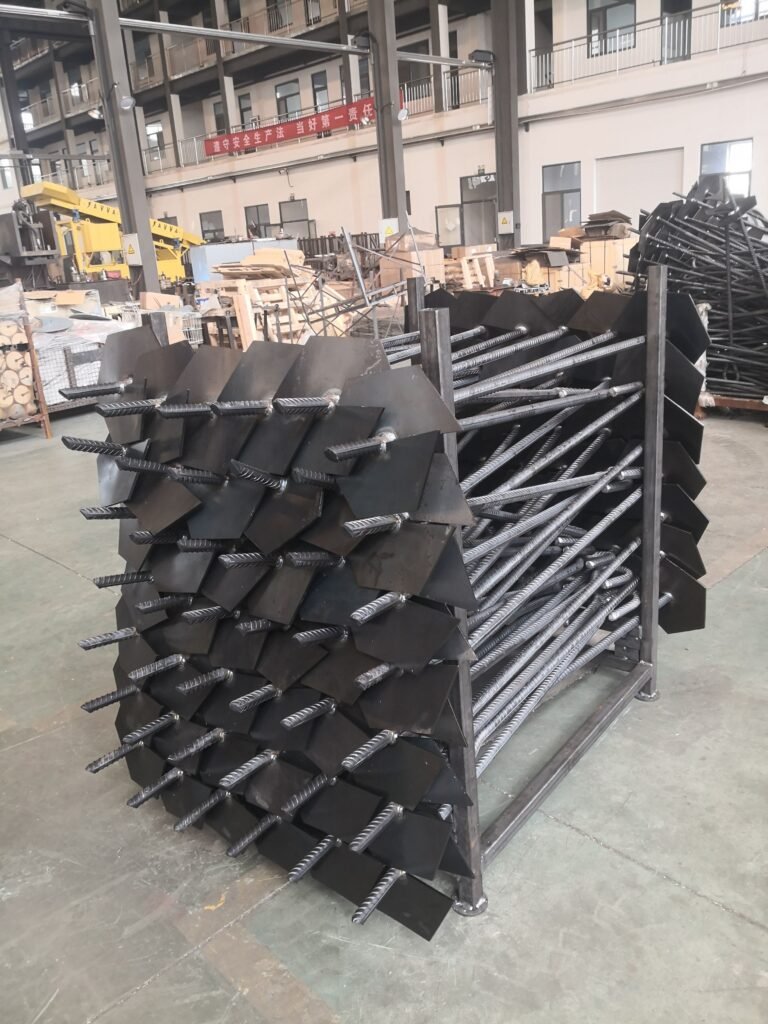
Ground Anchors
The purpose of ground anchors is to transfer the pulling force generated by the tensioning system into the soil.
Ground anchors are especially important around the perimeter and at the corners of the net house, where tension forces are usually greater.
The pulling force generated by the steel wires is ultimately transferred into the ground through the anchors.
The actual holding capacity of a ground anchor depends on several factors, including soil conditions, installation depth, anchor design, applied tension, and installation angle.
The same ground anchor may perform very differently in firm soil compared with loose or soft soil.
Therefore, site soil conditions should be carefully considered before the anchoring system is finalized.
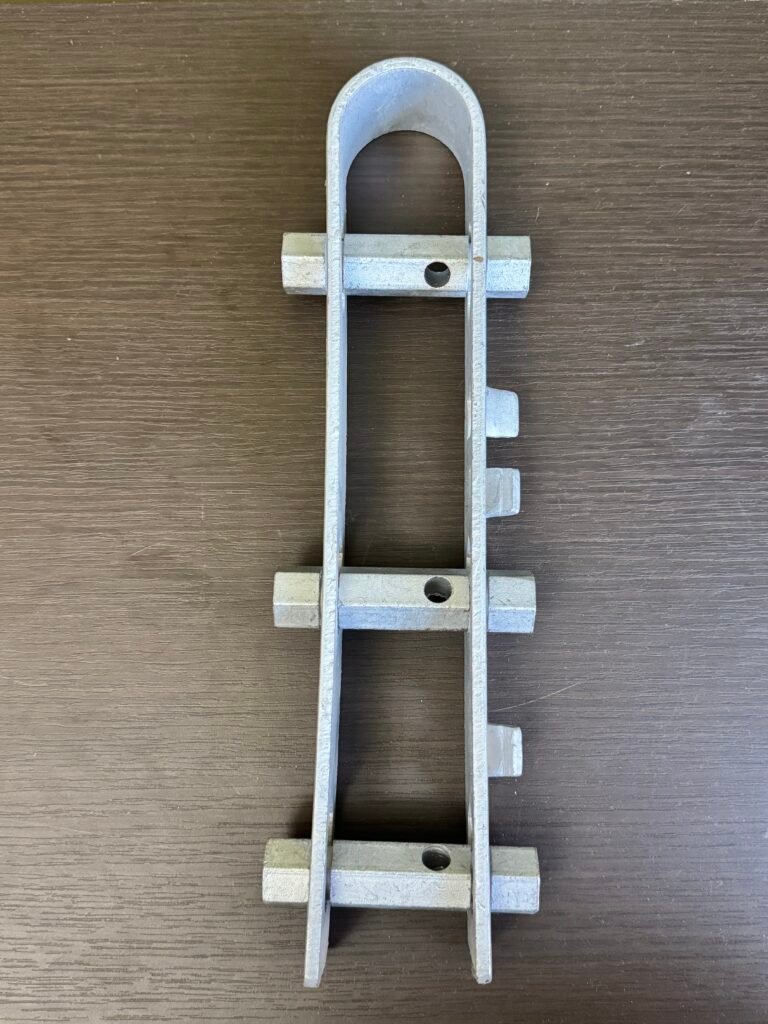
Tensioners
Tensioners are used to tighten and adjust the steel wires after installation.
They may appear to be small accessories, but they play an important role in the overall structure.
Steel wires cannot simply be connected loosely between two points.
They need to maintain a reasonable and controllable level of tension.
If the wire is too loose, the net house may move excessively under strong wind.
If the wire is overtightened, unnecessary additional loads may be placed on the posts, anchors, and connecting components.
Tensioners allow installers to adjust wire tension during installation and, when necessary, readjust it later during maintenance.
Connectors, Wire Clamps, and Other Accessories
A commercial net house also requires many smaller connecting components to complete the structural system.
These may include wire clamps, cable connectors, post fittings, insect-net clips, bolts, nuts, and other fasteners.
Individually, these components may appear insignificant.
However, from a structural perspective, every connection point is a location where forces are transferred.
Therefore, the quality of the accessories and the installation method can directly affect the reliability of the entire net house.
A Net House Should Be Viewed as a Complete Structural System
A common mistake when evaluating a net house is to compare each component separately.
A buyer may compare post wall thickness, insect-net price, or steel-wire diameter individually.
However, the real structural performance depends on how these components work together.
The posts support the structure.
The insect net protects the crops.
The steel wires distribute and transfer tension.
The ground anchors transfer pulling forces into the soil.
The tensioners control the tension of the wire network.
The connectors continuously transfer forces between different components.
Only when these systems are properly matched can they form a truly stable crop-protection structure.
If the systems are poorly matched, simply making one component thicker, heavier, or stronger does not necessarily solve the overall structural problem.
Large البيوت الشبكية Require Project-Specific Design
For smaller agricultural protection structures, standard specifications may sometimes be sufficient.
However, for large commercial net houses covering several hectares or even dozens of hectares, the structural design should be adjusted according to the actual project conditions.
Important factors include:
local wind conditions, soil conditions, net-house height, post spacing, crop requirements, insect-net specifications, site topography, and overall project dimensions.
This is especially important in Africa, the Middle East, Australia, and other regions where large-scale agricultural projects are common, because a single Net House project may cover dozens of hectares.
Therefore, a commercial net house should not be understood as simply “posts + insect netting.”
It should be treated as a complete agricultural engineering system.
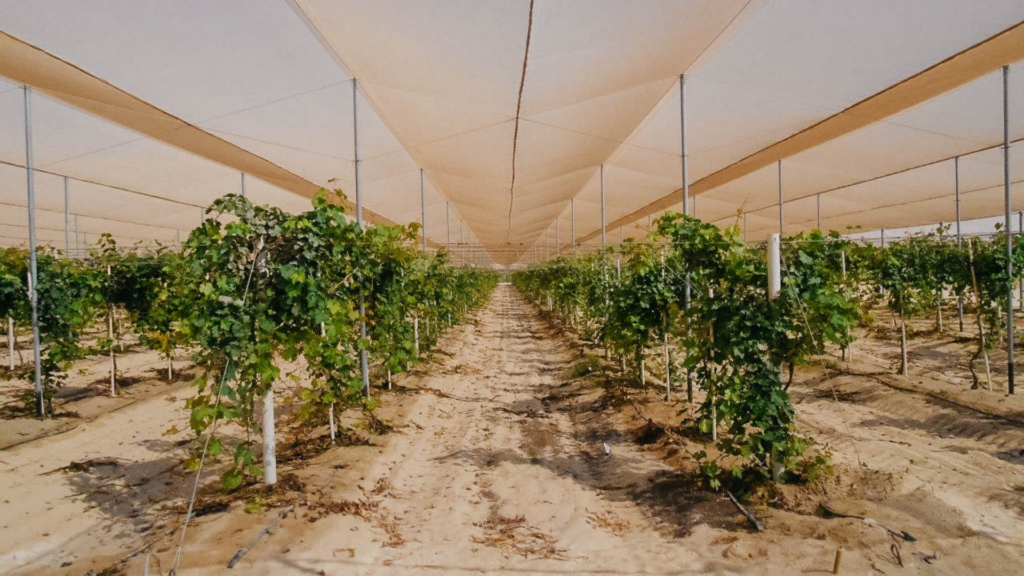
The main components of a بيت شبكي can be summarized into three systems:
Supporting structure system: galvanized steel posts and other main structural members.
Covering system: agricultural insect netting.
Tensioning and anchoring system: steel wire, galvanized wire, ground anchors, tensioners, and various connecting accessories.
The reliability of a net house depends on how well these three systems work together.
Even very strong posts cannot compensate for a poorly designed anchoring system.
Even high-quality insect netting cannot perform properly without adequate tension.
Even a strong wire system cannot ensure overall stability if the perimeter posts and ground anchors are poorly designed.
Therefore, for commercial agricultural projects, a good net house is not simply one that uses the largest individual components. It is one in which the entire structural system is properly matched, forces are transferred efficiently, and the design is suitable for the actual local growing and climate conditions.